


 English
 中文简体
中文简体
+86-0575-8215 2808
/8200 8688/8239 2526
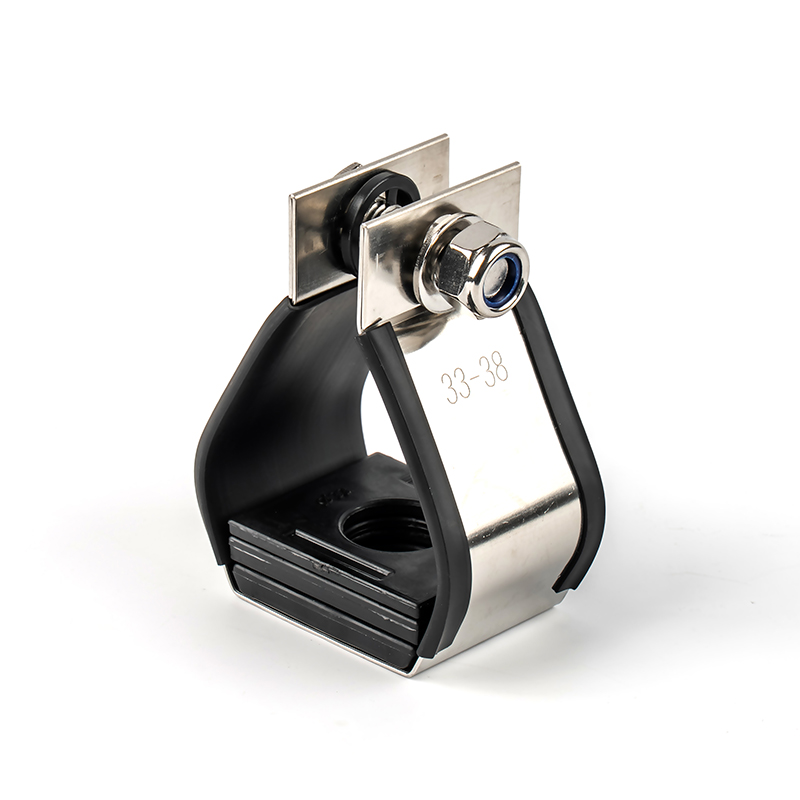
The single cable Cleats made of 316 stainless stee...
View more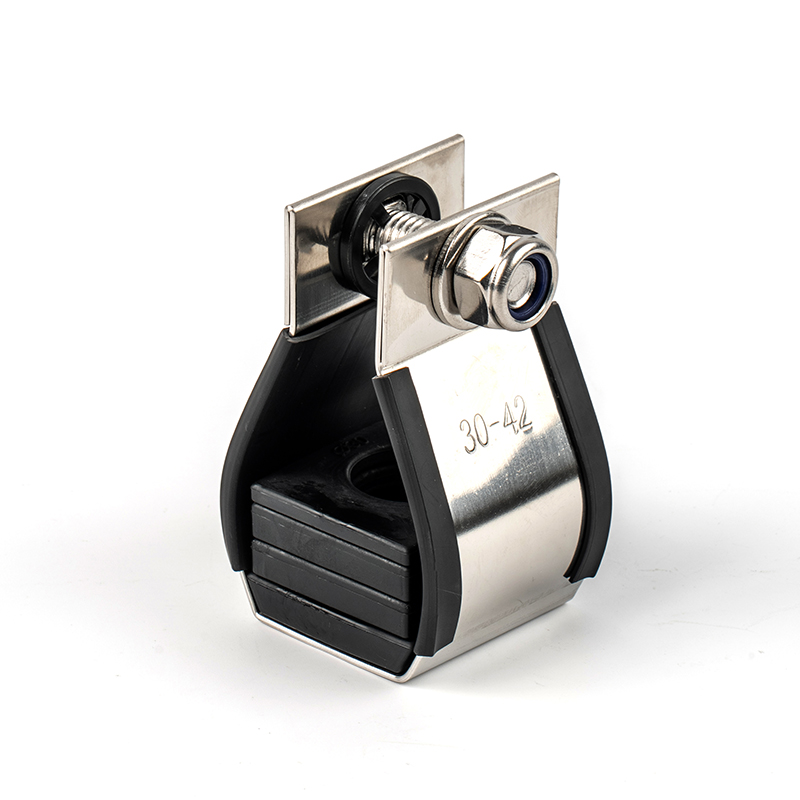
Manufactured from high-grade 316 stainless steel, ...
View more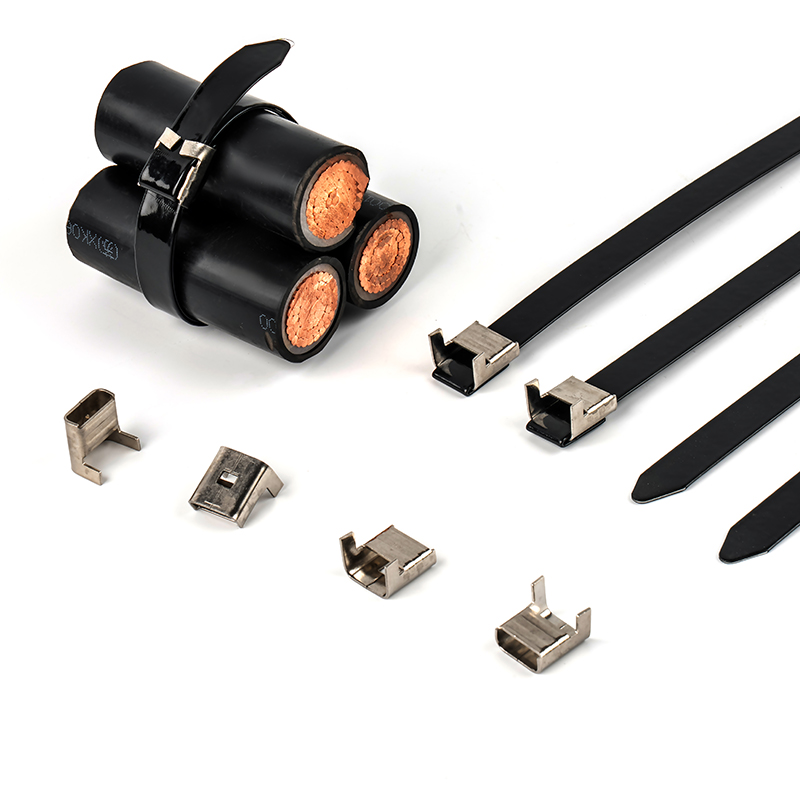
Brand Name: FengfanApproved Certificate: DNV &...
View moreContent
A rooftop installer replaces a 25 mm adhesive cable tie mount with a 20 mm screw-base version to save a few cents per fixing point. Six weeks of thermal cycling later, the DC string has moved, and the cable jacket is rubbing against the edge of the combiner box. The tie was never the weak point. The mount was.
So here is the conclusion first: choose the mount before the tie, size it by pull-off and side load rather than by tie width alone, and treat adhesive bases and screw bases as two different products with two different installation methods. The sections below explain what drives those decisions, where the common failures come from, and what to verify before you place an order.
A mount performs three jobs at once. It creates a fixing point where a cable cleat or a clamp would be overkill, it fixes the route so bundles stay parallel and clear of sharp edges and moving parts, and it spreads the force from the tie into a wider base so the panel does not take a point load.
Four variables decide how much load a mount can carry:
In field returns, three causes dominate: adhesive applied to a dusty or oily surface, ties tensioned until the head whitens, and side loads applied to a square base that was only ever rated for pull-off.
Most catalogue ranges come down to five families, and the fixing method decides where each one is appropriate.
| Style | Fixing method | Best suited to | Main risk |
|---|---|---|---|
| Adhesive base | Pressure-sensitive adhesive pad | Cabinets, electronics, retrofit work on panels that cannot be drilled | Peel and creep on dusty, oily or low-surface-energy surfaces |
| Screw or bolt base | One or two screws, or a bolt | Vibrating equipment, higher loads, accessible panels | Over-torquing cracks the base; screw heads can chafe the harness |
| Push or arrowhead mount | Pushed into a pre-drilled hole | Sheet-metal frames, automotive trim, high-volume assembly | Oversized holes reduce grip; the anchor is hard to reposition |
| Edge clip | Clips onto a panel edge | Wiring runs along flanges where drilling is not allowed | Edge thickness must match the clip within tolerance |
| Saddle or heavy-duty base | Bolted down, accepts a wide band | Cable trays, shipbuilding, offshore and outdoor racks | Bulkier footprint; needs the correct band width |
Two sizing details decide whether the joint holds. First, tie width: a 4.8 mm tie sitting in a 3.6 mm slot loads the head unevenly and lets it rotate under vibration. Second, tolerances: push mounts need a matched hole diameter, and edge clips need a known panel thickness, not an approximate one.
The tie is half of that joint. A standard self-locking nylon tie pulls its head tight against the slot of the mount, so a slot that is too wide allows movement that no amount of extra tension will fix.
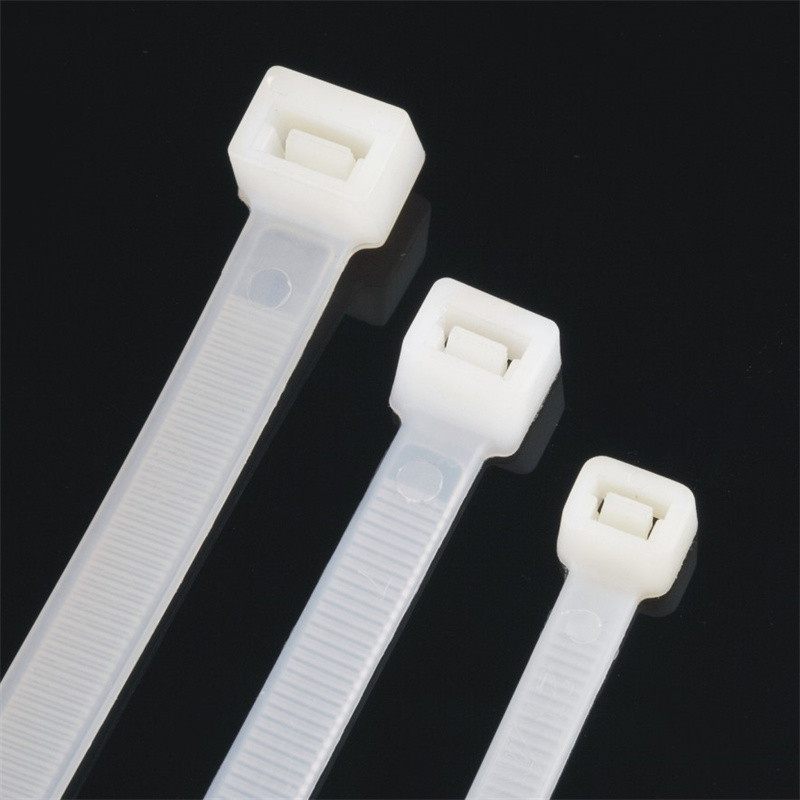 Nylon Cable Ties- Self-Lock TypeTechnical InformationView Product →
Material is chosen by the environment, not by strength. The same 25 mm base can be a ten-year fixing or a two-year problem depending on what it is moulded from.
Base size follows load. A 20 mm square base is usually enough for a light harness on a flat panel. Move up to 25 mm or larger when the route vibrates, when the mount sits at the end of a run, or when the tie is 4.8 mm or wider.
Where the environment rules out polymers, coated stainless steel ties hold tension far longer than nylon under UV and salt spray; the guide on how to choose stainless steel cable ties covers coating and width options in more detail.
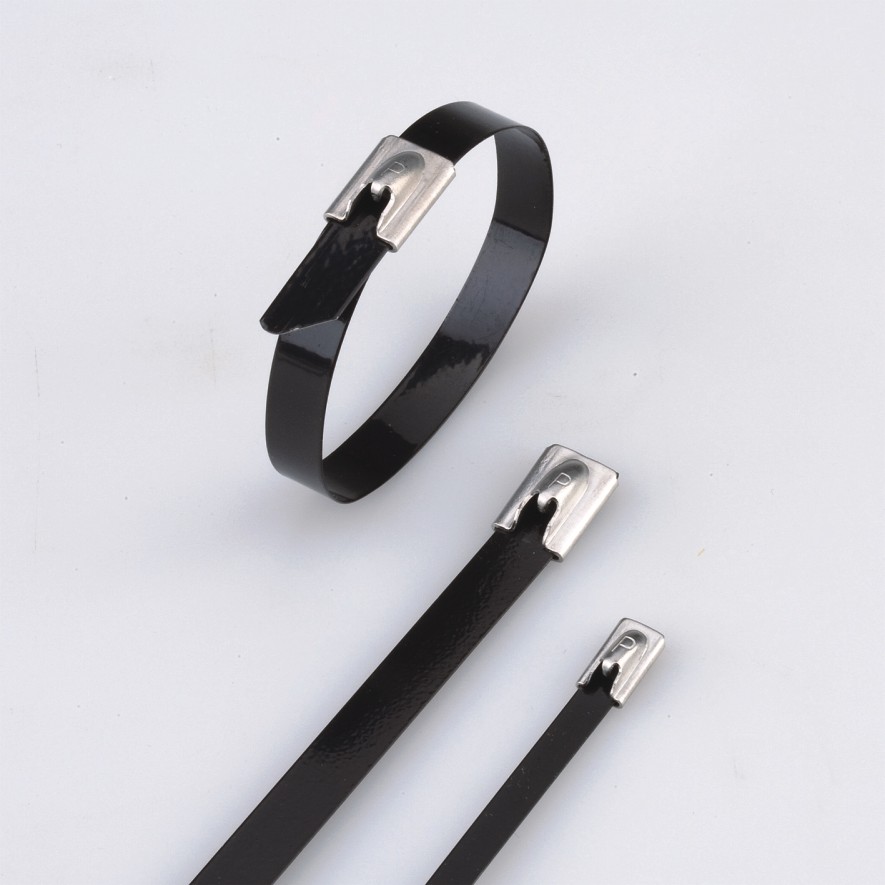 Stainless Steel Cable Ties- Ball-Lock Polyester Coated TiesTechnical Information Material: Stainless Steel Grade 304 or316 Coating: Polyester/Epoxy, Nylon 11 Working Temp: -40°Cto 150°C Description: Black Band with Metallic Bu...View Product →
Most mount failures are procedural rather than material. Six steps cover the majority of them.
Tie mounts are made for light and medium cable management. They are not short-circuit restraint, and they are not a substitute for a cleat on a medium-voltage or high-voltage route.
In those installations the cable itself has to be held against the peak fault current, so cleats are specified at a calculated spacing that comes from cable weight, fault level and support stiffness. The same logic applies to vibration. On railways, port machinery and offshore structures, an adhesive pad creeps and a single screw base can work loose, so the fixing method changes rather than the tie.
For rigid, high-load routes, stainless steel cleats bolted to the structure do the work a mount cannot: the cable is clamped directly rather than bundled and tied.
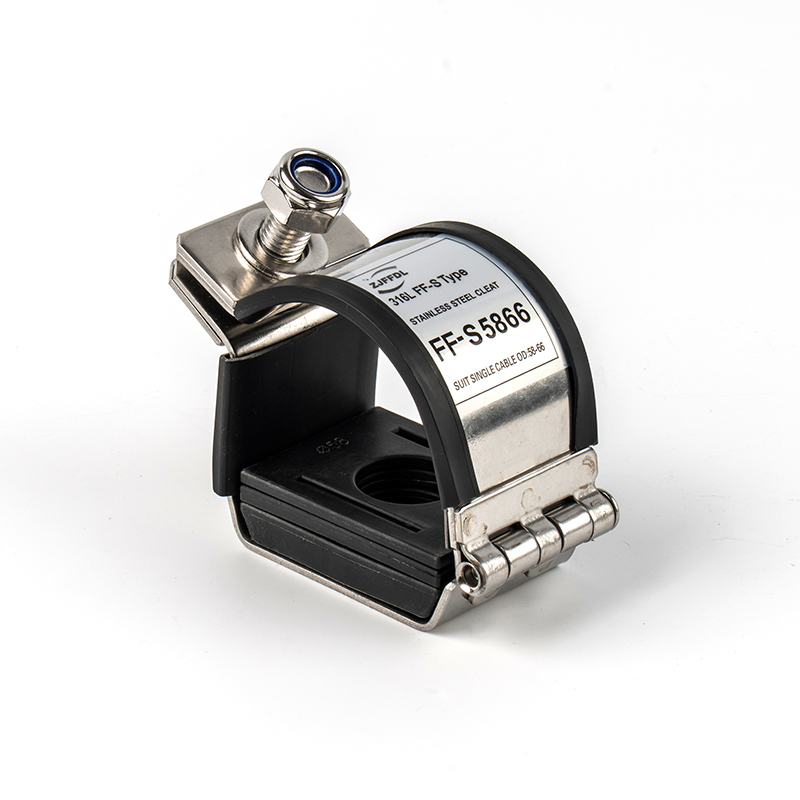 Stainless Steel 316 Single Cable Cleats For Cable Management ES SeriesLeave your requirements, and we will contact you!View Product →
Yes, with the right material. Use UV-stabilised black nylon, acetal or coated stainless steel, and check that the adhesive or the screw fixing is rated for the temperature swing on site. On hot metal roofs, adhesive pads soften and creep, so a screw base is the safer choice.
It depends far more on the fixing method than on the tie. A screwed four-way base may be rated in the low hundreds of newtons in pull-off, while an adhesive pad of the same footprint holds a fraction of that and much less in side load. Use the supplier figure for your exact substrate.
A mount holds a tie, and the tie holds the bundle. A cleat holds the cable itself and is rated for short-circuit forces, which is why MV and HV specifications call for cleats at defined spacing rather than a row of mounts.
Choose by tie width, bundle weight and load direction. Move up to the larger base when the route vibrates, when the mount is at the end of a run, or when the tie is 4.8 mm or wider.
The mount is a small part with a defined job: hold the tie, spread the load and survive the environment. When the fixing method and the material are matched to the route, the rest of the cable management usually behaves.
Zhejiang Fengfan Cable Fittings manufactures nylon ties, coated stainless steel ties, cable cleats, markers and the matching tensioning tools used in offshore, rail, automotive and power projects, and publishes product data for specification work.
The single cable Cleats made of 316 stainless steel is used for cable management. It is corrosion-resistant, high-temperature resistant and meets international standards. It is suitable for various ha...
See Detail
Manufactured from high-grade 316 stainless steel, this cable management system is specifically designed for secure cable retention in power generation, petrochemical, marine, offshore platforms, and c...
See Detail
Brand Name: FengfanApproved Certificate: DNV & ABS.Product Description: Cable Fixing Band and ClipsThe Lower Cost Alternative to Cable Cleats Product Benefits- Low profile finish- 316 grade stain...
See DetailMobile: +86-136 7685 3958
Email: lihai.fan@zjffdl.com
Mobile: +86-188 57530390
Email: alan.huang@zjffdl.com
No. 1116 Yasha Ave, Cao’e Street, Shangyu District, Shaoxing City, Zhejiang, China, 312300


+86-0575-8215 2808
/8200 8688/8239 2526

+86-0575-8215 2066
Copyright ©Zhejiang Fengfan Cable Fittings Co.,Ltd.
