


 English
 中文简体
中文简体
+86-0575-8215 2808
/8200 8688/8239 2526
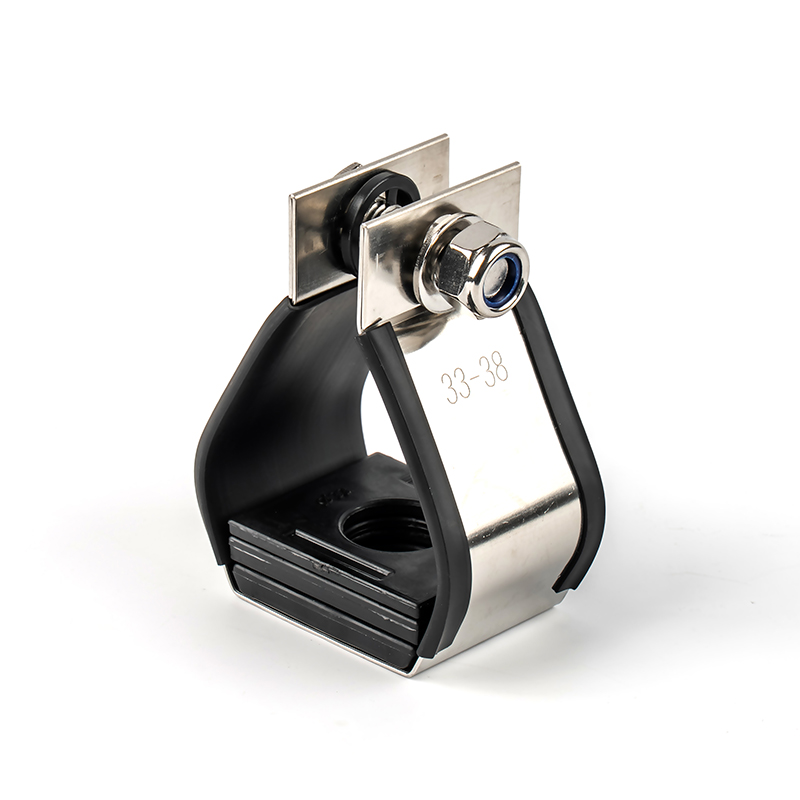
The single cable Cleats made of 316 stainless stee...
View more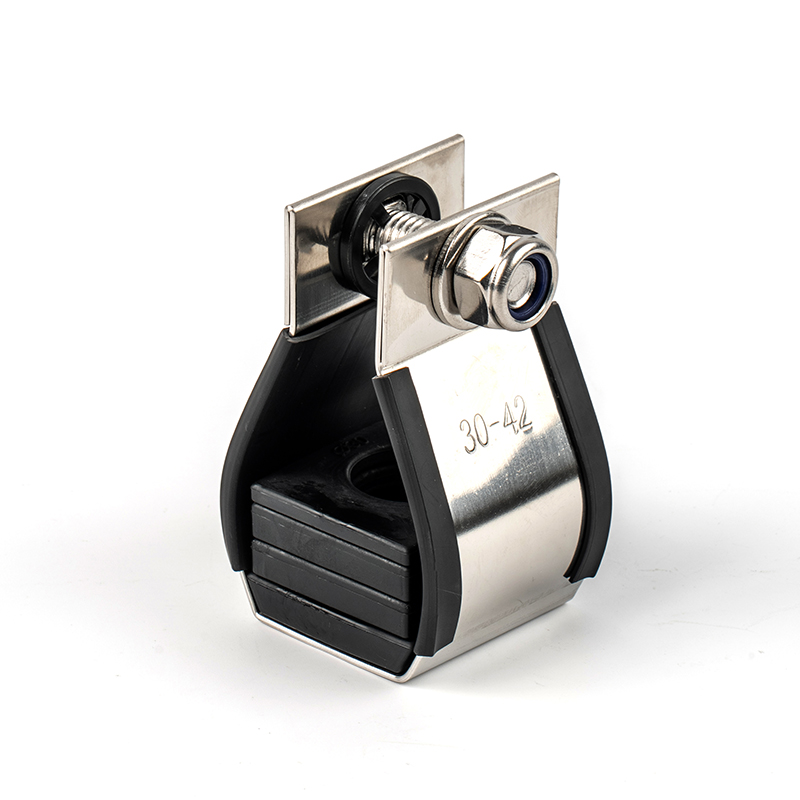
Manufactured from high-grade 316 stainless steel, ...
View more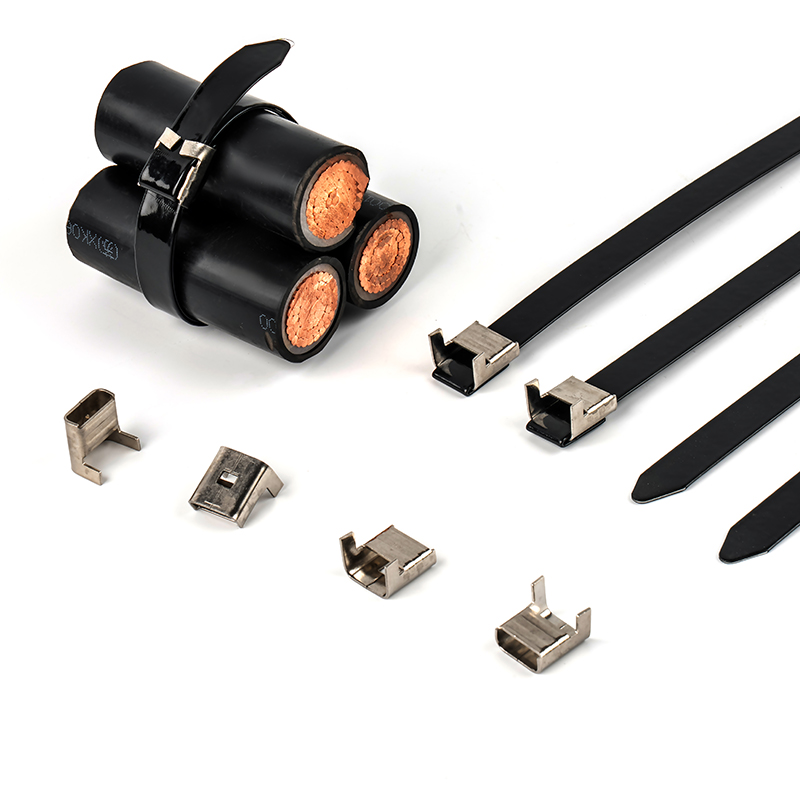
Brand Name: FengfanApproved Certificate: DNV &...
View moreContent
Stainless steel cable ties are the definitive fastening solution for environments where nylon or plastic ties fail. Made from Grade 304 or 316 stainless steel, they withstand temperatures from -80°C to +538°C, resist corrosion, UV, and chemicals, and deliver tensile strengths from 200 to 922 lbs — making them the professional standard across marine, industrial, petrochemical, and aerospace sectors.
Most cable tie conversations start and end with nylon. It is cheap, lightweight, and adequate for office cable management or low-load indoor wiring. But when conditions get hostile — heat, moisture, salt air, UV exposure, or mechanical vibration — nylon degrades and snaps. Stainless steel cable ties exist precisely for those conditions.
The core difference is material integrity over time. A standard PA66 nylon tie may begin to embrittle after 2–3 years of outdoor exposure. A stainless steel cable tie, by contrast, maintains structural performance for 20 to 30 years or more under comparable conditions. That longevity is not a minor upgrade; in critical infrastructure it eliminates the risk of mid-cycle failure.
Not every stainless steel tie is built the same. Two grades dominate the market, and the coating options expand the performance envelope further.
Grade 304 is the industry workhorse — cost-effective, widely available, and fully adequate for most industrial, construction, and utility applications. Grade 316 adds molybdenum to its alloy composition, which significantly improves resistance to chlorides and salt water. For marine installations, offshore platforms, chemical processing, and coastal environments, Grade 316 is the correct choice. Zhejiang Fengfan Cable Fittings Co., Ltd. produces both grades and holds DNV and ABS certifications, which are mandatory for offshore and marine applications.
| Coating Type | Working Temperature | Primary Benefit | Typical Application |
|---|---|---|---|
| Uncoated (Bare Metal) | -80°C to +538°C | Maximum temperature range, fireproof | Petrochemical, power plants, aerospace |
| PVC Coated | -40°C to +85°C | Protects cables from abrasion and sharp edges | Automotive wiring, general outdoor |
| Polyester / Epoxy (Nylon 11) | -40°C to +150°C | Chemical resistance, UV protection | Utilities, communications, railways |
| PPA Coated | -40°C to +150°C | High abrasion resistance, smooth finish | Industrial cable management |
| Fully Polyester Coated | -80°C to +538°C | Full strap protection at extreme temps | Petrochemical labeling and pipe marking |
The semi-coated variant — where only the outer band surface is coated — offers a middle ground: it protects the cable or pipe being bundled while retaining nearly the full temperature range of bare stainless steel.
The head design of a stainless steel cable tie determines both its installation speed and its removal behavior. Two architectures are standard.
The ball-lock mechanism uses a stainless steel ball bearing inside the buckle head. When the strap tail is pulled through and tensioned, the ball locks into the strap serrations and holds under load. This system is favored where repeated access or occasional repositioning is needed, and it is the dominant design for marine and utility applications. A roller-ball variant further refines locking strength by reducing slippage at the contact point.
The L-type buckle provides a more permanent grip. The strap end is folded and engaged into a fixed locking tab, making intentional release more difficult. L-type ties are preferred for permanent installations where vibration, shock loads, or thermal cycling could otherwise cause a ball-lock to work loose over extended periods.
Saltwater corrosion makes Grade 316 uncoated ties the minimum standard for vessel wiring harnesses, dock equipment, and offshore platform cable runs. DNV and ABS certification confirms compliance with classification society requirements.
Refinery pipe racks, heat exchanger bundles, and power plant cable trays operate at temperatures that destroy nylon instantly. Uncoated 304 or 316 ties — rated to 538°C — are the standard fastening method in these facilities.
High-frequency vibration during transit accelerates fatigue failure in plastic ties. Stainless steel ties, with anti-vibration properties and wide temperature tolerance, keep cable bundles intact across the full service life of rolling stock and vehicles.
Aircraft and defense hardware face simultaneous pressure differentials, temperature swings, and vibration profiles that exceed what any polymer tie can sustain. Tensile strengths of up to 922 lbs — available in 49-inch lengths — satisfy the most demanding aerospace bundling specifications.
Outdoor solar arrays face decades of UV, wind load, and thermal cycling. Stainless steel cable ties outlast the panels themselves, making them the logical fastening choice for utility-scale installations where maintenance access is limited.
Grade 304 and 316 stainless steel are FDA-approved for food contact and meet USDA requirements for food processing equipment. In hygiene-critical environments, stainless ties resist bacterial growth and are compatible with steam cleaning and chemical sanitizers.
Stainless steel cable ties can be installed by hand on accessible bundles. Thread the strap through the buckle head, loop it around the bundle, feed the tail back through the head, and pull to the required tension. Trim the excess tail flush with snips or a dedicated cutting tool to eliminate sharp projections.
For high-volume installation or applications where hand tension is insufficient or inconsistent, a stainless steel cable tie installation tool applies precise, repeatable tension and automatically cuts the excess tail. This is the recommended method for industrial projects where dozens or hundreds of ties must meet a specific tension specification.
A practical safety note: the cut tail of a stainless steel tie has a sharp edge. Protective gloves should be worn during installation and trimming. Filing or de-burring the cut end is good practice when the tie is accessible to personnel.
Stainless steel cable ties are available across a broad size range to match bundle diameter and load requirements. Standard lengths run from 5 inches (127 mm) to 49 inches (1245 mm). Tensile strengths range from 200 lbs for lighter-duty commercial ties up to 922 lbs for heavy industrial and aerospace specifications.
For bundle sizing: measure the outer circumference of the cable bundle and select a tie whose effective loop length exceeds that measurement by at least 20% to ensure adequate tail engagement in the buckle head. Overly short ties that are forced to maximum extension sacrifice locking reliability.
Zhejiang Fengfan Cable Fittings Co., Ltd. manufactures stainless steel cable ties in both Grade 304 and 316, across ball-lock and L-type head designs, with the full range of coating options. Their products are certified to DNV and ABS standards, enabling direct use in marine and offshore projects governed by classification society specifications. The company exports to more than 20 countries and offers OEM and ODM manufacturing for customers requiring custom dimensions, coatings, or labeling configurations.
Their fully polyester coated and ball-lock semi-coated tie ranges specifically address the identification and pipe marking requirements of petrochemical facilities, where color coding and legibility in low-light or difficult-access environments are as important as the fastening performance itself.
Choosing by price alone without accounting for environment leads to premature failure. A nylon tie that costs a fraction of a stainless steel tie offers no savings if it must be replaced annually in an outdoor installation — or worse, if it fails mid-service and causes cable damage or a safety incident.
Specifying Grade 304 in marine or high-chloride environments is a second common error. The cost differential between 304 and 316 is modest, but the corrosion resistance of 316 in salt or chemical exposure is substantially superior.
Finally, neglecting the coating choice in applications involving sensitive cables or pipes can result in the bare stainless edge cutting into insulation over time, especially under vibration. A PVC or polyester-coated tie eliminates that failure mode entirely.
The single cable Cleats made of 316 stainless steel is used for cable management. It is corrosion-resistant, high-temperature resistant and meets international standards. It is suitable for various ha...
See Detail
Manufactured from high-grade 316 stainless steel, this cable management system is specifically designed for secure cable retention in power generation, petrochemical, marine, offshore platforms, and c...
See Detail
Brand Name: FengfanApproved Certificate: DNV & ABS.Product Description: Cable Fixing Band and ClipsThe Lower Cost Alternative to Cable Cleats Product Benefits- Low profile finish- 316 grade stain...
See DetailMobile: +86-136 7685 3958
Email: lihai.fan@zjffdl.com
Mobile: +86-188 57530390
Email: alan.huang@zjffdl.com
No. 1116 Yasha Ave, Cao’e Street, Shangyu District, Shaoxing City, Zhejiang, China, 312300


+86-0575-8215 2808
/8200 8688/8239 2526

+86-0575-8215 2066
Copyright ©Zhejiang Fengfan Cable Fittings Co.,Ltd.
