


 English
 中文简体
中文简体
+86-0575-8215 2808
/8200 8688/8239 2526

The single cable Cleats made of 316 stainless stee...
View more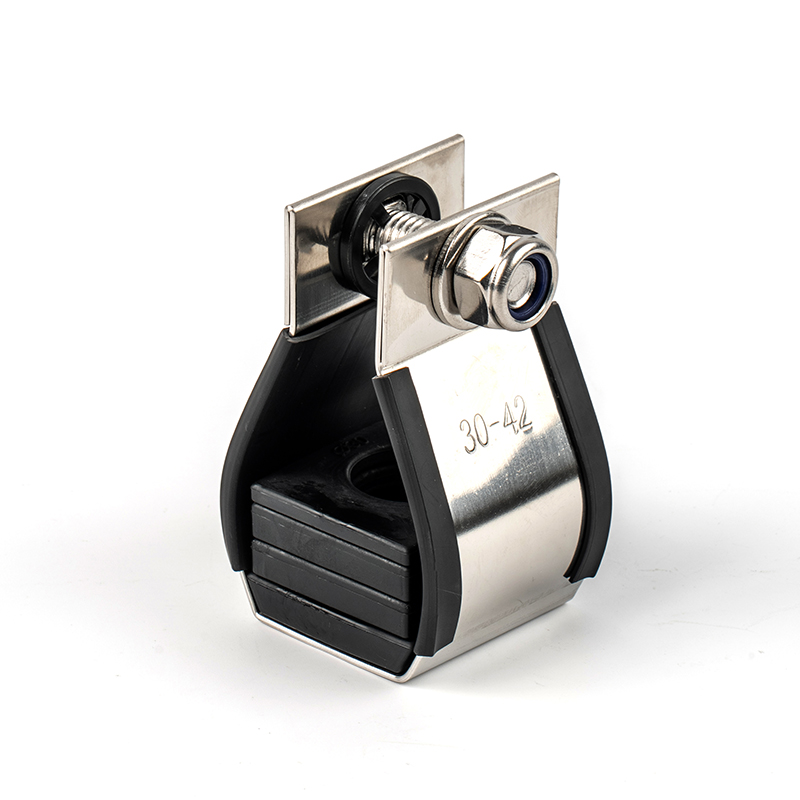
Manufactured from high-grade 316 stainless steel, ...
View more
Brand Name: FengfanApproved Certificate: DNV &...
View moreContent
Cable cleats are the mechanical restraint that keeps power cables in place when a short circuit hits. During a fault, cables can generate electromagnetic forces strong enough to whip, twist, or snap loose from a tray in a fraction of a second. A properly rated cable cleat absorbs that force, holds the conductors in their original geometry, and prevents the fault from escalating into fire, arc flash, or cascading equipment damage. Without cleats — or with the wrong ones — a single fault event can turn into a multi-day outage and a costly repair bill.
When a short circuit occurs, the current passing through parallel conductors can spike to tens of thousands of amps for a few cycles. This produces a strong mechanical force between the cables, pushing them apart or slamming them together depending on phase arrangement. In a trefoil (triangular) formation, for example, a fault current of 40 kA can generate peak forces exceeding 1,000 N per meter of cable run. If nothing holds the cables in position, that force translates directly into movement — cables can jump out of a tray, crack their insulation against sharp edges, or pull connectors loose at switchgear terminals.
The damage rarely stays contained to one cable. Loose conductors can strike adjacent circuits, spreading the fault and multiplying repair time. In marine and offshore installations, an unrestrained cable failure can also compromise watertight bulkhead penetrations, turning an electrical problem into a structural one.
Typical peak electromagnetic force on a trefoil cable run during a 40 kA fault
Time window in which fault forces peak — mechanical restraint has to react instantly
The international standard used to test and rate cable cleats for short-circuit withstand
A cable cleat is not simply a bracket. It is a load-rated component engineered to grip a cable bundle at a fixed spacing along a tray, ladder, or wall run, and to transfer short-circuit forces safely into the supporting structure instead of into the cable jacket or nearby equipment. Three things determine how well a cleat performs:
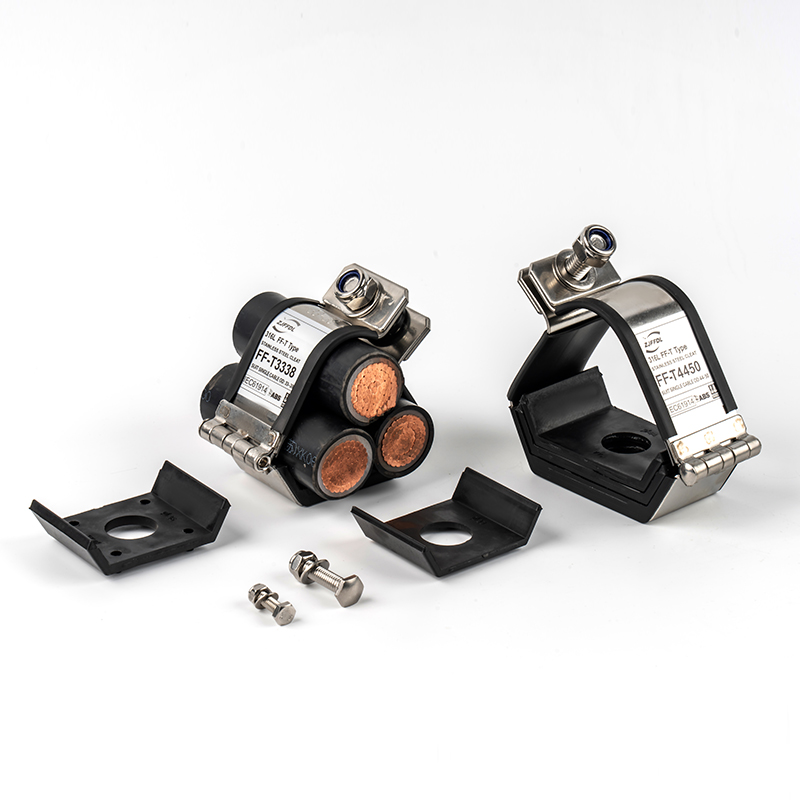
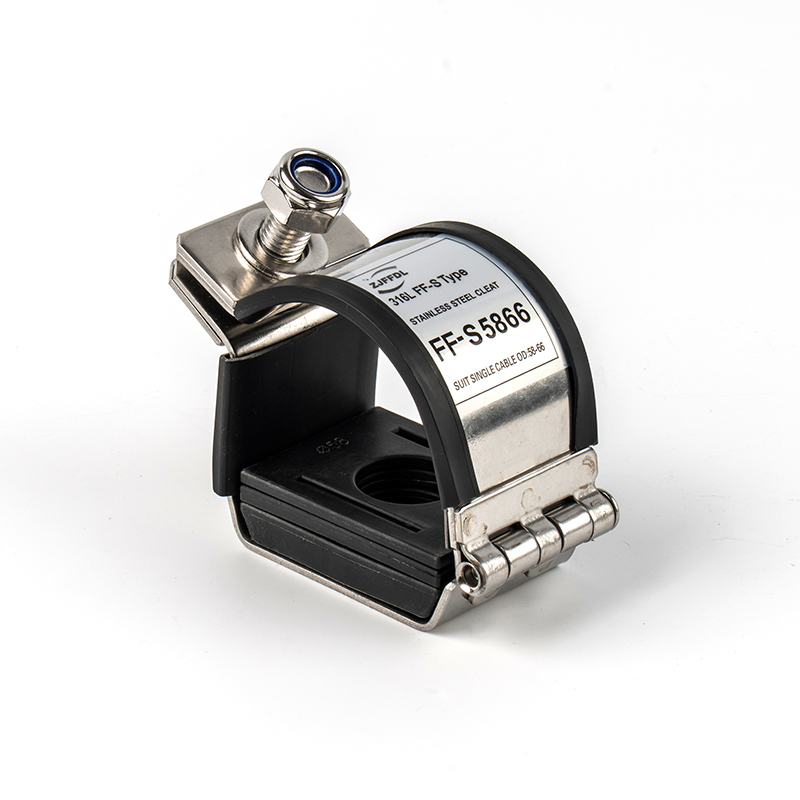
Zhejiang Fengfan Cable Fittings produces cleats in single, trefoil, and quad body styles using 316 stainless steel, which is the grade most commonly specified for offshore platforms, port machinery, and coastal power infrastructure because it tolerates chloride exposure without pitting.
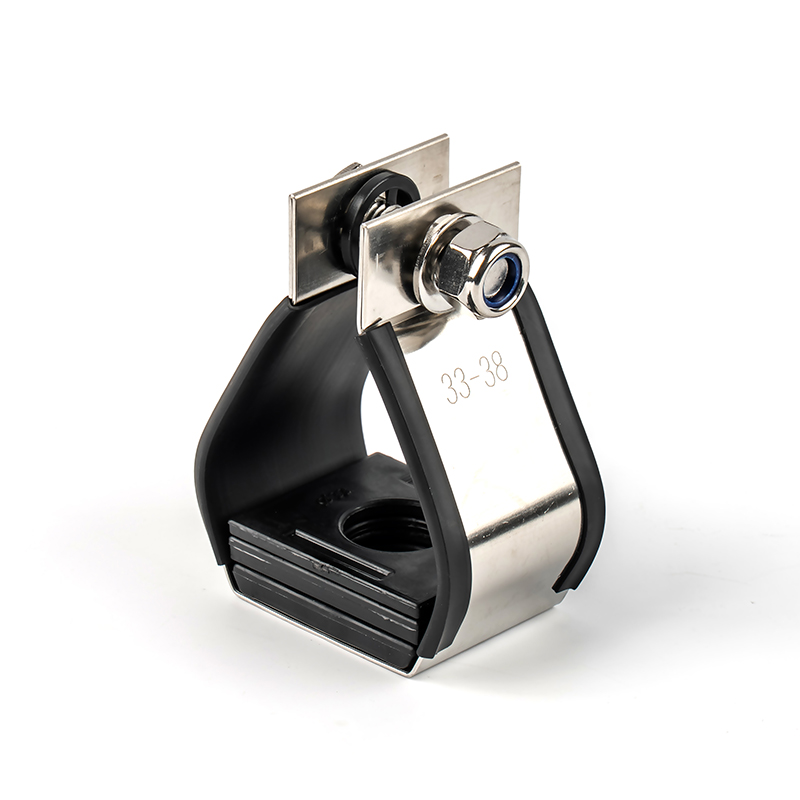
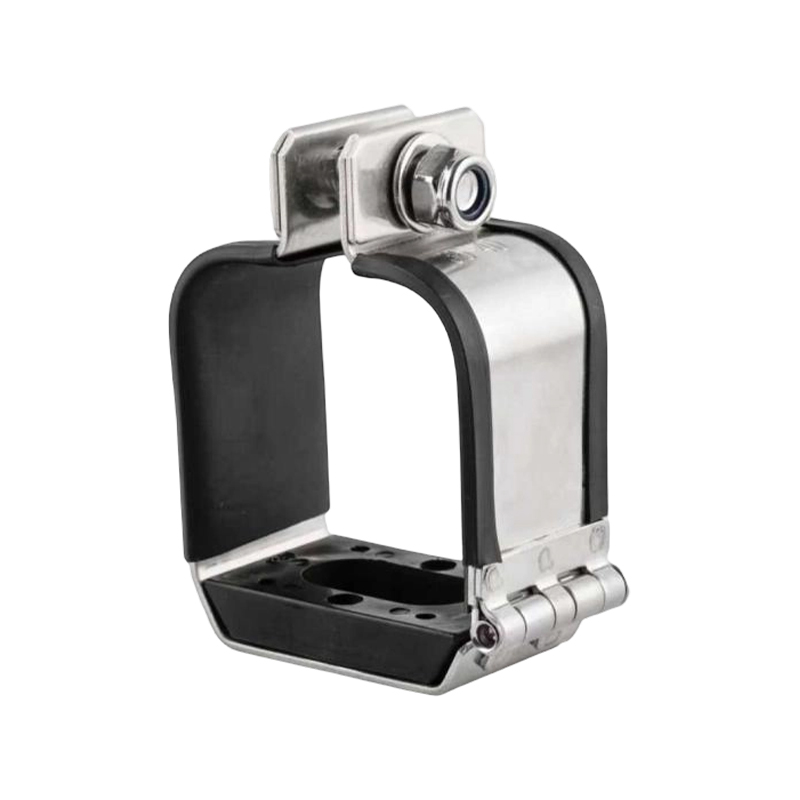
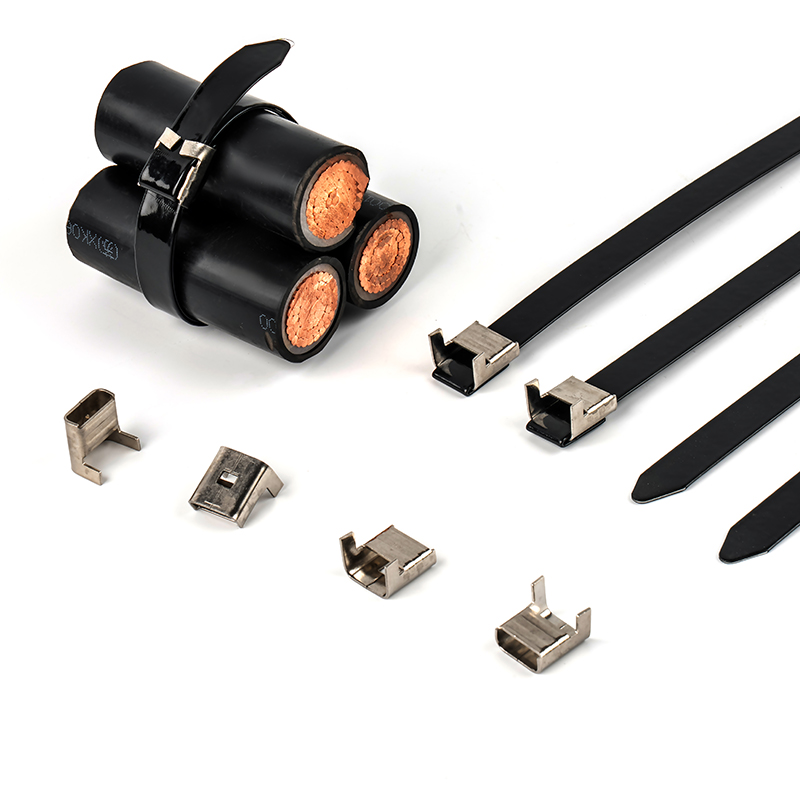
Below is a selection of stainless steel cable cleat configurations built for cable tray and support systems, ranging from single-cable retention to quad bundle arrangements and coated fixing bands.
Cable cleats, cable clamps, and cable ties all hold cables in place, but they are not interchangeable. Choosing the wrong one for a fault-current application is one of the most common — and most expensive — mistakes in cable tray design.
| Product | Primary Function | Typical Rating | Best Fit |
|---|---|---|---|
| Cable Cleats | Withstand short-circuit electromagnetic force | Tested to IEC 61914 | Power and control cables in trays, ladders, offshore platforms |
| Cable Clamps | General-purpose fixing of cables or objects | No specific fault rating | Light fixing, non-critical circuits, general mounting |
| Cable Ties (Ball Lock / Barb-lock) | Bundling and routing | Tensile strength only | Low-voltage bundling, harnessing, panel wiring |
| Stainless Steel Strapping | Continuous banding of large bundles or ducts | Tensile / corrosion rated | Long cable runs, pipe and duct securing |
In practice, engineers frequently combine products: cleats hold the main power cable geometry against fault forces, while cable ties or stainless steel strapping manage smaller instrumentation bundles running alongside, and cable markers keep the whole system identifiable during maintenance.
Cleat inner dimensions must match the cable OD closely. A cleat that is too loose allows movement before it engages; one that is too tight can compress and damage the insulation over time.
Single cleats suit one conductor per position, trefoil cleats suit three-phase triangular bundles, and quad cleats suit four-cable arrangements common in larger feeder circuits.
Manufacturer test data specifies a maximum spacing between cleats for a given fault current rating. Following that interval is what keeps the whole run within its tested withstand capacity.
316 stainless steel is the standard choice for marine, coastal, and chemical-exposure sites. For non-metallic or weight-sensitive applications, weather resistant acetal cleats are sometimes specified instead.
Cable cleats are specified wherever a fault in the power system has to be physically contained rather than just electrically interrupted. That includes offshore oil and gas platforms, shipbuilding and marine vessels, port and crane machinery, railway signaling and traction power, substations, nuclear power facilities, and telecommunication infrastructure. In each of these environments, cable trays often run long distances through areas that are difficult or costly to access for repair, which is exactly why the cleats holding those cables in place need to be rated correctly the first time.
Do cable cleats replace the need for cable ties?
No. Cleats are for fault-current restraint on power cables; ties such as ball lock stainless steel ties or nylon coated stainless steel ties are for bundling and routing lighter cable groups. Most installations use both.
Why is 316 stainless steel used instead of 304?
Grade 316 contains molybdenum, which significantly improves resistance to chloride pitting. That makes it the preferred grade for offshore, coastal, and chemical-processing environments where fault protection has to last for decades without corrosion failure.
Can PPA coated bands be used with cable cleats?
Yes. PPA coated stainless steel bands are often used as the fixing strap that secures the cleat body to a tray or structural member, adding an extra layer of insulation and corrosion protection at the contact point.
The single cable Cleats made of 316 stainless steel is used for cable management. It is corrosion-resistant, high-temperature resistant and meets international standards. It is suitable for various ha...
See Detail
Manufactured from high-grade 316 stainless steel, this cable management system is specifically designed for secure cable retention in power generation, petrochemical, marine, offshore platforms, and c...
See Detail
Brand Name: FengfanApproved Certificate: DNV & ABS.Product Description: Cable Fixing Band and ClipsThe Lower Cost Alternative to Cable Cleats Product Benefits- Low profile finish- 316 grade stain...
See DetailMobile: +86-136 7685 3958
Email: lihai.fan@zjffdl.com
Mobile: +86-188 57530390
Email: alan.huang@zjffdl.com
No. 1116 Yasha Ave, Cao’e Street, Shangyu District, Shaoxing City, Zhejiang, China, 312300


+86-0575-8215 2808
/8200 8688/8239 2526

+86-0575-8215 2066
Copyright ©Zhejiang Fengfan Cable Fittings Co.,Ltd.
