


 English
 中文简体
中文简体
+86-0575-8215 2808
/8200 8688/8239 2526
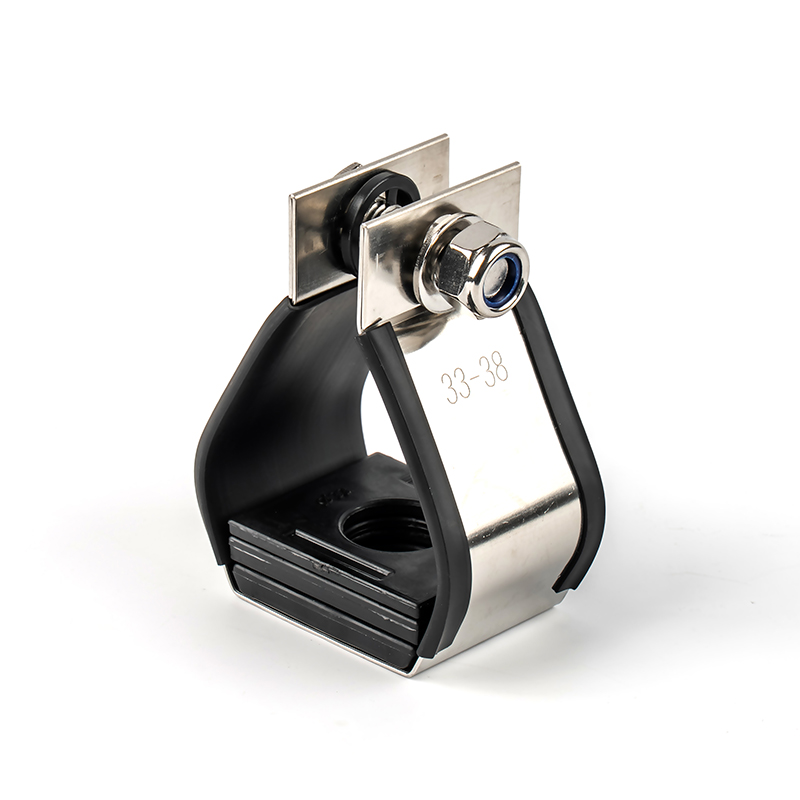
The single cable Cleats made of 316 stainless stee...
View more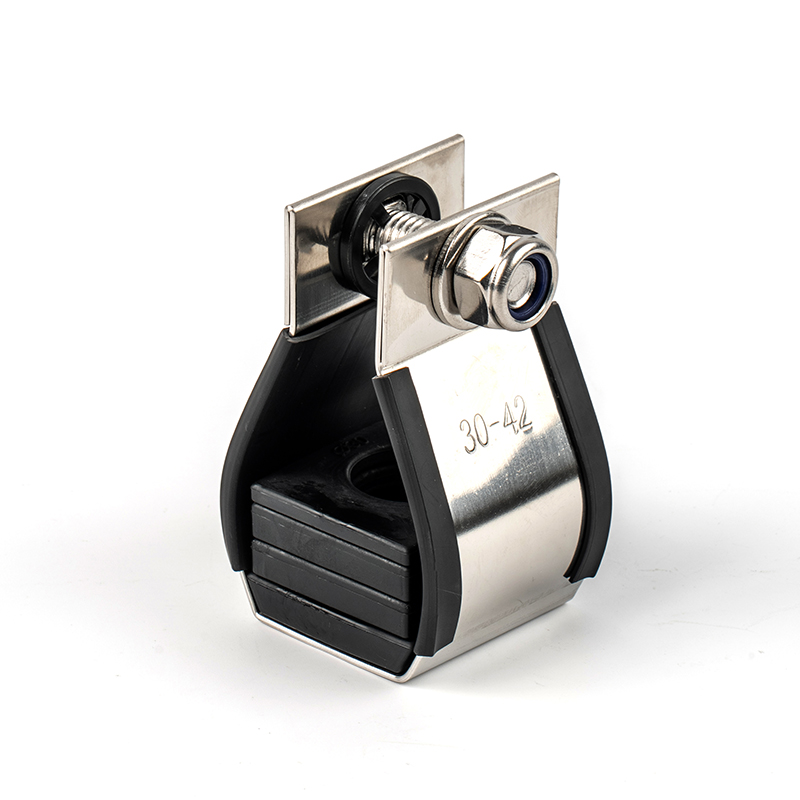
Manufactured from high-grade 316 stainless steel, ...
View more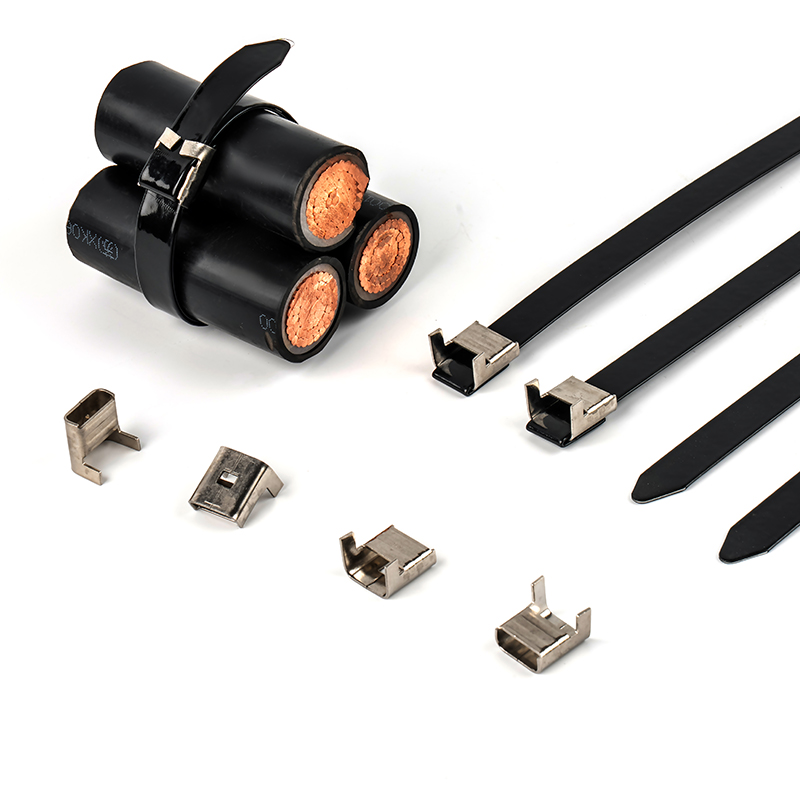
Brand Name: FengfanApproved Certificate: DNV &...
View moreContent
For marine and offshore cable runs, stainless steel readable markers (grade 316) paired with nylon reel-fed marker carriers are the two formats that consistently hold up. Stainless steel handles splash zones, deck penetrations, and exposed switchgear where salt fog and mechanical impact are constant, while UV-stabilized nylon carriers cover high-density panel and junction box labeling below deck. Standard PVC clip tags and paper-insert labels fail within one to three years in this setting and should not be specified for any permanent offshore installation.
Offshore platforms and vessels combine three stresses that rarely appear together on land: continuous salt spray, elevated UV exposure from open water reflection, and constant low-frequency vibration from engines, pumps, and wave motion. Salt fog concentrations on exposed platform decks can exceed 5 percent, and UV intensity offshore runs roughly 1.3 times higher than equivalent onshore sites. Under these conditions, unmodified plastics begin to chalk, curl at the edges, and crack within two to three years, and printed text becomes unreadable long before the marker physically fails.
This is why classification societies and shipyards specify marker materials the same way they specify cable ties and clamps for the same environment: by corrosion class and mechanical retention, not by print clarity alone. A marker that looks correct on day one but delaminates by year three creates the exact misidentification risk it was installed to prevent.
Stainless steel readable markers are the standard choice anywhere a cable is exposed to direct spray, washdown, or handling by maintenance crews. Made from 304 or 316 grade stainless steel, these markers stamp or engrave the identification code directly into the metal, so the information cannot wash off, fade, or peel regardless of humidity. 316 grade is the safer pick whenever the run sits within reach of saltwater mist or deck wash, since it resists pitting corrosion far better than 304 in chloride-rich air.
These markers are typically secured with a stainless steel readable label carrier, a high-strength plastic strip that holds the tag against the cable and flexes with cable movement without cracking. Because the carrier and the tag are separate components, damaged tags can be swapped individually without re-running the whole identification system.
Inside control rooms, switchgear cabinets, and communication panels, cable density is high and space is tight, which makes reel-packed nylon cable markers the more practical format. Instead of pre-cut single tags, the marker feeds off a roll and is cut to length on site, cutting waste and letting one roll cover an entire panel run. A matching nylon cable marker carrier holds the printed section flat against the cable, similar in function to the stainless steel carrier but suited to lighter, non-metallic runs.
For offshore duty, the nylon compound needs UV-326 absorbers and HALS light stabilizers built into the material. Modified nylon markers with this treatment retain more than 80 percent of their tensile strength after accelerated salt and UV aging, compared to standard nylon, which begins powdering within two to three seasons in the same conditions. Where fire safety rules apply, such as engine rooms and accommodation spaces, flame-retardant nylon markers modified with red phosphorus or magnesium hydroxide reach UL94 V-0 ratings, an important spec point for any offshore procurement checklist.
The formats referenced above are manufactured as a matched product line, so tags, carriers, and roll systems can be specified together for one installation.
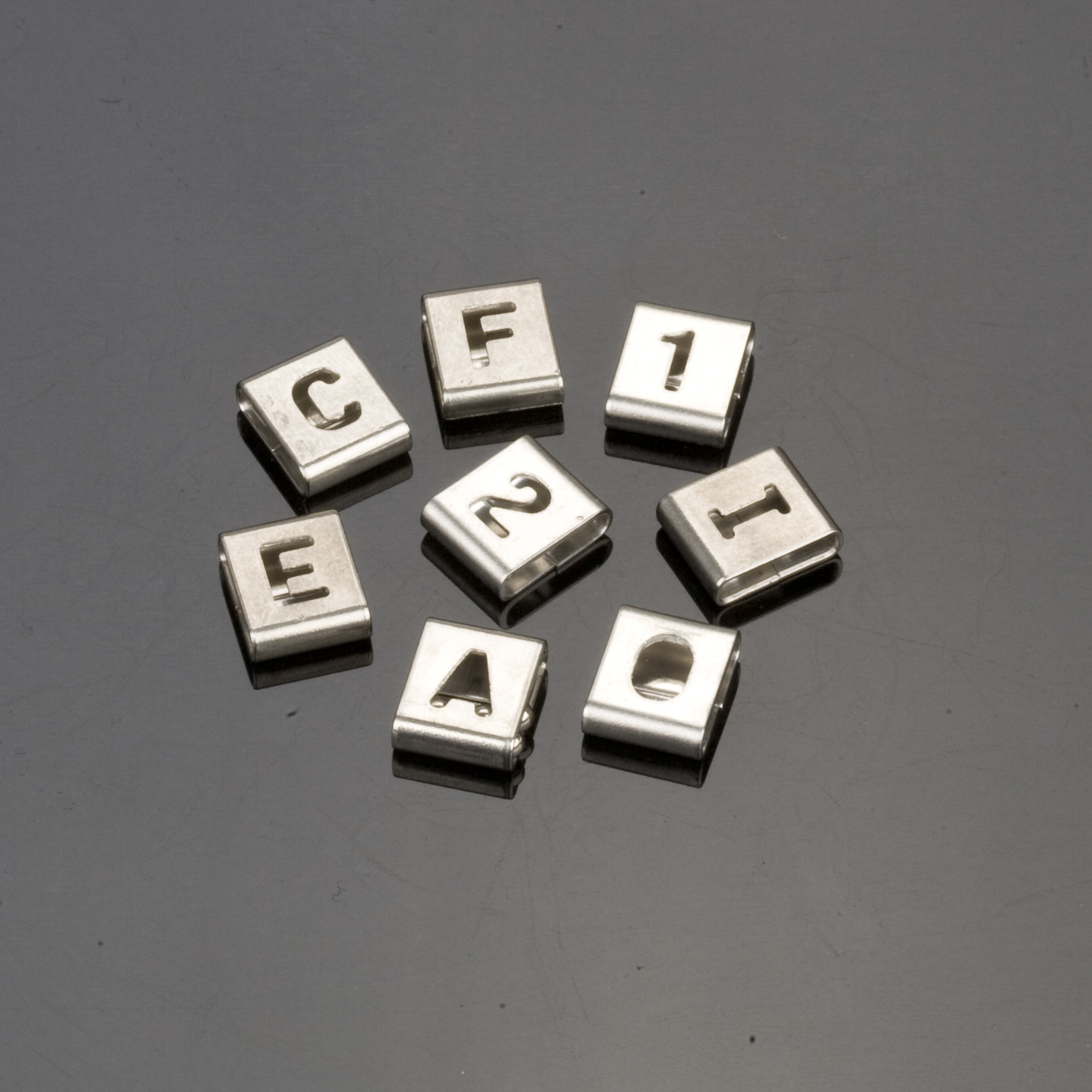
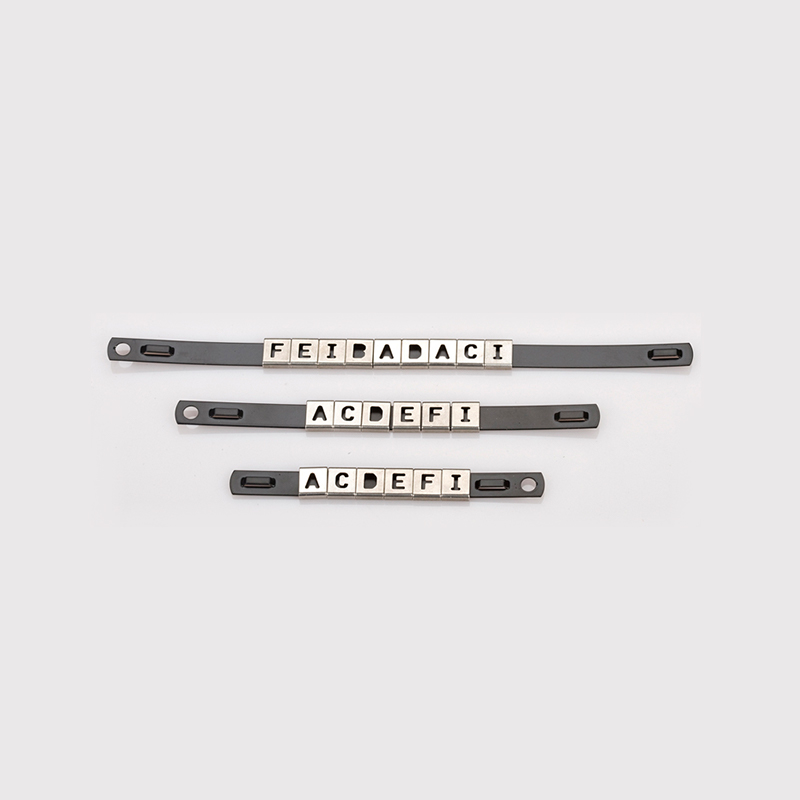
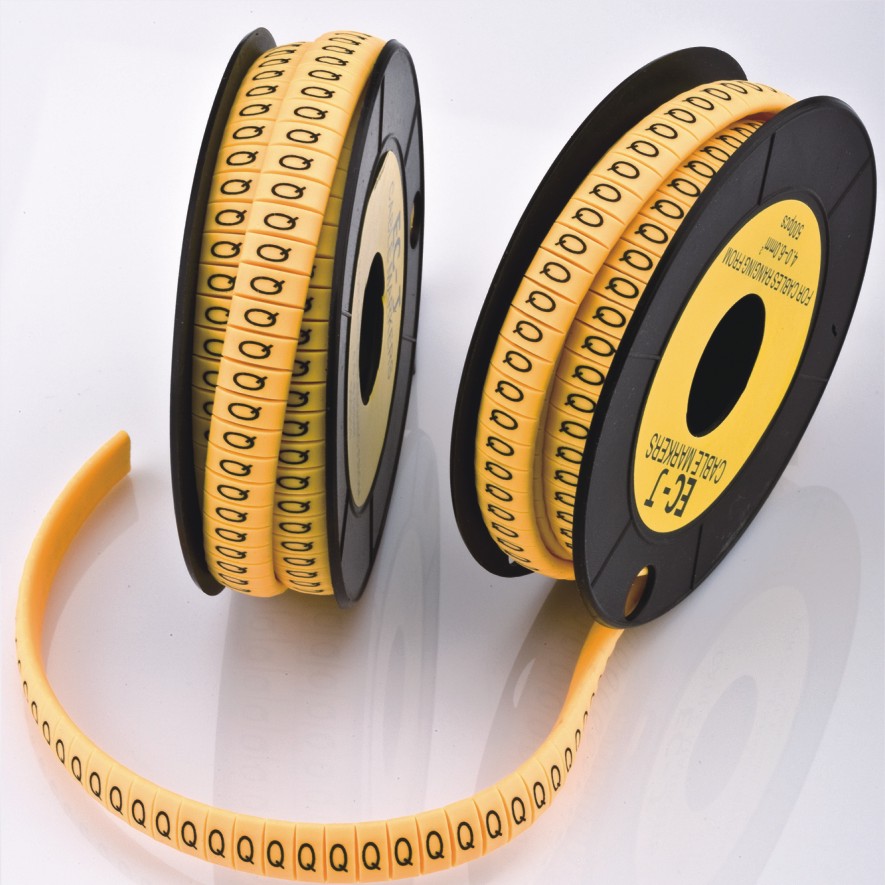
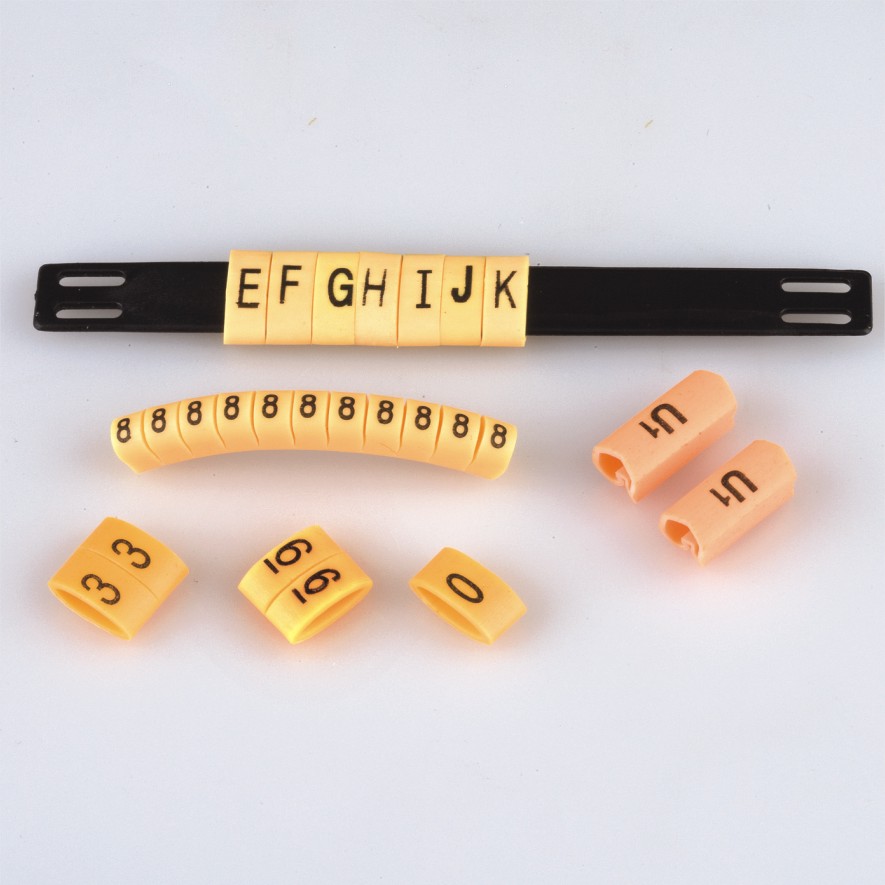
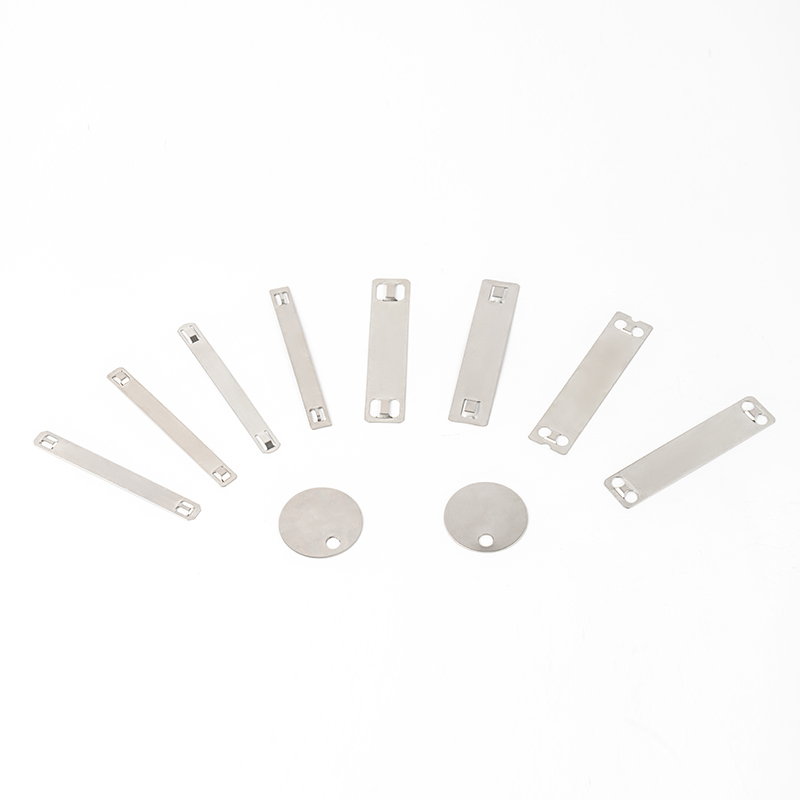
The right marker depends on exactly where the cable sits, not just the fact that a project is offshore overall. The table below maps each format to its typical zone on a vessel or platform.
| Marker Format | Best Suited Zone | Key Advantage |
| Stainless steel readable marker (316) | Deck penetrations, bilge, exposed switchgear | No fading, immune to washdown and salt fog |
| Stainless steel marker with carrier | Cable trays, exposed conduit runs | Individually replaceable tags |
| UV-stabilized nylon reel marker | Control rooms, junction boxes, comms racks | Fast application, low material waste |
| Flame-retardant nylon marker | Engine rooms, accommodation wiring | Meets UL94 V-0 fire performance |
| Standard PVC clip tag | Not recommended for offshore duty | Low cost, but short service life in salt fog |
Cable markers rarely work alone on a vessel or platform. A durable identification system is only as good as the fastening hardware holding the cable in place around it, so most shipyards specify the marker together with the rest of the cable fitting package in one purchase order.
Cable Ties made from stainless steel are the standard fastening method next to these markers, since plastic ties become brittle in the same UV and salt conditions that damage plain nylon labels. Ball Lock Stainless Steel Ties and Ball Lock semi-coated ties are common for bundling runs behind the marker point, while Nylon Coated Stainless Steel Ties and PPA Coated Ties add a protective sleeve over the metal band where the tie contacts insulation, reducing wear at the contact point. For lighter interior runs, Barb-lock Nylon Cable Ties handle bundling where full metal hardware is not required.
Where cables need to be routed along structural steel rather than bundled, Cable Clamps and Cable Cleats take over, holding the run against trays or supports and protecting it during short-circuit events. Stainless Steel Strapping is typically used for larger bundles or where a continuous band is needed across an irregular surface. For components exposed to extreme temperature swings, Weather Resistant Acetal parts are specified for buckles, saddles, and clips that need to stay dimensionally stable outdoors.
Specifying all of these together, rather than sourcing markers and fasteners separately, keeps corrosion class and temperature rating consistent across the whole cable route, which is what inspectors check during commissioning.
The single cable Cleats made of 316 stainless steel is used for cable management. It is corrosion-resistant, high-temperature resistant and meets international standards. It is suitable for various ha...
See Detail
Manufactured from high-grade 316 stainless steel, this cable management system is specifically designed for secure cable retention in power generation, petrochemical, marine, offshore platforms, and c...
See Detail
Brand Name: FengfanApproved Certificate: DNV & ABS.Product Description: Cable Fixing Band and ClipsThe Lower Cost Alternative to Cable Cleats Product Benefits- Low profile finish- 316 grade stain...
See DetailMobile: +86-136 7685 3958
Email: lihai.fan@zjffdl.com
Mobile: +86-188 57530390
Email: alan.huang@zjffdl.com
No. 1116 Yasha Ave, Cao’e Street, Shangyu District, Shaoxing City, Zhejiang, China, 312300


+86-0575-8215 2808
/8200 8688/8239 2526

+86-0575-8215 2066
Copyright ©Zhejiang Fengfan Cable Fittings Co.,Ltd.
