


 English
 中文简体
中文简体
+86-0575-8215 2808
/8200 8688/8239 2526
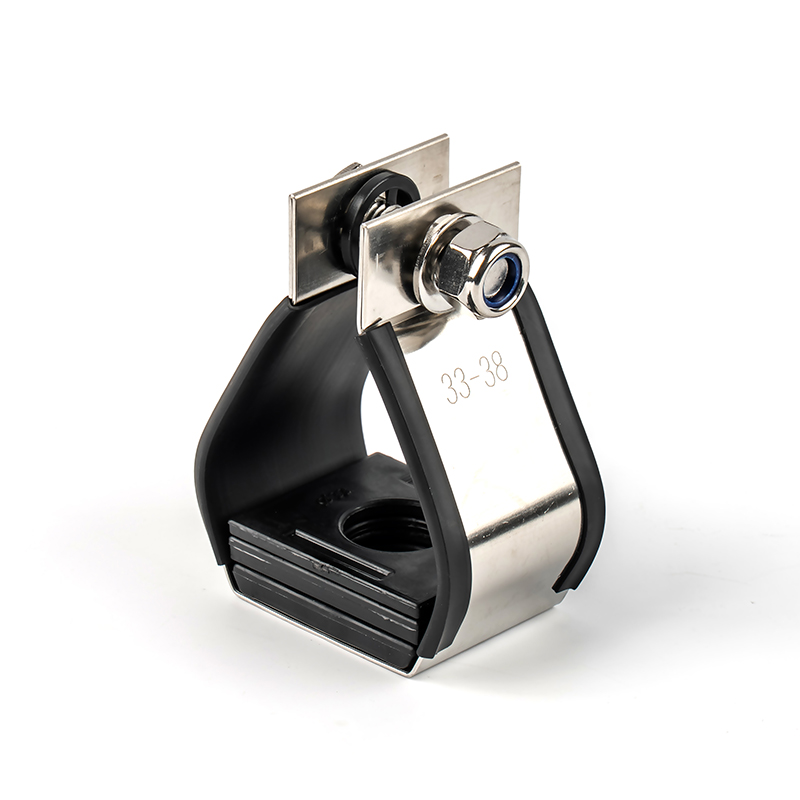
The single cable Cleats made of 316 stainless stee...
View more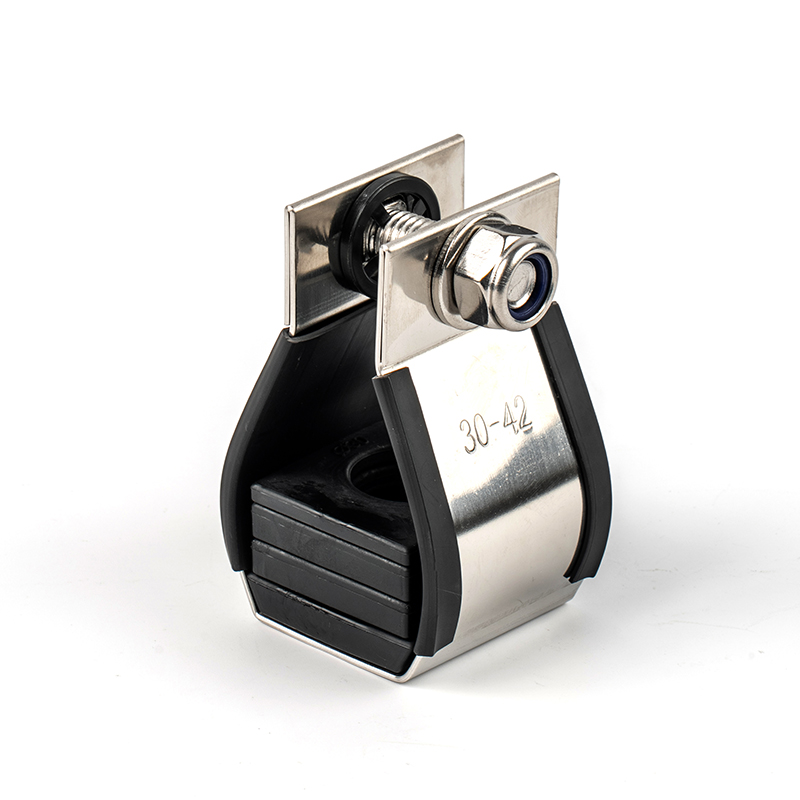
Manufactured from high-grade 316 stainless steel, ...
View more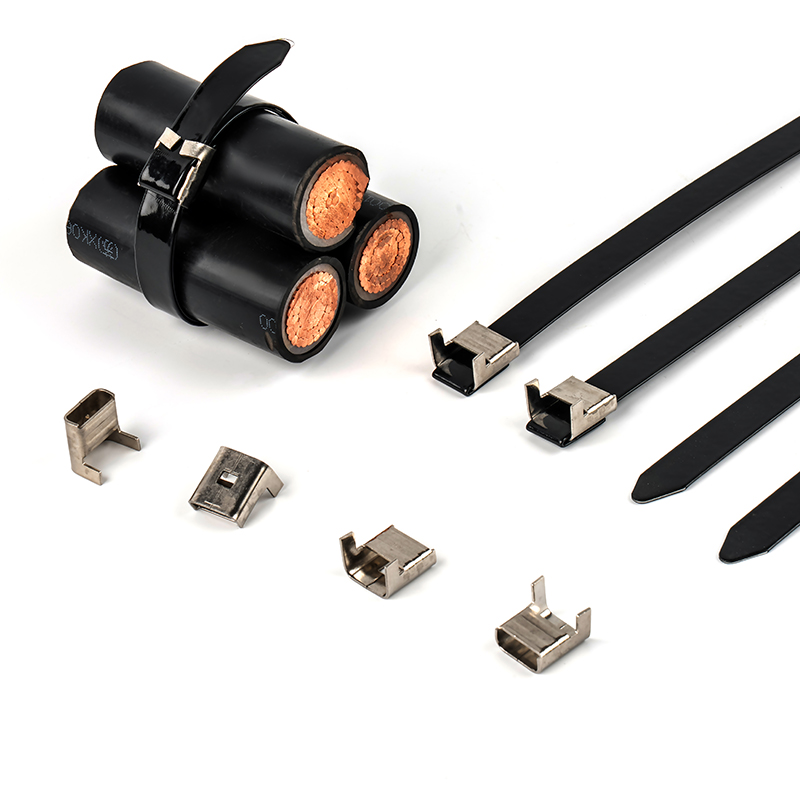
Brand Name: FengfanApproved Certificate: DNV &...
View moreContent
The primary criterion for selecting a cable cleat size is the cable outer diameter (OD). First, measure the cable OD precisely, then choose a cleat model whose inner diameter range covers that dimension. For three-phase systems, additional factors include cable formation (trefoil or flat), peak short-circuit current (kA), and installation spacing, which together determine the mechanical strength and spacing requirements of the cleat. Following the IEC 61914 standard for selection ensures system safety during short-circuit faults.
The inner diameter of a cable cleat must match the cable outer diameter precisely. Cleat sizes are typically labeled with a cable diameter range, such as "33-40mm" or "51-57mm". Measurement should be taken with a vernier caliper at multiple positions on the cable to obtain an average value. If the cable has an armoring layer or outer sheath, the measurement must include these outer structures.
For common industrial cables, low-voltage power cables typically have an outer diameter between 20mm and 80mm, while medium and high-voltage cables may exceed 100mm. Zhejiang Fengfan Cable Fittings Co., Ltd. offers a comprehensive range of 316 stainless steel cable cleats covering everything from single small-diameter cables to multi-core large-diameter cables, including three-leaf cable cleats and single cable cleats to meet diverse diameter requirements.
The arrangement of three-phase cables directly influences cleat selection. In a trefoil formation, the three cables are in mutual contact and require a dedicated trefoil cleat that holds all three cables within a single unit. In a flat formation, single cable cleats are used to secure each cable individually, or multi-cleat systems may be employed.
Trefoil and flat formations generate different electromagnetic forces during a short circuit. According to the IEC 61914 standard, the center-to-center distance in a trefoil arrangement equals the cable outer diameter, while in a flat arrangement the center-to-center distance is typically larger. This difference directly affects the force calculation and cleat selection.
| Formation | Cleat Type | Center Distance Calculation | Typical Application |
|---|---|---|---|
| Trefoil | Trefoil cable cleat | S = Cable outer diameter | Medium and high voltage three-phase power cables |
| Flat | Single cleat / Multi-cleat | S = Center distance (design determined) | Low voltage distribution, control cables |
| Single cable | Single cable cleat | Not applicable | Single-phase lines, communication cables |
During a short-circuit fault, enormous electromagnetic repulsive forces are generated between adjacent conductors. According to the IEC 61914 standard, the maximum theoretical force (Ft) between conductors during a three-phase short circuit is calculated as follows:
Where: Ft = maximum force per unit length (N/m); ip = peak short-circuit current (kA); S = center-to-center distance between neighboring conductors (m)
For example, when the system peak short-circuit current is 50kA and the trefoil-arranged cable has an outer diameter of 50mm (S = 0.05m), Ft = 0.17 x 50² / 0.05 = 8,500 N/m. If the cleat installation spacing is 300mm, the force each cleat must withstand is 8,500 x 0.3 = 2,550 N. Therefore, the loop strength of the selected cleat must exceed this value.
In practical engineering, the peak short-circuit current is typically derived from system calculations. If only the RMS value is available, it can be converted using the following multipliers: multiply by 2.0 for 10-20kA; by 2.1 for 21-50kA; and by 2.2 for 51kA and above. Zhejiang Fengfan Cable Fittings Co., Ltd. manufactures cable cleats from 316 stainless steel, delivering excellent mechanical strength and corrosion resistance to withstand severe short-circuit electrodynamic forces.
Cleat installation spacing directly affects the short-circuit force each cleat must withstand. Smaller spacing reduces the force on individual cleats but increases installation costs; larger spacing lowers costs but demands higher cleat strength. In practice, spacing is typically set in multiples of 300mm to align with standard ladder rung intervals.
When selecting cleats, compare the total cost of different schemes: using higher-strength cleats with wider spacing is often more economical than using standard cleats at closer intervals. For instance, a scheme using cleats with 36,000N loop strength at 600mm spacing may have a lower total cost than one using 15,000N cleats at 300mm spacing.
| Cleat Loop Strength | 300mm Spacing Capacity | 600mm Spacing Capacity | 900mm Spacing Capacity |
|---|---|---|---|
| 15,000 N | 15,000 N | Not applicable | Not applicable |
| 36,000 N | 36,000 N | 36,000 N | Not applicable |
| 63,000 N | 63,000 N | 63,000 N | 63,000 N |
| 85,000 N | 85,000 N | 85,000 N | 85,000 N |
The material of a cable cleat determines its suitability for different environments. 316 stainless steel cleats offer outstanding corrosion resistance and are suitable for harsh environments such as marine engineering, chemical processing, and port machinery, with an operating temperature range of -60°C to +120°C. Aluminum alloy cleats are lightweight and suitable for general industrial environments. Non-metallic cleats (such as nylon or LSOH materials) are appropriate for applications with fire safety, low smoke, and zero halogen requirements.
Zhejiang Fengfan Cable Fittings Co., Ltd., as a professional cable fittings manufacturer, provides cable cleats in various materials. Its 316 stainless steel cable cleats are widely used in shipbuilding, railways, automotive, power energy, aerospace, nuclear power, and telecommunications industries, meeting cable management needs under diverse operating conditions.
Mistake one: Selecting cleats based solely on cable cross-sectional area. The relationship between cable cross-section and outer diameter is not linear; different insulation materials and sheath structures can result in significantly different outer diameters for cables with the same cross-section. The actual outer diameter must always be used as the basis.
Mistake two: Ignoring the impact of short-circuit current. In power systems, short-circuit electrodynamic forces are the primary cause of cleat failure. If cleats are selected based only on mechanical fastening needs without considering short-circuit conditions, serious consequences may occur during a fault.
Mistake three: Setting installation spacing arbitrarily. Spacing must be based on the spacing declared by the manufacturer during testing, combined with actual calculated force values. Using cleats beyond the tested and declared spacing voids standard compliance assurance.
The single cable Cleats made of 316 stainless steel is used for cable management. It is corrosion-resistant, high-temperature resistant and meets international standards. It is suitable for various ha...
See Detail
Manufactured from high-grade 316 stainless steel, this cable management system is specifically designed for secure cable retention in power generation, petrochemical, marine, offshore platforms, and c...
See Detail
Brand Name: FengfanApproved Certificate: DNV & ABS.Product Description: Cable Fixing Band and ClipsThe Lower Cost Alternative to Cable Cleats Product Benefits- Low profile finish- 316 grade stain...
See DetailMobile: +86-136 7685 3958
Email: lihai.fan@zjffdl.com
Mobile: +86-188 57530390
Email: alan.huang@zjffdl.com
No. 1116 Yasha Ave, Cao’e Street, Shangyu District, Shaoxing City, Zhejiang, China, 312300


+86-0575-8215 2808
/8200 8688/8239 2526

+86-0575-8215 2066
Copyright ©Zhejiang Fengfan Cable Fittings Co.,Ltd.
