


 English
 中文简体
中文简体
+86-0575-8215 2808
/8200 8688/8239 2526
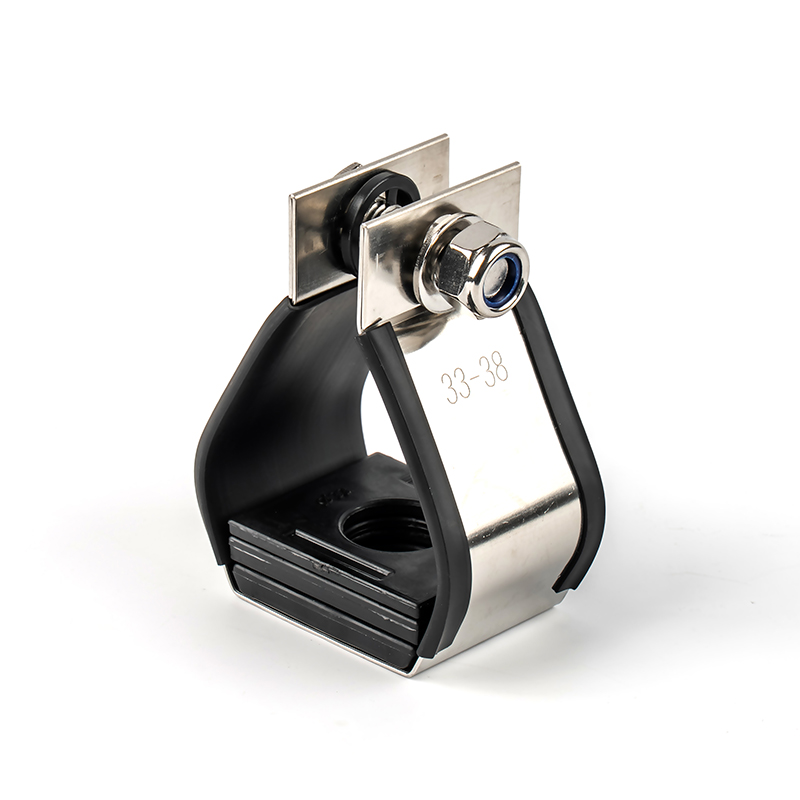
The single cable Cleats made of 316 stainless stee...
View more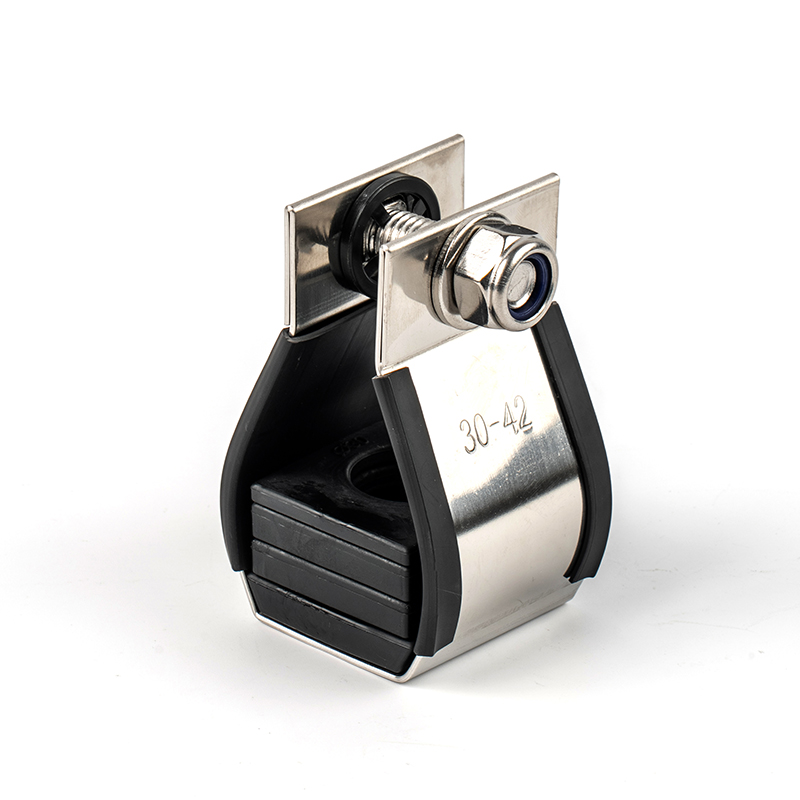
Manufactured from high-grade 316 stainless steel, ...
View more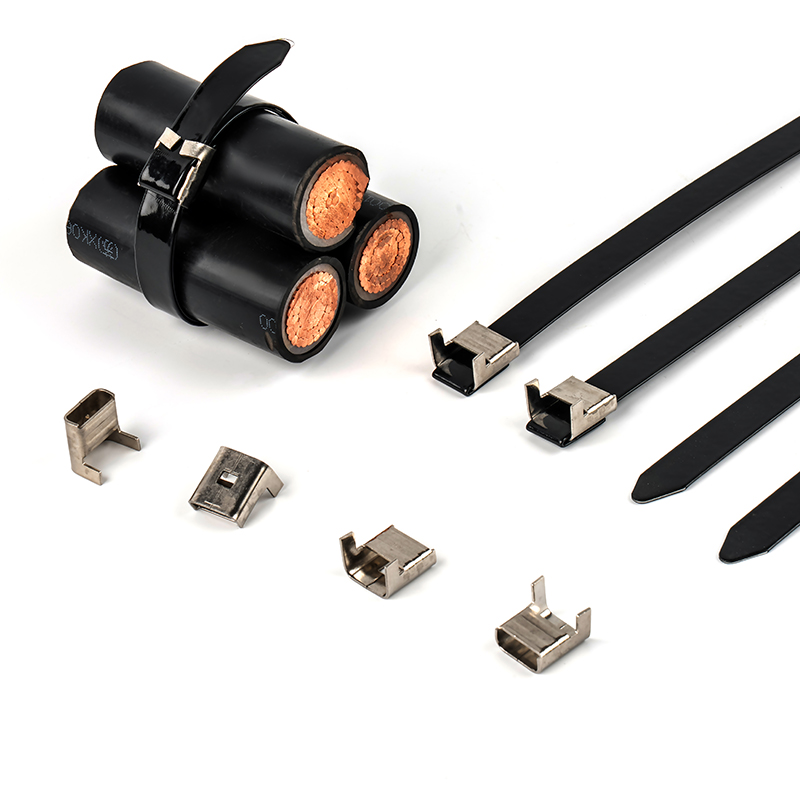
Brand Name: FengfanApproved Certificate: DNV &...
View moreContent
If your application touches saltwater, coastal air, or chemical fumes, Grade 316 stainless steel cable ties are the safer choice. For most indoor, general industrial, and moderate outdoor conditions, Grade 304 delivers the same mechanical strength at a lower material cost. The real difference between the two grades comes down to one added alloying element, molybdenum, which gives 316 far stronger resistance to chloride-driven corrosion.
Both grades are used to make metal zip ties for bundling, routing, and securing cables, hoses, and wire loom in environments where nylon plastic ties or standard plastic tie cable products cannot survive. They share the same ball-lock or L-type buckle designs and are rated for a wide working temperature range, but their long-term behavior in aggressive environments is different enough to change a project outcome.
| Factor | Grade 304 | Grade 316 |
|---|---|---|
| Core Alloy Addition | Approximately 18% chromium, 8% nickel | Approximately 16% chromium, 10% nickel, 2-3% molybdenum |
| Corrosion Resistance | Good in normal atmospheric and general industrial conditions | Significantly higher resistance to chlorides and salt water |
| Typical Material Cost | Lower baseline cost | Roughly 20 to 30 percent higher than 304 |
| Working Temperature | -80°C to 538°C for uncoated ties | -80°C to 538°C for uncoated ties |
| Tensile Strength Range | 200 lbs to 922 lbs depending on width and length | 200 lbs to 922 lbs depending on width and length |
| Best Suited Environments | General industry, construction, indoor wiring, HVAC | Marine, offshore, coastal sites, chemical processing |
Chromium gives both grades their base resistance to rust by forming a passive oxide layer on the surface. The problem is that chloride ions, found in seawater, salt spray, and de-icing salts, can break down that passive layer locally and start pitting corrosion. Grade 316 adds molybdenum specifically to reinforce the passive layer against chlorides, which is why it consistently outperforms 304 in salt spray testing, often withstanding several times longer exposure before visible red rust appears.
This is also why 316 uncoated cable ties are typically the minimum standard accepted for vessel wiring harnesses, dock equipment, and offshore platform cable runs, and why products used in these settings usually carry DNV and ABS classification society certification.
Ball Lock Stainless Steel Ties are available in several finishes, each built on the same 304 or 316 substrate but adapted for different insulation, edge-protection, and cost requirements.
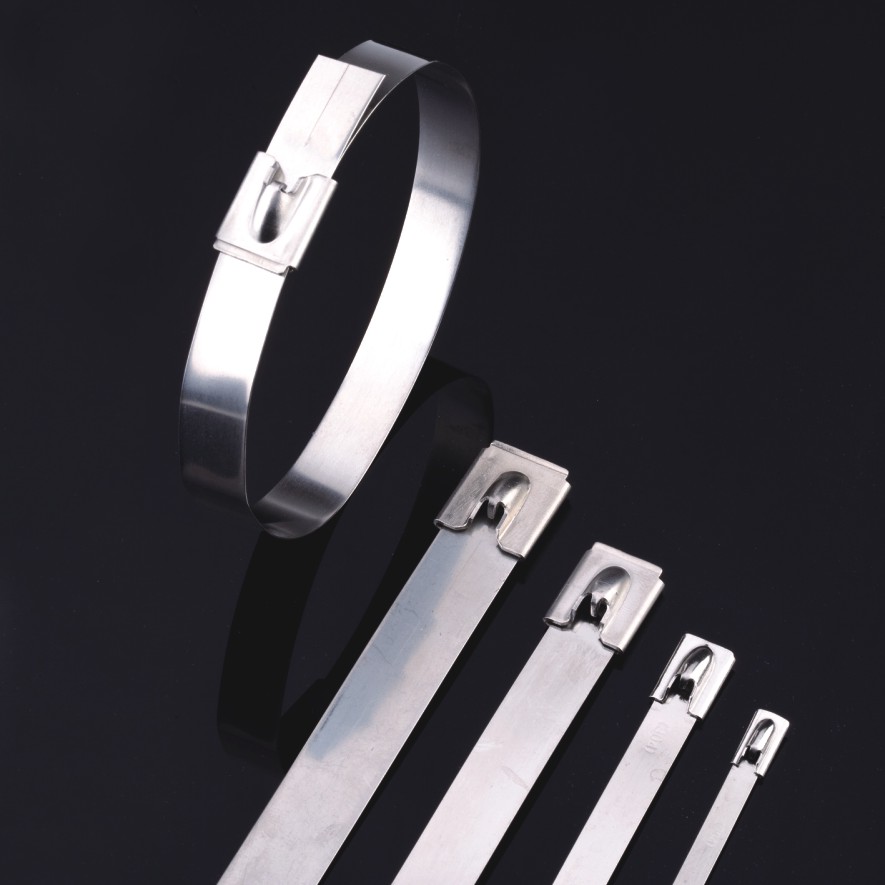
Ball-Lock Uncoated Ties
Uncoated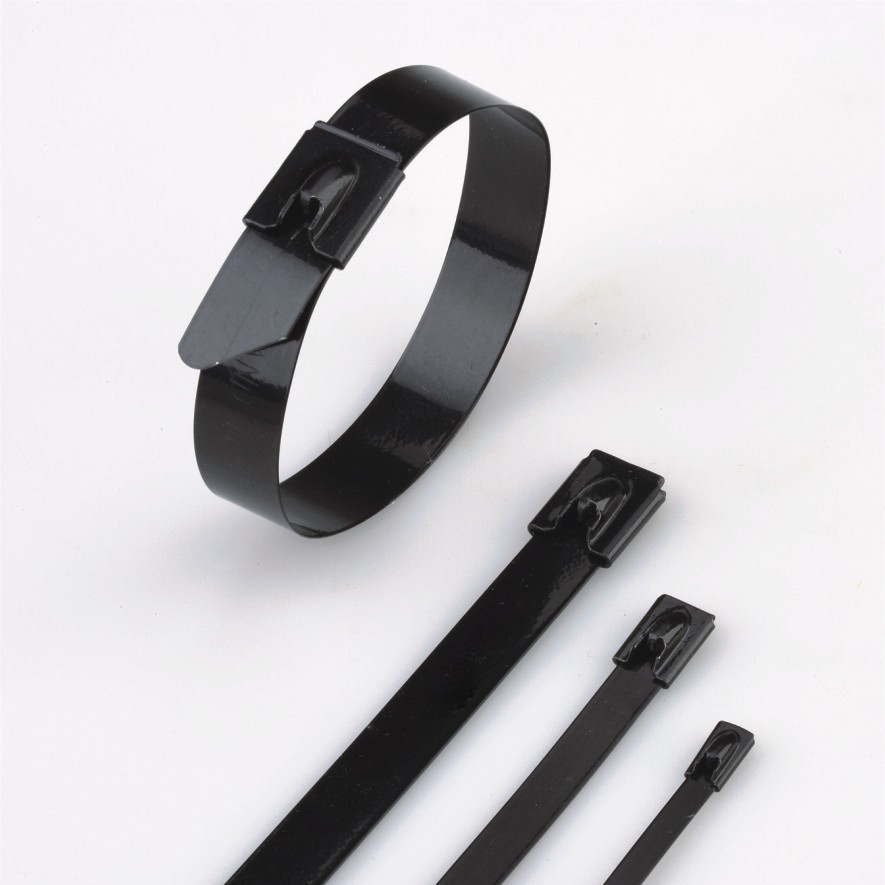
Ball-Lock Fully Polyester Coated Ties
Fully Coated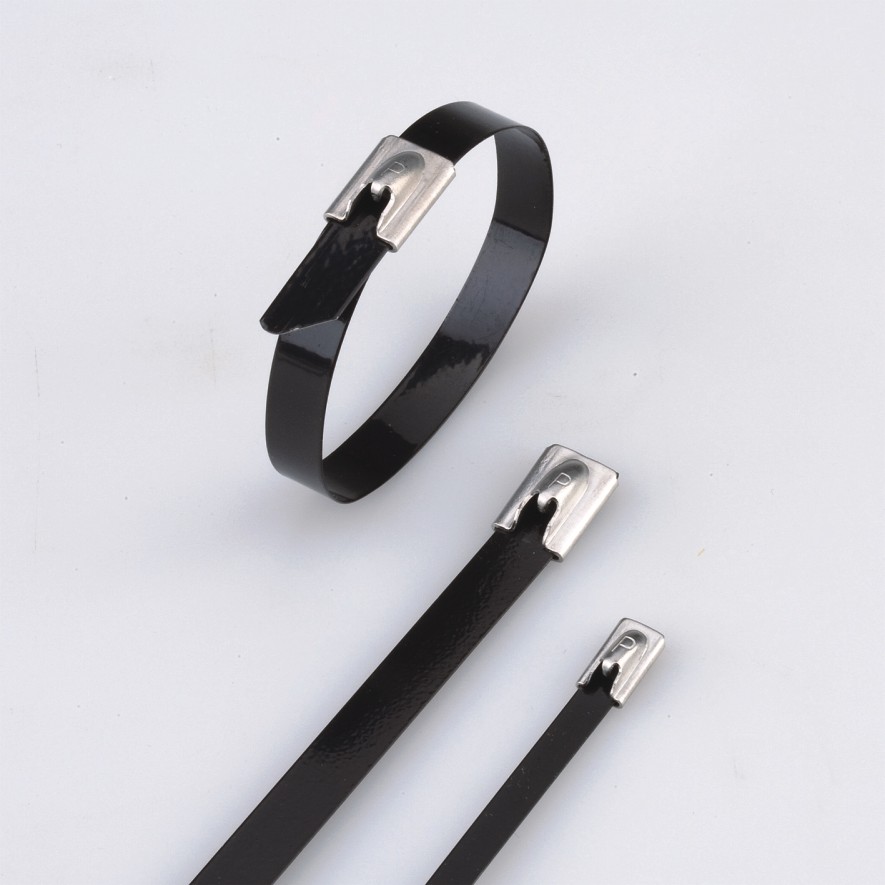
Ball-Lock Polyester Coated Ties
Polyester Coated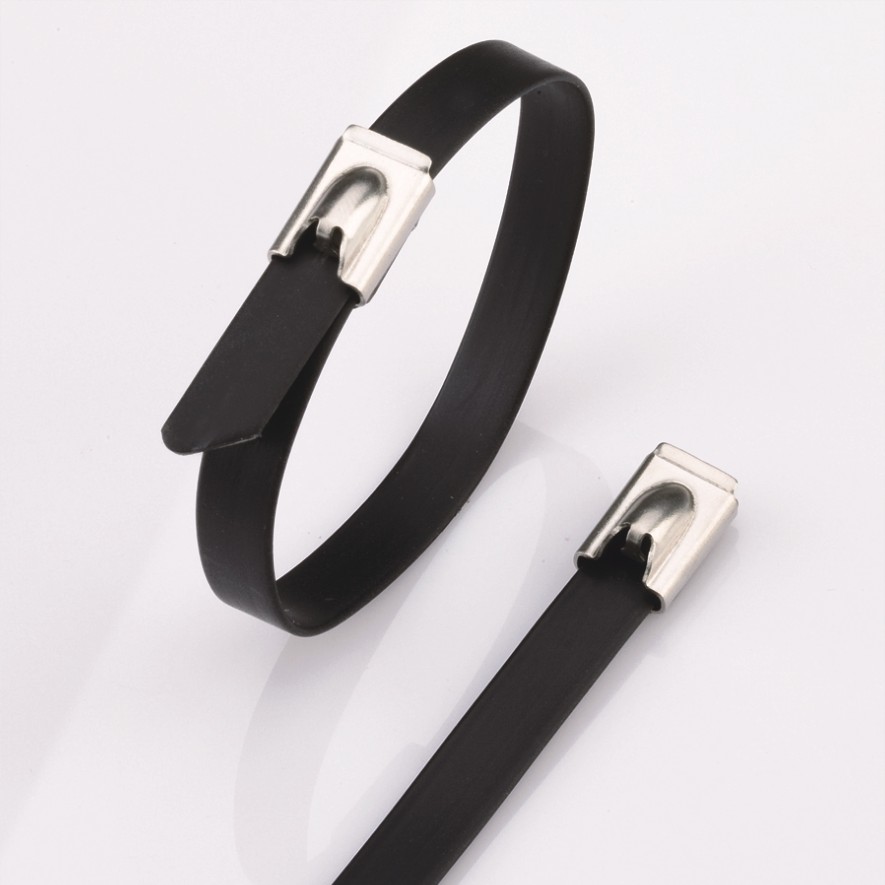
Ball-Lock PVC Coated Ties
PVC Coated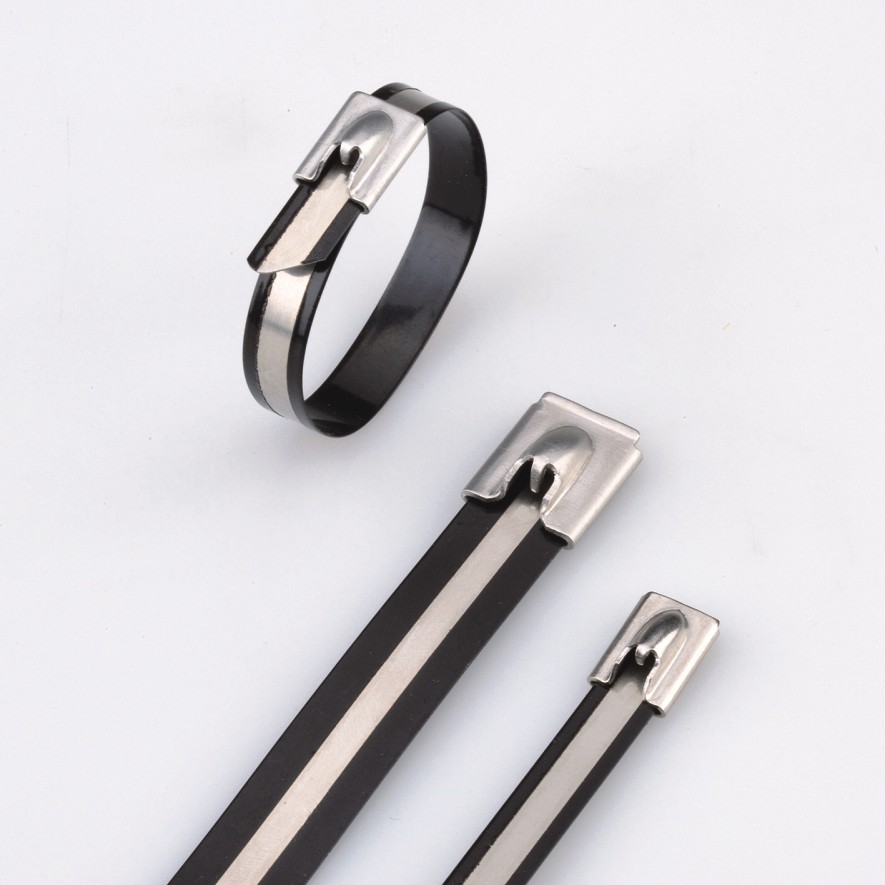
Ball-Lock Semi-Coated Ties
Semi-CoatedGrade 304 covers the majority of industrial tying cables needs without paying a premium for chloride resistance that will never be tested. It is a practical alternative to heavy duty zip ties or standard cable clamp hardware wherever strength, heat resistance, or tamper resistance matters more than salt exposure.
Once chlorides, acids, or high-humidity coastal air enter the picture, the extra cost of 316 stainless steel zip ties is usually recovered many times over by avoiding premature replacement and unplanned maintenance.
Both 304 and 316 substrates can be left bare or finished with a coating, which is a separate decision from the grade itself. Nylon Coated Stainless Steel Ties and Polyester coated bands add edge protection and prevent galvanic corrosion between dissimilar metals, which matters when the tie contacts aluminum brackets or copper conductors. PVC coated ties are a lower-cost option rated to a narrower working temperature of -40°C to 85°C and add basic electrical insulation. PPA Coated Ties hold up better under higher heat and harsher chemical exposure, and Ball Lock semi-coated ties leave part of the metal band exposed to balance conductivity with protection.
For non-metallic bundling where stainless is not required, Barb-lock Nylon Cable Ties and Weather Resistant Acetal ties remain useful lower-cost alternatives, particularly for indoor or short-term outdoor tying cables tasks.
A standard nylon plastic tie or common zip ties product tends to become brittle after two to three years outdoors as UV and temperature cycling degrade the polymer. Stainless steel cable ties, in either grade, routinely stay in service for twenty to thirty years or more under the same conditions, which reframes the cost comparison from unit price to total lifecycle cost.
| Metric | Nylon Zip Ties | Grade 304 | Grade 316 |
|---|---|---|---|
| Typical Outdoor Service Life | 2 to 3 years | 20 to 30 years | 20 to 30 years or more |
| Chloride Resistance | Not applicable, degrades from UV instead | Moderate | High |
| Relative Unit Cost | Lowest | Mid | Mid to high |
| Fire and High Heat Rating | Poor, melts or ignites | Rated to 538°C uncoated | Rated to 538°C uncoated |
Use the scenario below closest to your project to shortlist a grade before finalizing coating, buckle type, and tie length. Related cable management hardware, including Cable Cleats, Cable Clamps, and Cable Markers, is often specified alongside cable ties on the same job to complete a bundle routing plan.
| Project Scenario | Recommended Grade |
|---|---|
| Indoor data center or panel cable management | 304, uncoated or coated |
| Inland solar farm or utility installation | 304, coated for UV and handling protection |
| Ship engine room, deck, or dock wiring | 316 uncoated, DNV or ABS certified |
| Coastal substation within 5 km of the ocean | 316 |
| Chemical plant piping and cable tray runs | 316 |
| Food or pharmaceutical processing line | 304 for light washdown, 316 for aggressive sanitizers |
| Rail, automotive, or heavy machinery harnessing | 304 or 316 depending on OEM specification |
When in doubt, choosing 316 adds a small upfront cost for a meaningful margin of safety, while 304 remains the efficient, well-tested default for the majority of general industrial and construction applications.
The single cable Cleats made of 316 stainless steel is used for cable management. It is corrosion-resistant, high-temperature resistant and meets international standards. It is suitable for various ha...
See Detail
Manufactured from high-grade 316 stainless steel, this cable management system is specifically designed for secure cable retention in power generation, petrochemical, marine, offshore platforms, and c...
See Detail
Brand Name: FengfanApproved Certificate: DNV & ABS.Product Description: Cable Fixing Band and ClipsThe Lower Cost Alternative to Cable Cleats Product Benefits- Low profile finish- 316 grade stain...
See DetailMobile: +86-136 7685 3958
Email: lihai.fan@zjffdl.com
Mobile: +86-188 57530390
Email: alan.huang@zjffdl.com
No. 1116 Yasha Ave, Cao’e Street, Shangyu District, Shaoxing City, Zhejiang, China, 312300


+86-0575-8215 2808
/8200 8688/8239 2526

+86-0575-8215 2066
Copyright ©Zhejiang Fengfan Cable Fittings Co.,Ltd.
