


 English
 中文简体
中文简体
+86-0575-8215 2808
/8200 8688/8239 2526
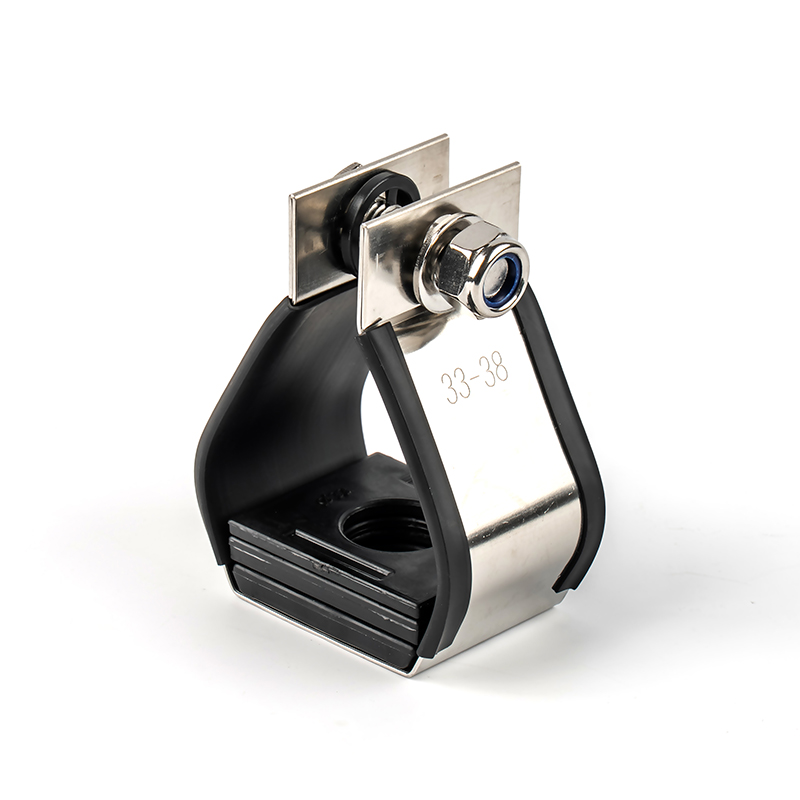
The single cable Cleats made of 316 stainless stee...
View more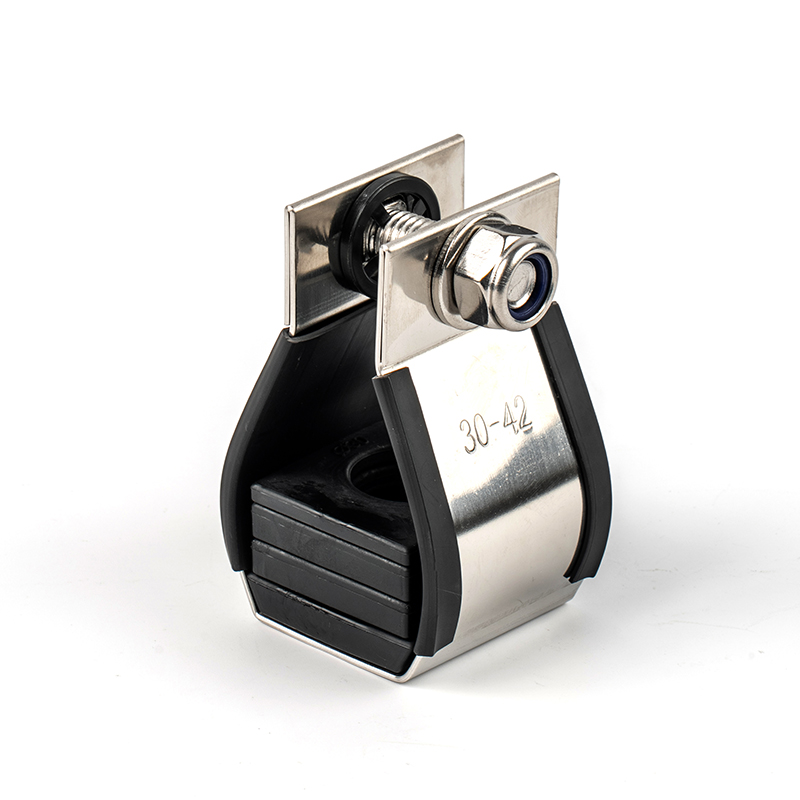
Manufactured from high-grade 316 stainless steel, ...
View more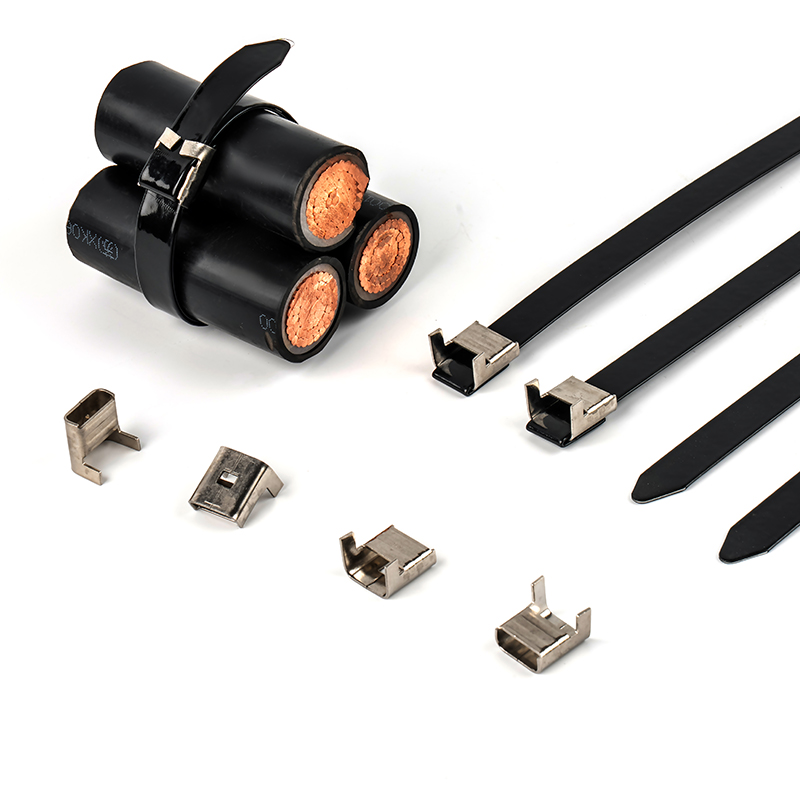
Brand Name: FengfanApproved Certificate: DNV &...
View moreContent
Stainless steel strapping is used to bundle, secure, and fasten cables, pipes, hoses, signs, and structural components across heavy industrial, marine, construction, and infrastructure environments. Its defining advantage is the combination of high tensile strength and long-term corrosion resistance — making it the preferred choice where plastic cable ties or standard steel bands cannot survive.
The use cases for stainless steel strapping span a wide range of sectors. Below is a breakdown of where it performs best and why:
| Industry | Typical Use | Why Stainless Steel |
|---|---|---|
| Marine & Offshore | Cable bundling, pipe fastening, hose attachment, dock and pier repair | Resists salt spray and constant moisture; Grade 316 recommended |
| Construction | Air duct securing, solar panel mounting, road sign attachment, suspension bridge cable bundling | Handles UV, wind load, and vibration without fatigue |
| Power & Telecommunications | Cable cleats support, underground cable bundling, cable markers attachment | Non-conductive coating options (PPA coated, PVC coated) prevent galvanic issues |
| Oil, Gas & Petrochemical | Insulation fixing, hose fitting attachment, pipeline component fastening | Withstands chemical exposure and high temperature cycling |
| Railways & Automotive | Wire harness bundling, vibration-resistant component securing | High tensile strength maintains grip under continuous vibration |
| Nuclear & Aerospace | Safety-critical cable management in high-radiation or high-altitude environments | Does not degrade under radiation or extreme thermal cycles |
Standard nylon cable ties and even weather resistant acetal ties are rated for specific temperature and UV ranges — typically -40°C to 85°C for nylon and slightly broader for acetal. Stainless steel strapping operates reliably from -60°C to over 500°C depending on grade, and does not become brittle, discolor, or lose clamping force over time.
Ball lock stainless steel ties and barb-lock nylon cable ties both provide secure one-way locking, but the ball lock mechanism in a stainless steel version maintains holding force under thermal expansion cycles that would cause plastic heads to crack. For permanent installations — offshore platforms, bridge cable management, or nuclear conduit work — this matters significantly.
Not all stainless steel strapping is identical. The surface treatment and coating determine which environment a band is suited for:
Uncoated Stainless Steel Bands deliver maximum mechanical contact and are used where direct metal-to-metal grip is needed: attaching fittings to rigid pipelines, mounting cable clamps and cable cleats to structural steel, and insulation fixing in dry industrial settings.
PPA Coated Bands add a polyphenylene amide outer layer that electrically insulates the strap from the surface beneath. This is essential when strapping aluminum conduit or copper cable trays where galvanic corrosion between dissimilar metals is a real risk. PPA coated ties are widely used in telecommunications and power energy distribution.
PVC Coated Bands provide impact-buffering and protect soft cable jackets from abrasion. They are the standard choice when running stainless steel strapping directly over nylon coated stainless steel ties or over optical fiber bundles where surface damage would degrade signal.
Polyester Coated Bands offer weather resistance combined with a cleaner aesthetic finish, often selected for visible exterior installations: façade cable management, rooftop equipment mounting, and solar array tie-down systems.
When comparing stainless steel strapping to alternatives, three factors drive the decision: service life expectancy, environment aggressiveness, and installation method.
| Fastener Type | Estimated Service Life (Outdoor) | Best Environment | Limitation |
|---|---|---|---|
| Stainless Steel Strapping | 20+ years | Marine, chemical, extreme heat/cold | Requires tensioning tool for optimal clamp force |
| Nylon Cable Ties (standard) | 3-5 years outdoor | Indoor, sheltered outdoor | UV and heat cause brittleness and failure |
| Weather Resistant Acetal | 8-12 years | Moderate outdoor, UV-exposed | Not suitable for temperatures above 120°C |
| Ball Lock Semi-Coated Ties | 15-20 years | Outdoor, moderate corrosion | Semi-coated; bare metal edges may contact surface |
| Nylon Coated Stainless Steel Ties | 15-20 years | General outdoor, cable trays | Coating adds cost; check chemical compatibility |
Three variables narrow the choice quickly:
Steel grade: Grade 304 handles freshwater, atmospheric, and mild chemical environments. Grade 316 is mandatory for saltwater, chlorine-rich, or strongly acidic settings. The difference is the addition of 2-3% molybdenum in 316, which closes the pitting-corrosion pathway that causes 304 to fail in marine use.
Width and thickness: Wider bands distribute load over a larger surface area, reducing the risk of cutting into soft insulation. Common widths run from 12mm to 25mm. For cable markers attachment or light-duty sign fixing, 12mm uncoated bands are sufficient. For heavy pipe bundling or suspension applications, 19-25mm bands with buckles provide the clamping force needed.
Coating type: Match the coating to the contact surface and the electrical environment. PPA coated or nylon coated stainless steel ties are the standard choice where electrical isolation between the strap and the substrate is required — a detail that matters in live cable management environments more than almost anywhere else.
Stainless steel strapping requires a banding tool to apply correct tension. Under-tensioned bands slip; over-tensioned bands cut into the substrate or fracture at the buckle ear. Most professional installations target 80-90% of rated tensile strength during tensioning.
Routine inspection intervals depend on environment. In offshore or chemical plant settings, quarterly visual inspection of the buckle crimp and band surface is standard practice. In buried or concealed applications — underground cable bundling or conduit support — inspection at every 5-year maintenance cycle is typical. Corrosion around the buckle, not the band itself, is usually the first failure point.
Cable clamps and cable cleats used in conjunction with stainless steel strapping should be rated for the same corrosion category. Mixing a Grade 316 strap with a zinc-plated clamp in a marine environment negates the corrosion advantage of the stainless component within 12-18 months.
Real-world installations that commonly rely on stainless steel strapping include: subsea pipeline insulation blankets secured at regular intervals; transmission tower cable bundling at heights where re-access is expensive; offshore oil platform cable management rated for Zone 1 and Zone 2 hazardous areas; railway trackside signal cable bundling subject to vibration from 200+ km/h train passes; and solar farm module mounting where 25-year service life is the contractual minimum.
In municipal settings, traffic signal pole attachments, roadway sign mounting, and street lighting cable management are standard deployments. The strapping itself is rarely visible to the public, but its failure would be immediately apparent — making reliability the primary selection criterion over cost.
The single cable Cleats made of 316 stainless steel is used for cable management. It is corrosion-resistant, high-temperature resistant and meets international standards. It is suitable for various ha...
See Detail
Manufactured from high-grade 316 stainless steel, this cable management system is specifically designed for secure cable retention in power generation, petrochemical, marine, offshore platforms, and c...
See Detail
Brand Name: FengfanApproved Certificate: DNV & ABS.Product Description: Cable Fixing Band and ClipsThe Lower Cost Alternative to Cable Cleats Product Benefits- Low profile finish- 316 grade stain...
See DetailMobile: +86-136 7685 3958
Email: lihai.fan@zjffdl.com
Mobile: +86-188 57530390
Email: alan.huang@zjffdl.com
No. 1116 Yasha Ave, Cao’e Street, Shangyu District, Shaoxing City, Zhejiang, China, 312300


+86-0575-8215 2808
/8200 8688/8239 2526

+86-0575-8215 2066
Copyright ©Zhejiang Fengfan Cable Fittings Co.,Ltd.
