


 English
 中文简体

+86-0575-8215 2808
/8200 8688/8239 2526
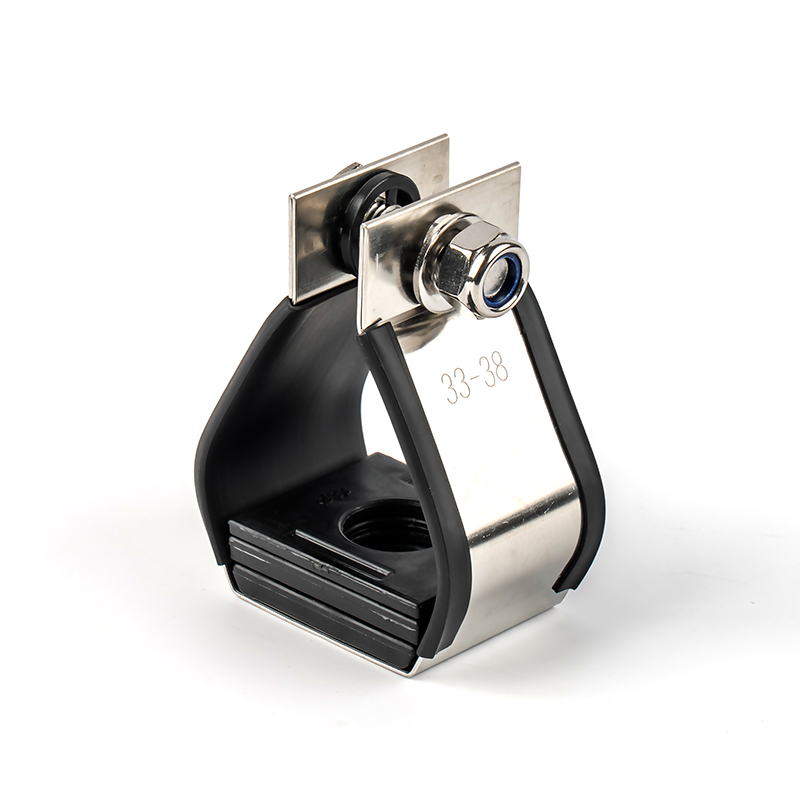
The single cable Cleats made of 316 stainless stee...
View more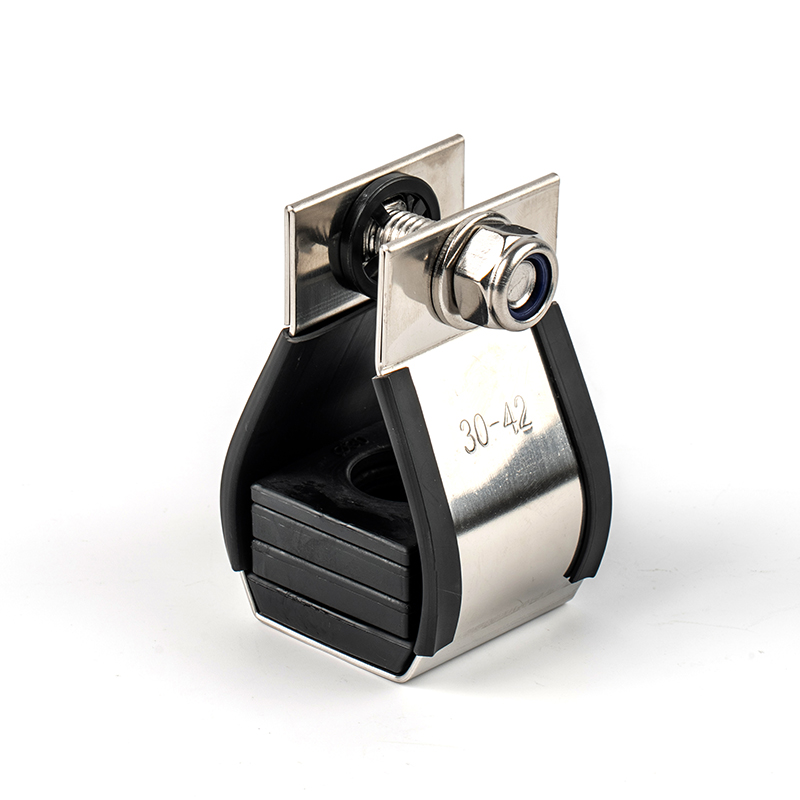
Manufactured from high-grade 316 stainless steel, ...
View more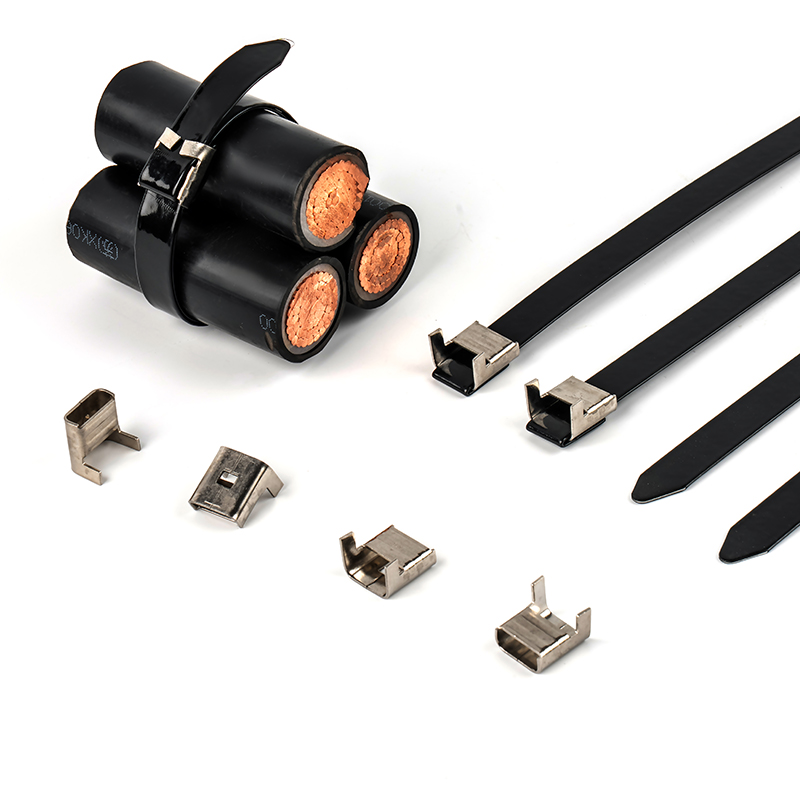
Brand Name: FengfanApproved Certificate: DNV &...
View moreContent
Count the cable bundles on a rooftop or a marina dock three summers after installation and the split is easy to read: one run is still tight, the next has gone chalky white and dropped its cables into the tray. The installer did not change. The tie did.
The short answer first: for anything that must survive more than three or four summers, use a UV-stabilized black nylon 6/6 tie for light outdoor bundling, a weather-resistant acetal tie where vibration, moisture or repeated flexing is involved, and a 304 or 316 stainless steel tie wherever salt, heat or a 20-year service window appears on the drawing. No plastic tie is UV-proof. Only the stabilizer package, the sun hours and the load determine how long it stays intact, and the rest of this guide explains how that decision is actually made.
Ultraviolet light does not weaken a tie evenly. It attacks the surface. Photons break polymer chains at the skin of the part, the surface chalks, micro-cracks open, and the load path narrows until the strap snaps under a tension it used to carry easily. Most outdoor failures are surface failures, not bulk strength failures.
Protection comes from the additive package, not from the shape of the tie. Carbon black absorbs UV before it reaches the polymer, and hindered amine light stabilizers (HALS) interrupt the radical chain reaction that follows. A tie can be perfectly black and still contain almost no stabilizer, which is why color alone proves nothing at the purchasing stage.
A statement such as "70% tensile retention after 1,000 hours" is far more useful than a badge on the bag. Where the tie is part of an enclosure or a long-life installation, UL 746C is the reference that outdoor polymeric components are usually judged against.
Three material families cover almost every outdoor job, and the ranking between them rarely changes even when individual figures shift from site to site.
| Material | UV behaviour | Service temperature | Realistic outdoor life | Where it fits |
|---|---|---|---|---|
| Standard nylon 6/6, natural | Unstabilized; chalks and cracks within one strong season | -40 to 85 °C | 6–18 months | Indoor work, shaded runs, temporary bundling |
| UV-stabilized black nylon 6/6 | Carbon black plus HALS; slow surface erosion | -40 to 85 °C, up to 105 °C for heat-stabilized grades | 2–5 years | General outdoor bundling, fencing, signage, cable trays |
| Nylon 12 | Stabilized, lower moisture uptake, better cold flexibility | -50 to 100 °C | 3–6 years | Cold climates, humid or washdown areas |
| Weather-resistant acetal | Stabilized, very low moisture absorption, resists creep | -40 to 90 °C | 5 years and beyond | Vibrating equipment, flexing loads, coastal-adjacent plant |
| 304 stainless steel | Immune to UV; may pit in chloride environments | -80 to 400 °C | 15–25 years | Inland industrial, heat zones, permanent fixtures |
| 316 stainless steel | Immune to UV; molybdenum resists chlorides | -80 to 400 °C | 20 years and beyond | Coastal, offshore, chemical and tunnel projects |
Within the nylon group, differences matter more than the generic label suggests. A standard black nylon cable tie with a light stabilizer package behaves very differently from a heavily loaded compound, and both behave differently from nylon 12 in a cold store or an unheated mast.
Acetal is the middle ground that buyers often overlook. It absorbs very little moisture, holds tension under continuous load and shrugs off the vibration that slowly works a nylon ratchet loose. A weather-resistant double buckle tie in acetal is a sensible step up from nylon for pump skids, HVAC frames and cable runs that flex in wind.
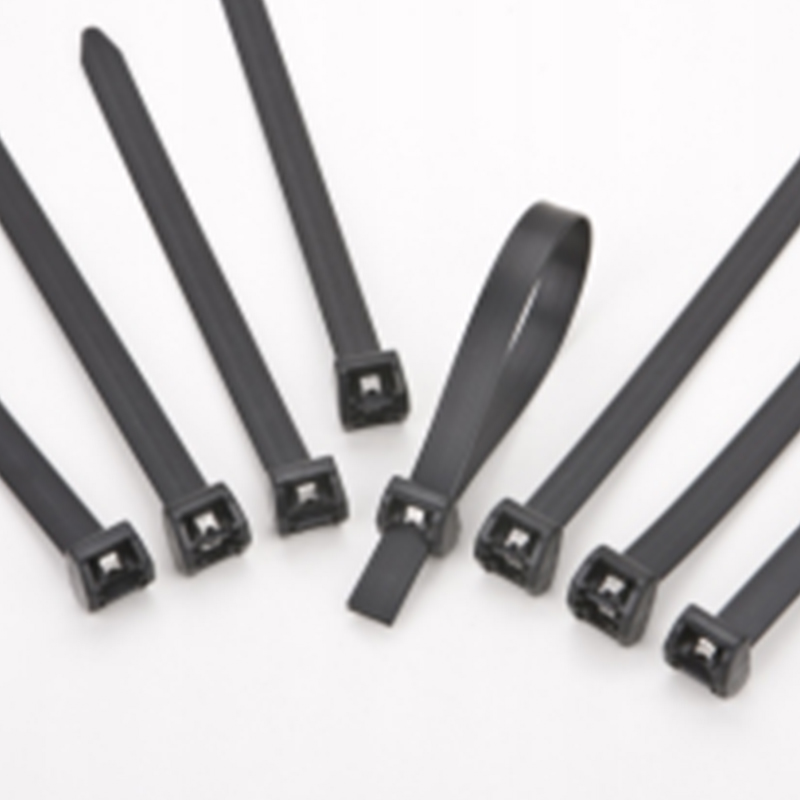 Acetal Weather Resistant Double Buckle Cable TieBlack acetal tie with 304 stainless locking barbs suits outdoor cable runs where UV, moisture and vibration make nylon less dependable.View Product →
In practice, yes — but only because of what the pigment does. Carbon black absorbs ultraviolet energy and converts it to heat before it can break polymer chains, which is why nearly every outdoor-rated tie on the market is black. Natural and white ties carry no such screen, and field experience shows them failing first on the same bundle.
The trap is assuming pigment equals protection. Black regrind with a token carbon loading still fails in a season, and it fails quietly, because the surface looks fine until it cracks. On the other side, black ties run hotter: surface temperature on a dark roof can sit 20 to 30 °C above ambient, which eats into the 85 °C ceiling of standard nylon and pushes buyers toward heat-stabilized grades or stainless.
Field ranges are broad but consistent: unprotected nylon 6/6 fails within one to two seasons in direct sun, UV-stabilized black nylon commonly reaches two to five years, acetal runs five years and beyond, and 316 stainless is limited by the installation rather than the material.
Four failure modes account for most callbacks:
A tie that manages three years at a saltwater dock may well manage six inland, so specify life by site class rather than by a single number.
The trigger points are simple: an expected service life beyond five years, surface temperatures above 90 °C, salt spray or chloride exposure, heavy bundles, vibration, or any installation where a loose cable is a safety or liability issue. Once two or more of those apply, stainless usually costs less than the second and third replacement cycle.
Grade selection follows the environment. Type 304 is adequate inland; type 316, with molybdenum in the alloy, is the standard choice within sight of saltwater or in chemical plants. Coating choice is just as important: uncoated ties grip hard but can chafe cable jackets, while polyester, PVC and PPA coatings cushion the cable and separate dissimilar metals. Where stainless contacts aluminium, a coated tie or an isolating liner prevents galvanic attack on the softer metal. Lock design — ball lock, ladder, L-type — then follows the load and adjustment needs; readers who want the background can start with what stainless steel cable ties are and how the locking styles differ.
For coastal and offshore work, a polyester-coated ball lock tie gives the combination most projects ask for: 316 strength, corrosion resistance, and a jacket that will not saw into the cable.
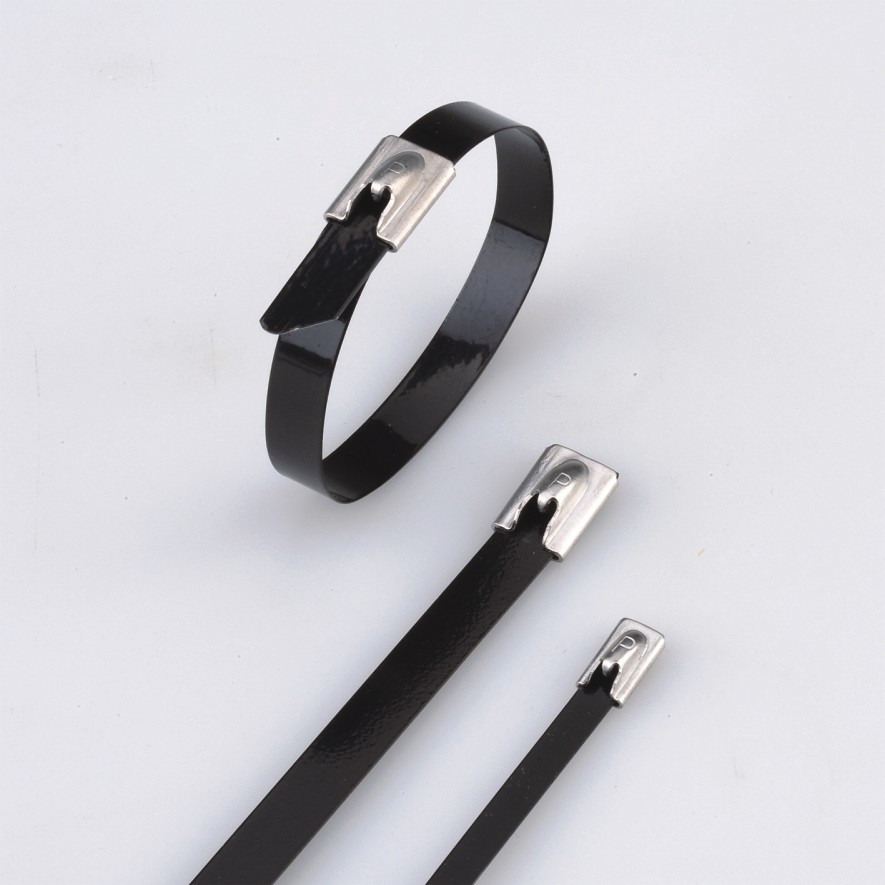 Polyester-Coated Ball-Lock Stainless Steel Cable TiesFor coastal and offshore bundles, these 304/316 stainless ties add a polyester jacket and ball-lock buckle for corrosion resistance and cable edge protection.View Product →
Two identical ties installed by different hands can differ by years of service. Tension is the first variable: hand-tight plus a quarter turn is a reasonable default, and a tensioning tool makes that repeatable across hundreds of bundles. Over-tensioning does not make a bundle safer; it accelerates creep and pre-loads the ratchet.
Sharp edges come second. A tie pulled across a cut strut or a stamped tray edge loses its protective surface in one pass, and the failure starts there. Edge trim, grommets or a coated tie solve it cheaply. In cold weather, nylon turns brittle below roughly -10 °C, so ties should be kept warm before installation rather than pulled straight from an unheated van.
Finally, inspect at year two. Chalking on the surface is the earliest warning; if the strap whitens and no longer springs back when flexed, the bundle is due for replacement regardless of what the datasheet promised.
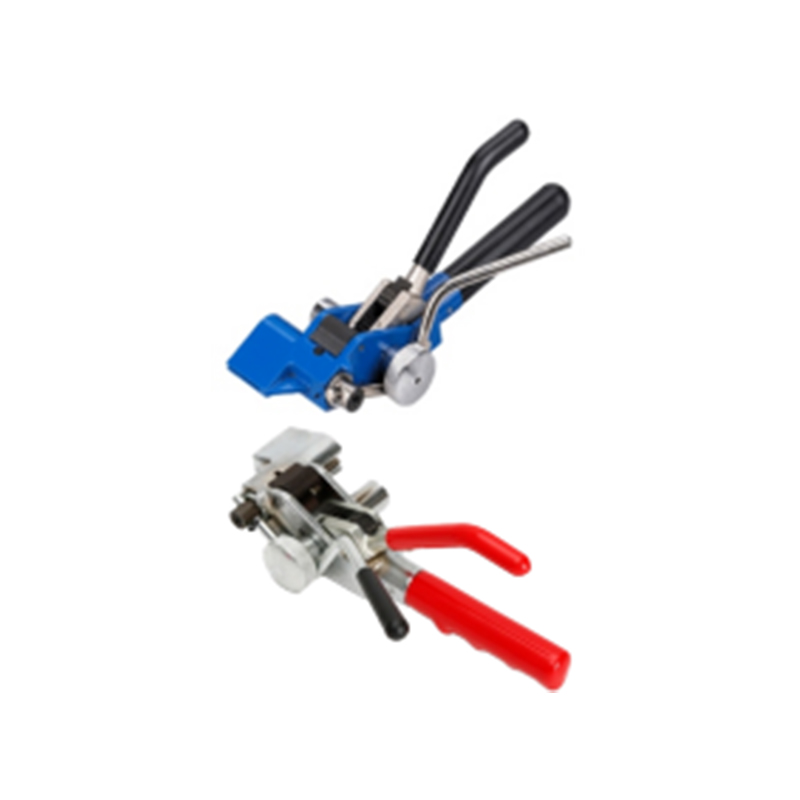 LQA Stainless Steel Cable Tie Strapping ToolA hand tool for tensioning and cutting stainless steel ties from 8 to 16 mm, with adjustable tension for repeatable, controlled installations.View Product →
Most outdoor failures are procurement failures, not manufacturing ones. A purchase order that specifies "UV resistant, black" leaves the stabilizer package entirely to the supplier's discretion, and price pressure will find the cheapest compound that still passes a visual check.
Consistency is easier to verify with a manufacturer than with a trader. Our own plant in Shangyu, Shaoxing covers 25,000 m² with in-house production and inspection equipment, ships through Ningbo and Shanghai, and runs output in the range of 100 million stainless ties, 40 million clamps and 130 million nylon ties — which is the kind of volume that makes a stated stabilizer package repeatable across reorders.
No. Carbon black helps only when it is present at a proper loading alongside a light stabilizer. Ask for the datasheet rather than judging by color.
They do, but standard nylon becomes brittle at low temperatures. Nylon 12, acetal or 316 stainless handle freeze-thaw and wind loading far better.
Not automatically. UV stabilizers and heat stabilizers are different additive systems, and a tie rated for full sun may still soften at 85 °C.
Yes, for a season or a temporary installation, provided nobody depends on them beyond that. Expect surface chalking within months and plan the replacement.
Dry, sealed and out of direct sun. Nylon absorbs moisture, and a damp bag left on a dashboard for a summer is a poor start for any outdoor installation.
UV resistance is a material decision, not a marketing claim. Match the polymer to the sun hours, the salt and the temperature the bundle will actually see, confirm the stabilizer package in writing, and install with controlled tension on protected edges. Do that, and the tie is still doing its job when the next inspection comes around.
The single cable Cleats made of 316 stainless steel is used for cable management. It is corrosion-resistant, high-temperature resistant and meets international standards. It is suitable for various ha...
See Detail
Manufactured from high-grade 316 stainless steel, this cable management system is specifically designed for secure cable retention in power generation, petrochemical, marine, offshore platforms, and c...
See Detail
Brand Name: FengfanApproved Certificate: DNV & ABS.Product Description: Cable Fixing Band and ClipsThe Lower Cost Alternative to Cable Cleats Product Benefits- Low profile finish- 316 grade stain...
See DetailMobile: +86-136 7685 3958
Email: lihai.fan@zjffdl.com
Mobile: +86-188 57530390
Email: alan.huang@zjffdl.com
No. 1116 Yasha Ave, Cao’e Street, Shangyu District, Shaoxing City, Zhejiang, China, 312300

+86-0575-8215 2808
/8200 8688/8239 2526

+86-0575-8215 2066
Copyright ©Zhejiang Fengfan Cable Fittings Co.,Ltd.
