


 English
 中文简体
中文简体
+86-0575-8215 2808
/8200 8688/8239 2526
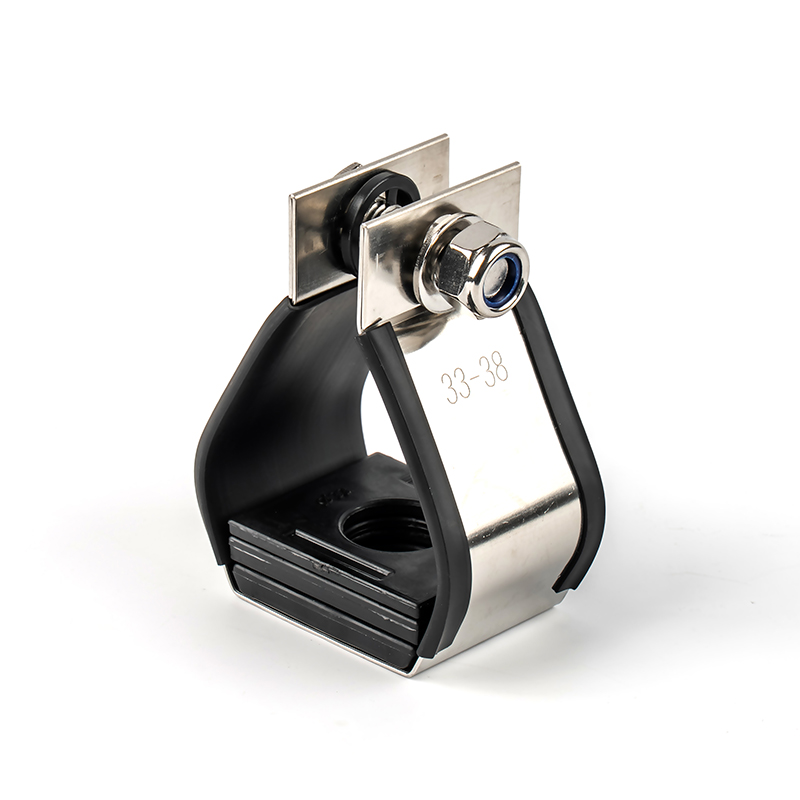
The single cable Cleats made of 316 stainless stee...
View more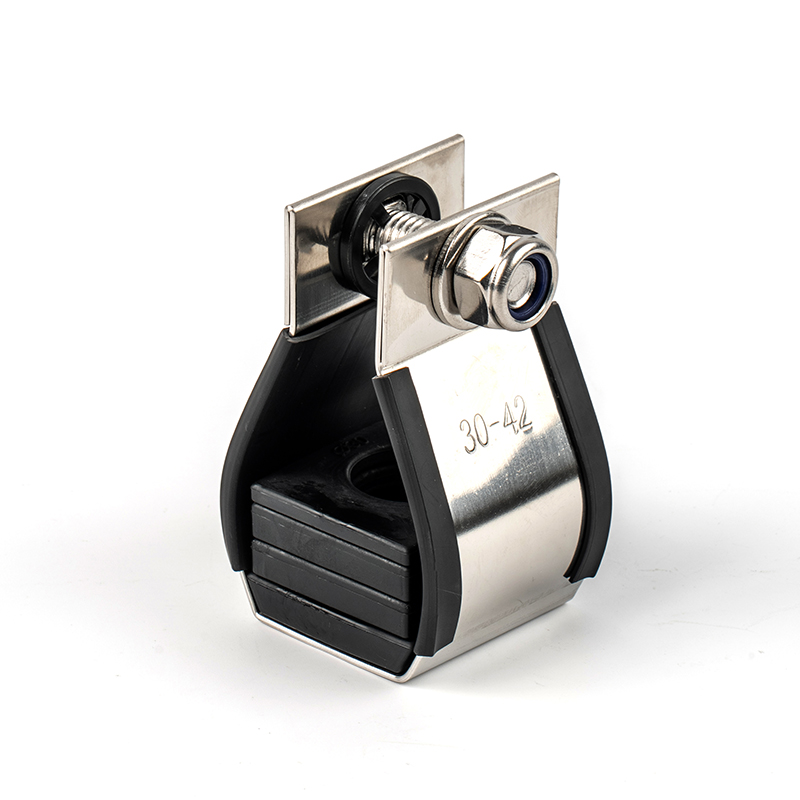
Manufactured from high-grade 316 stainless steel, ...
View more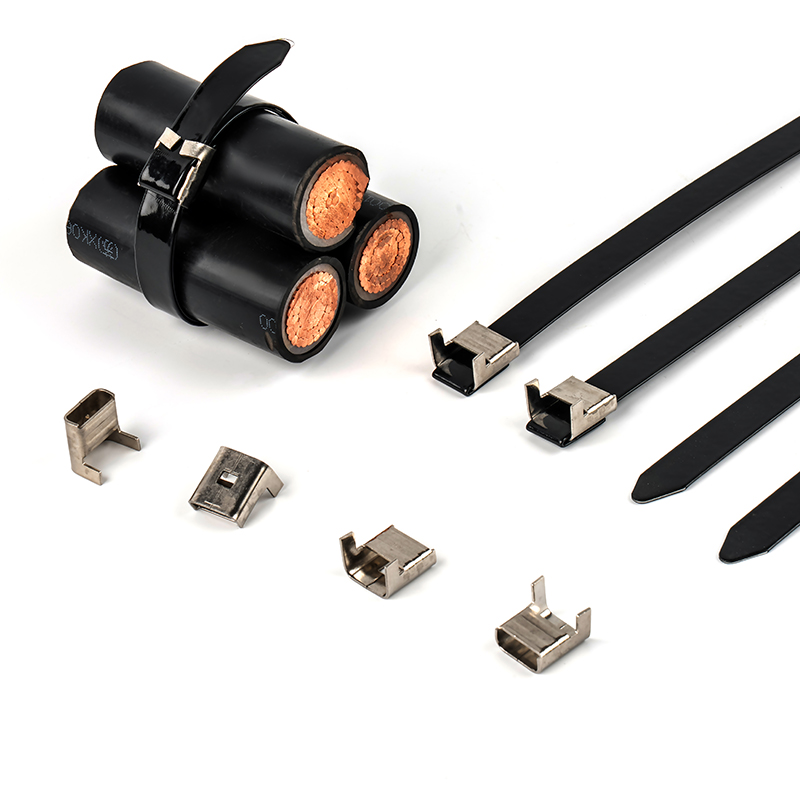
Brand Name: FengfanApproved Certificate: DNV &...
View moreContent
The 2026 buildout of solar, wind, and battery storage projects is driving a direct and measurable increase in demand for cable management hardware. Utility-scale sites need far more Cable Ties, Stainless Steel Strapping, Cable Clamps, Cable Cleats, and Cable Markers per megawatt than a decade ago, and the products winning specification are increasingly the corrosion-resistant and UV-stable variants: Weather Resistant Acetal PPA Coated Ties, Ball Lock Stainless Steel Ties, Nylon Coated Stainless Steel Ties, Ball Lock Semi-Coated Ties, and Barb-Lock Nylon Cable Ties. For buyers and installers, the practical takeaway is simple: material selection now matters as much as price, because outdoor renewable sites fail cable management hardware faster than any other application.
Renewable capacity additions are not slowing down in any market that matters to cable accessory exporters. Global renewable capacity additions rose by roughly 16 percent year over year, pushing annual additions to around 800 gigawatts, with solar photovoltaic alone accounting for more than three-quarters of that growth. China is forecast to commission close to 235 gigawatts of new solar and 98 gigawatts of new wind capacity in 2026 on its own. In the United States, the Energy Information Administration expects utility-scale solar, wind, and battery storage to add more than 80 gigawatts of new generating capacity by early 2027, with battery storage capacity growing fastest of all.
Illustrative Annual Renewable Capacity Growth Trend
Figures are directional industry estimates intended to show the trend, not a single unified global total.
The single biggest driver of premature cable tie failure on renewable sites is mismatched material selection. Fengfan Cable's product range covers uncoated, polyester, PVC, and PPA coated stainless ties alongside nylon and acetal families, which lets a buyer specify the right product for each zone of a project rather than using one tie type everywhere. The table below summarizes which product family typically fits which condition.
| Product | Best Fit Condition | Key Advantage |
| Barb-Lock Nylon Cable Ties | General indoor and semi-outdoor wiring harnesses | High tensile hold with a locking barb that resists vibration back-out |
| Weather Resistant Acetal PPA Coated Ties | Coastal solar farms, high UV exposure sites | Low moisture absorption and stronger banding strength than standard nylon under UV |
| Ball Lock Stainless Steel Ties | Wind turbine nacelles, high-temperature zones | Rated from minus 80°C to 538°C, entirely metallic and fireproof |
| Nylon Coated Stainless Steel Ties | Substations, marine platforms, chemically aggressive sites | Steel strength with a coating that protects cable jacketing from abrasion |
| Ball Lock Semi-Coated Ties | Battery storage enclosures, high-vibration equipment | Partial coating balances grip strength with cable protection |
Fengfan Cable Product Line for New Energy Applications
Core product families supplied to solar, wind, and storage projects, from bundling to fault protection.
Module string wiring and combiner box runs rely on UV-stable nylon and Weather Resistant Acetal PPA Coated Ties, since standard indoor-grade nylon becomes brittle within one to two seasons of direct sun exposure.
Inside the nacelle, heat and vibration favor Ball Lock Stainless Steel Ties, while tower base cabling often uses Cable Cleats to hold conductors in position if a short-circuit fault occurs.
Dense enclosures with power and communication cabling side by side use Ball Lock Semi-Coated Ties and Cable Clamps to keep runs separated and serviceable.
High-voltage feeder runs are bundled with Stainless Steel Strapping and labeled with Cable Markers so maintenance crews can trace circuits years after commissioning.
Distribution is a representative estimate based on typical DC and AC wiring layouts, actual ratios vary by project design.
| Consideration | Why It Matters for New Energy Projects |
| ISO, UL, DNV, ABS, CE, RoHS, REACH | Required by most utility-scale EPC contractors before hardware can be specified into a bill of materials |
| Tensile strength rating | Determines correct sizing for bundle diameter and load, especially for Stainless Steel Strapping on feeder cables |
| UV and temperature range data | Outdoor sites need documented performance across the full seasonal range, not just room-temperature specifications |
| OEM and ODM capability | Large developers increasingly request custom lengths, colors, or printed markers for site-specific identification |
| Lead time and export logistics | Renewable project schedules compress fast once financing closes, so consistent stock availability and port access matter as much as unit price |
Key Takeaway
As solar, wind, and storage capacity keeps expanding through 2026, cable management hardware demand grows with it, and the mix is shifting toward higher-performance products. Fengfan Cable's range of ISO, UL, DNV, ABS, CE, RoHS, and REACH approved nylon, acetal, and stainless steel products, manufactured near the Ningbo, Hangzhou, and Shanghai ports, is built for exactly this shift: buyers who standardize on weather resistant and corrosion-resistant tie families now avoid costly field failures later.
The single cable Cleats made of 316 stainless steel is used for cable management. It is corrosion-resistant, high-temperature resistant and meets international standards. It is suitable for various ha...
See Detail
Manufactured from high-grade 316 stainless steel, this cable management system is specifically designed for secure cable retention in power generation, petrochemical, marine, offshore platforms, and c...
See Detail
Brand Name: FengfanApproved Certificate: DNV & ABS.Product Description: Cable Fixing Band and ClipsThe Lower Cost Alternative to Cable Cleats Product Benefits- Low profile finish- 316 grade stain...
See DetailMobile: +86-136 7685 3958
Email: lihai.fan@zjffdl.com
Mobile: +86-188 57530390
Email: alan.huang@zjffdl.com
No. 1116 Yasha Ave, Cao’e Street, Shangyu District, Shaoxing City, Zhejiang, China, 312300


+86-0575-8215 2808
/8200 8688/8239 2526

+86-0575-8215 2066
Copyright ©Zhejiang Fengfan Cable Fittings Co.,Ltd.
