


 English
 中文简体
中文简体
+86-0575-8215 2808
/8200 8688/8239 2526
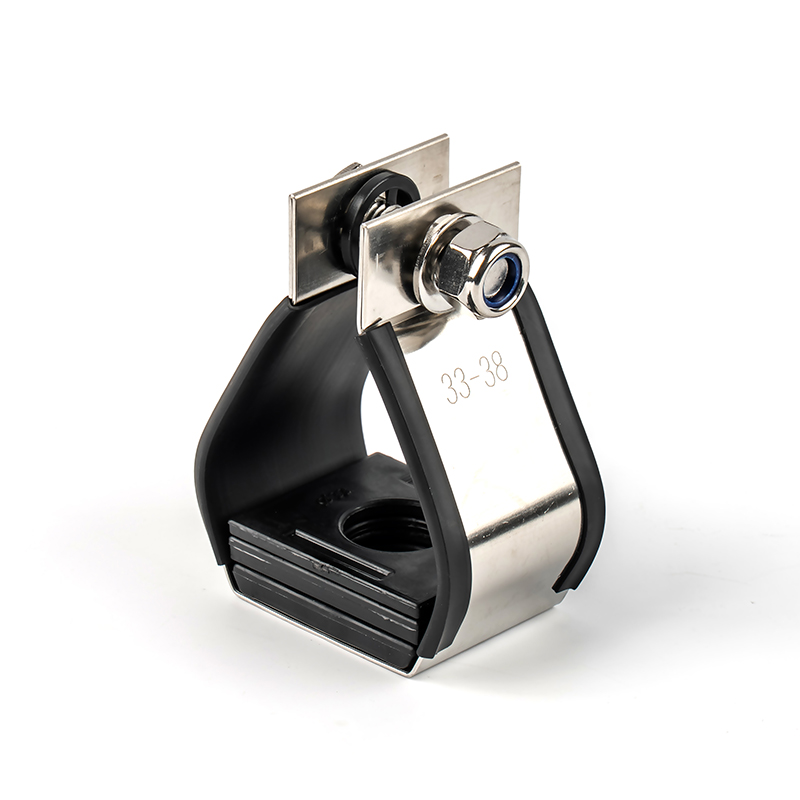
The single cable Cleats made of 316 stainless stee...
View more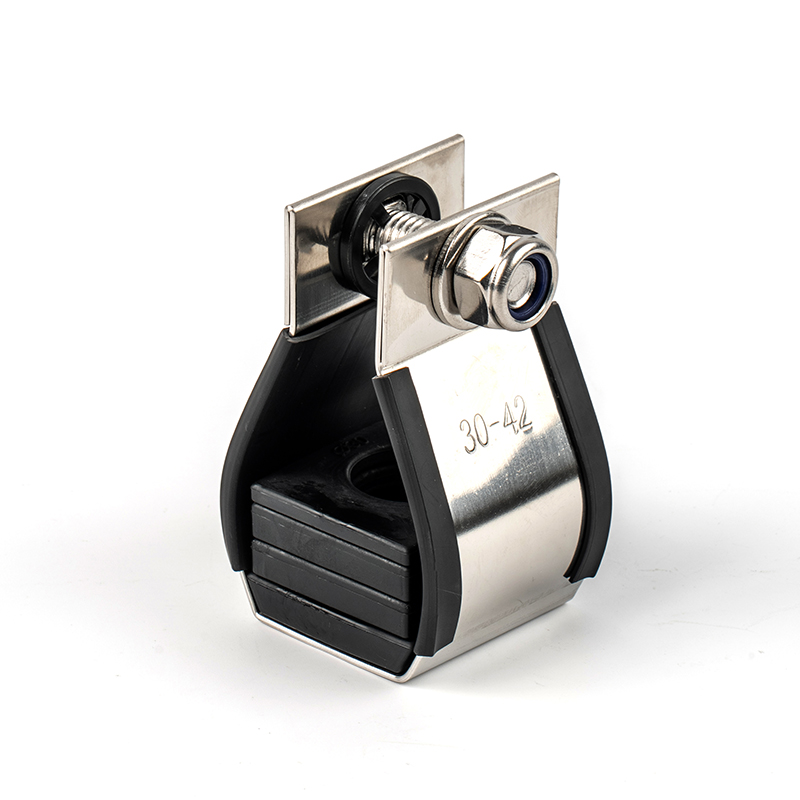
Manufactured from high-grade 316 stainless steel, ...
View more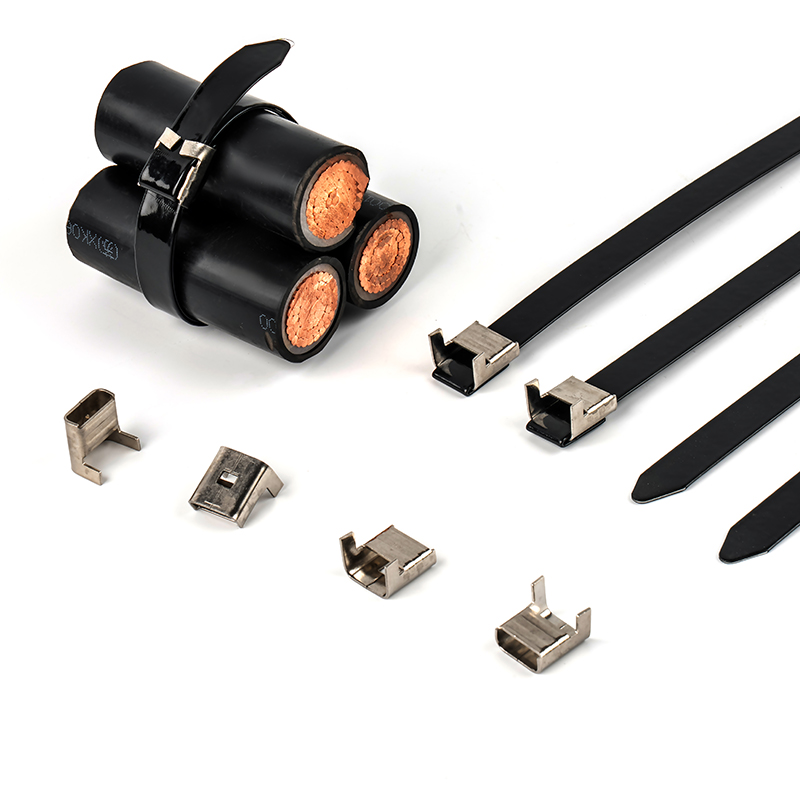
Brand Name: FengfanApproved Certificate: DNV &...
View moreContent
Yes — silver zip ties made for outside work do exist, and the most dependable version is not a dyed nylon tie at all. Stainless steel cable ties are silver in their natural finish, immune to ultraviolet light, and specified for exactly the places where plastic ties give up: rooftop solar rails, fence mesh on coastal sites, antenna cabling on towers, shipboard cable trays and offshore platforms.
The confusion comes from retail packs of glossy grey nylon ties. They look ready for the weather, yet unless the datasheet explicitly states UV stabilization, most are indoor products that turn brittle under direct sun. Separating genuine outdoor-grade ties from cosmetic look-alikes is the whole point of this guide: below you will find what actually makes a "silver" tie outdoor-capable, why standard nylon fails outside, and how to match strength, coating and lock type to your site conditions.
Stainless steel ties owe their color to the metal itself, so they never fade, chalk or discolor outdoors. Ball-lock, L-type, ladder and micro formats cover bundles from a few millimeters up to heavy cable groups, and the alloy choice matters more than the shade: 304 handles general outdoor work, while 316, with its added molybdenum, is the default for salt spray, marine decks and chemical plants. For the construction details, locking mechanics and grade differences in one place, this overview of what stainless steel cable ties are walks through the essentials.
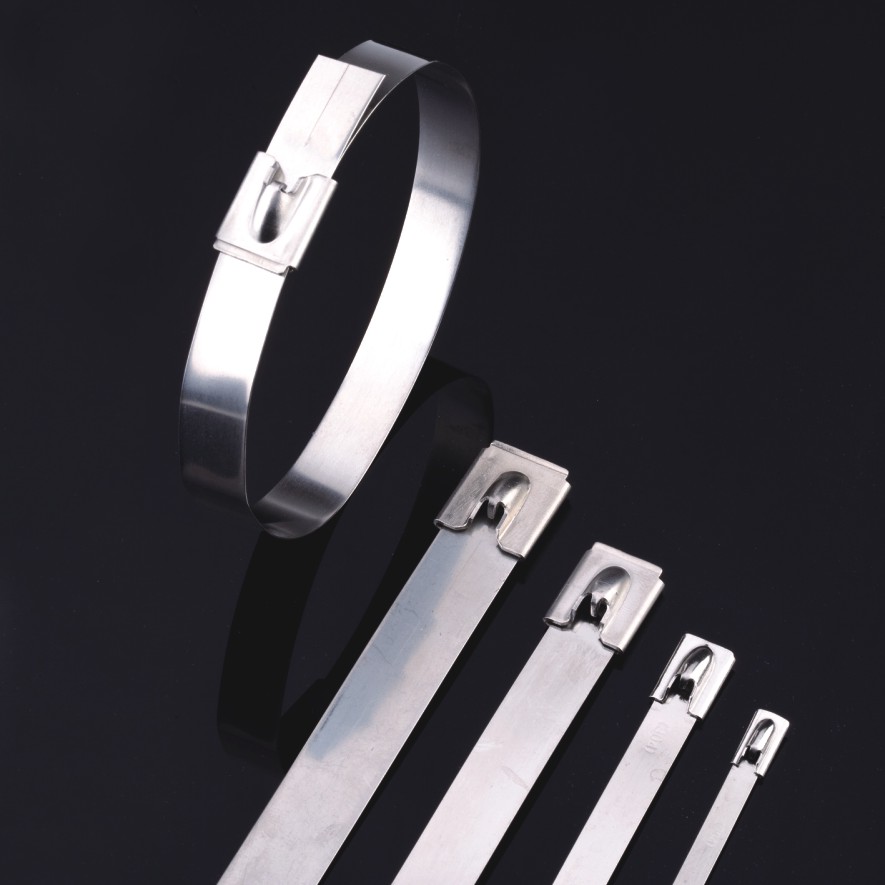 Stainless Steel Ball-Lock Cable Ties for Outdoor BundlingStainless steel ties keep their color and strength outdoors, with ball-lock formats covering small to heavy bundles. This overview suits readers comparing 304 and 316 grades for permanent exterior installations.View Product →
Nylon 6.6 can be dyed grey or silver to match equipment enclosures, and there is nothing wrong with that when the job is indoors or short-term. For continuous outdoor exposure, the material to shortlist instead is weather-resistant acetal (POM). Its light-grey finish reads as silver from a distance, and the polymer is far more stable under UV than standard nylon — one reason acetal double-buckle ties are used on exterior telecom cabinets, power distribution boxes and rooftop hardware.
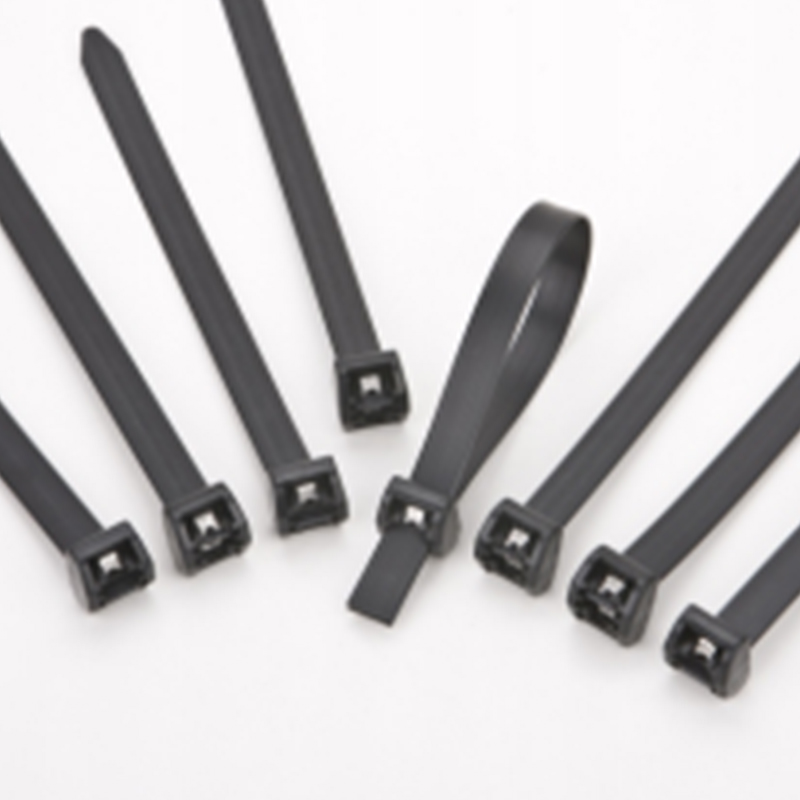 Weather-Resistant Acetal Double Buckle Cable TieStandard nylon degrades quickly under UV, while acetal resists sunlight, moisture and saltwater for years of outdoor service. These double buckle ties fit telecom cabinets, distribution boxes and rooftop hardware.View Product →
Sunlight, not rain, is what kills a nylon zip tie. Ultraviolet radiation breaks the polymer chains in nylon 6/6, so the tie stiffens, whitens and finally snaps — often right at the lock head. In hot, high-UV climates that failure can arrive within a single summer; in milder regions it typically takes one to three years. Freeze-thaw cycling, repeated moisture absorption and salt deposits all accelerate the same process.
Two buying points follow from this. First, a silver dye adds no protection whatsoever — UV resistance comes from stabilizer packages and inherently stable polymers, not from color. Second, even UV-stabilized nylon only buys time, not permanence. The chart below shows the typical shape of that decay.
Four product families cover permanent outdoor bundling, and they differ mainly in how they handle UV, salt, abrasion and cost. Coated stainless steel deserves a specific mention: a PVC or polyester layer over the 316 core adds electrical insulation, protects galvanized and painted surfaces from scratching, and gives visible runs a tidier, finished appearance. PVC coating is the economical choice for moderate duty, while polyester and PPA coatings hold up better against weathering and chemical exposure.
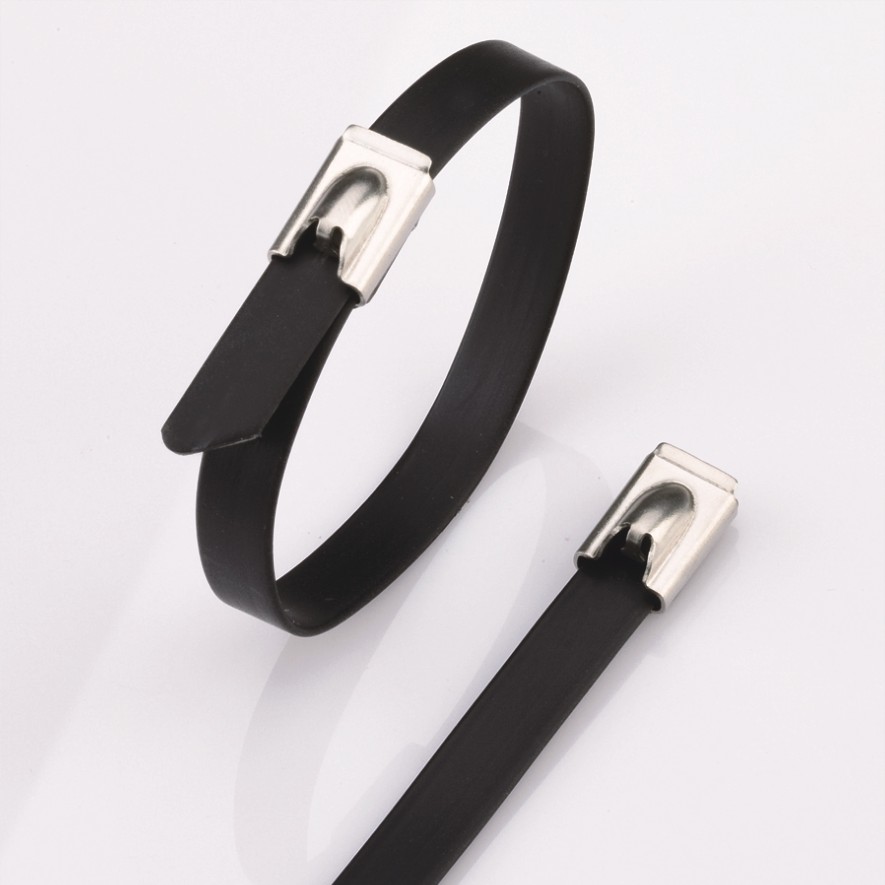 Ball-Lock Stainless Steel Cable Ties with PVC CoatingA PVC layer over the stainless steel core adds insulation, protects surfaces from scratching and offers a tidy finish at economical cost. These ties suit moderate-duty outdoor bundling with UV resistance.View Product →
| Tie type | Finish | Outdoor suitability | Typical outdoor use |
|---|---|---|---|
| Stainless steel 316, uncoated | Natural metallic silver | Excellent — no UV degradation, resists salt and chemicals | Offshore, shipbuilding, solar farms, chemical plants |
| Stainless steel 316, coated (PVC / polyester / PPA) | Silver core under coating | Excellent — adds insulation and abrasion protection | Visible runs, public infrastructure, vibrating equipment |
| Weather-resistant acetal | Light grey, silver-like | Very good — UV-stable polymer for long exterior life | Telecom hardware, rooftop and outdoor power boxes |
| UV-stabilized nylon 6.6 | Dyed silver or grey | Good for a limited number of years, then degrades | Seasonal jobs, temporary bundling with planned replacement |
| Standard nylon 6/6 | Any dyed color | Poor — embrittles within months to a few years in sun | Indoor use only |
Loop tensile strength decides whether the tie survives wind load, cable weight and thermal movement. Standard 4.8 mm nylon ties rate around 50 lbf and heavy-duty nylon around 120 lbf, while a 4.6 mm stainless steel tie reaches roughly 270 lbf and a 7.9 mm tie about 485 lbf. For exterior bundles exposed to wind, ice or sustained tension, size the tie with a safety margin of two to three times the steady load.
Ball-lock and ladder-style heads hold better under vibration than smooth single locks, and stainless installations need the matching tensioning and cut-off tools to reach rated strength without fraying the strap. A short sequence keeps the decision honest:
Worked through in order, these four steps prevent most field failures. The same logic is expanded in this guide on how to choose stainless steel cable ties, including coating selection by atmosphere.
Only if the manufacturer lists UV stabilization for outdoor service. Standard silver-dyed nylon is a cosmetic variant of an indoor product and will embrittle in direct sun. If the datasheet is silent on UV, treat the tie as indoor-rated.
304 grades cope with normal weather but can stain in chloride-rich coastal air. For marine exposure, de-icing salt or chemical plants, specify 316 — its molybdenum content resists pitting — and consider coated versions where the tie contacts dissimilar metals.
PVC coating suits budget-driven projects with light abrasion. Polyester and PPA coatings withstand weathering, chemicals and salt far better, so they are the usual choice for offshore-adjacent and heavy industrial sites.
Yes, and that is one of their quiet strengths: the metallic finish blends with stainless enclosures, solar rails and machine frames instead of standing out the way black or brightly colored ties do.
The short answer to "are there silver zip ties made for outside" is yes: specify stainless steel cable ties for permanent installations, weather-resistant acetal for lighter exterior bundling, and UV-stabilized nylon only where replacement is already planned. Sourcing all three families from one manufacturer also keeps alloys, coatings, widths and the matching tensioning tools consistent across a project — a detail worth confirming before you commit to a single supply.
The single cable Cleats made of 316 stainless steel is used for cable management. It is corrosion-resistant, high-temperature resistant and meets international standards. It is suitable for various ha...
See Detail
Manufactured from high-grade 316 stainless steel, this cable management system is specifically designed for secure cable retention in power generation, petrochemical, marine, offshore platforms, and c...
See Detail
Brand Name: FengfanApproved Certificate: DNV & ABS.Product Description: Cable Fixing Band and ClipsThe Lower Cost Alternative to Cable Cleats Product Benefits- Low profile finish- 316 grade stain...
See DetailMobile: +86-136 7685 3958
Email: lihai.fan@zjffdl.com
Mobile: +86-188 57530390
Email: alan.huang@zjffdl.com
No. 1116 Yasha Ave, Cao’e Street, Shangyu District, Shaoxing City, Zhejiang, China, 312300


+86-0575-8215 2808
/8200 8688/8239 2526

+86-0575-8215 2066
Copyright ©Zhejiang Fengfan Cable Fittings Co.,Ltd.
