


 English
 中文简体
中文简体
+86-0575-8215 2808
/8200 8688/8239 2526
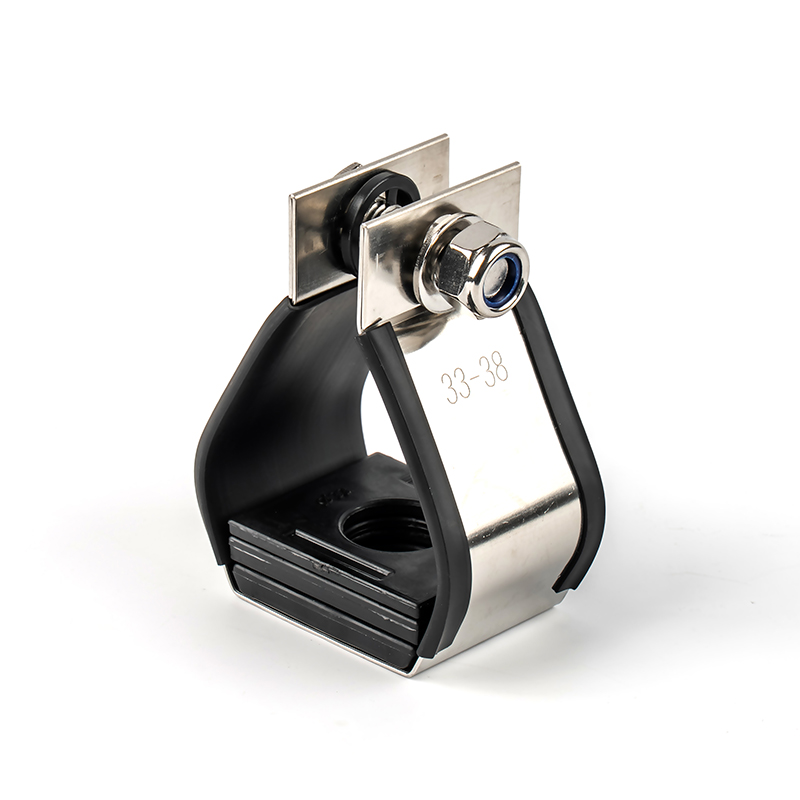
The single cable Cleats made of 316 stainless stee...
View more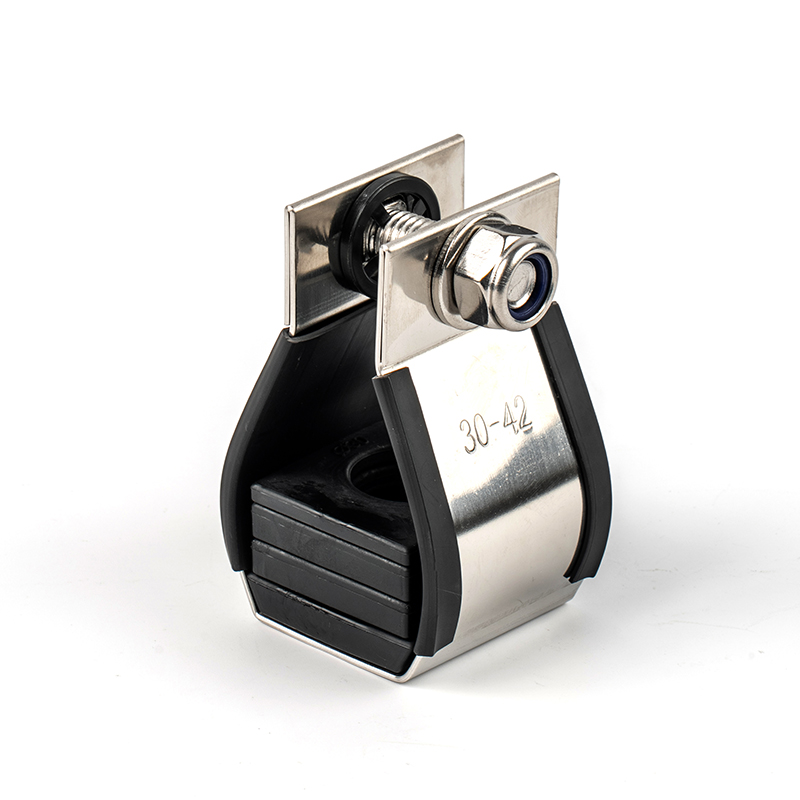
Manufactured from high-grade 316 stainless steel, ...
View more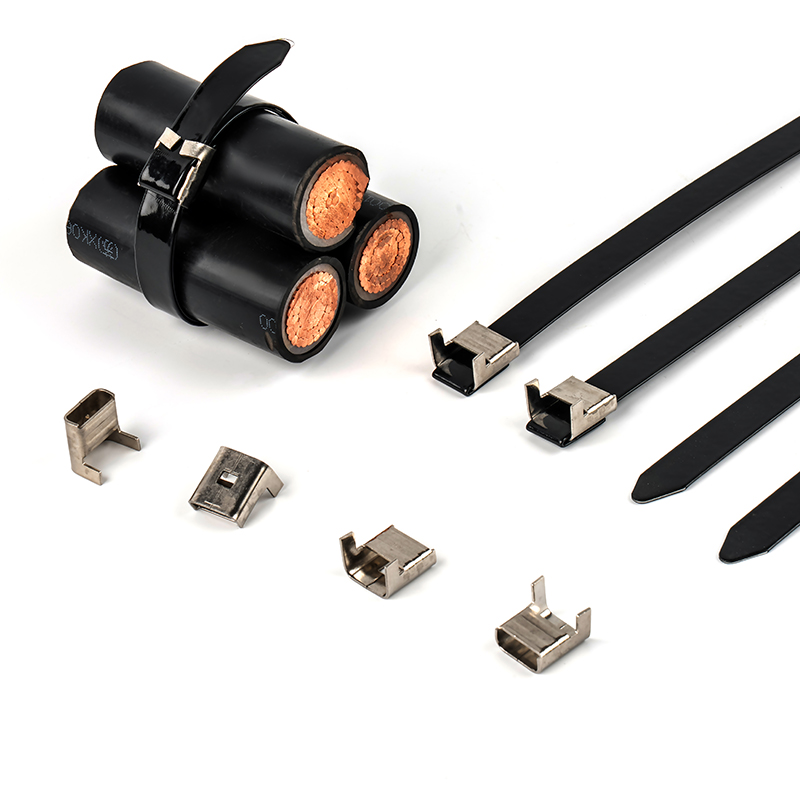
Brand Name: FengfanApproved Certificate: DNV &...
View moreContent
Amid accelerating global industrial infrastructure upgrades and surging demand for extreme-environment applications, stainless steel cable ties have become the preferred fastening solution across critical sectors including power utilities, marine engineering, and rail transit. Compared to traditional nylon cable ties, stainless steel variants deliver superior corrosion resistance, high-temperature tolerance, UV aging immunity, and exceptional mechanical strength. Their service life extends 5 to 10 times longer than nylon alternatives, demonstrating irreplaceable engineering value under demanding operating conditions.
Stainless steel cable ties have expanded from conventional cable management into multiple high-technology sectors, where their performance advantages directly determine system reliability and maintenance costs.
Marine environments present extreme challenges with high salinity and humidity. Stainless steel cable ties manufactured from 304 or 316 stainless steel resist long-term seawater and salt spray corrosion, ensuring stability for shipboard cable bundles and pipeline fixation systems. In offshore wind platforms and deep-sea drilling facilities, stainless steel cable ties have become mandatory standard equipment.
High-speed trains and automobiles operate under continuous vibration and temperature fluctuations. Stainless steel cable ties exhibit outstanding anti-vibration performance and heat resistance, maintaining mechanical integrity across a temperature range of -80°C to 538°C. This effectively prevents system failures caused by cable loosening. In high-speed train carriage wiring and automotive engine compartment harness management, adoption rates now exceed 85%.
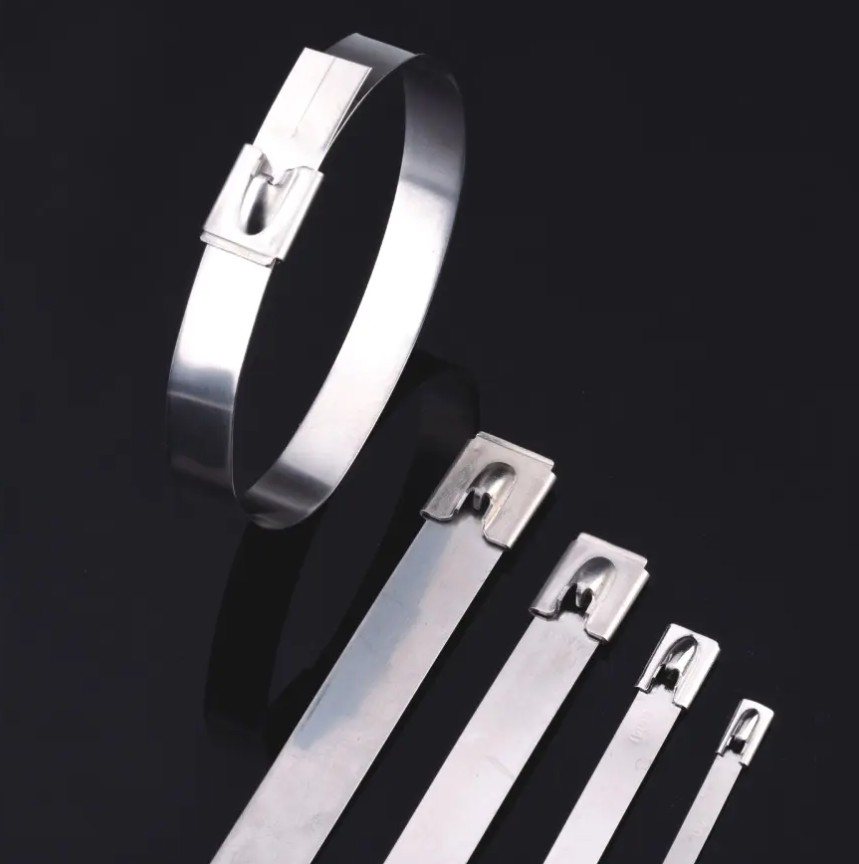
In outdoor installations such as substations, transmission towers, and 5G base stations, stainless steel cable ties must simultaneously withstand UV radiation, acid rain, and electromagnetic interference. Designs featuring electrical insulation outer layers (PVC/EPDM coating) further enhance safety ratings and reduce short-circuit risks.
The technical evolution of stainless steel cable ties focuses on two dimensions: locking mechanism structures and surface treatments, with different designs corresponding to specific operational requirements.
| Type | Locking Structure | Typical Tensile Strength | Application Scenario | Reusability |
|---|---|---|---|---|
| Ball-Lock Type | Ball-Type Buckle | 80-160 kg | General Cable Bundle Fixing | Detachable |
| L-Lock Type | L-Type Ratchet | 100-200 kg | Permanent Heavy-Duty Fixing | Non-Detachable |
| Coated Type | Metal/Coated Composite | 70-150 kg | Insulation Protection Required | Structure-Dependent |
| Spray-Coated Type | Metal Buckle + Spray Layer | 75-140 kg | High-Corrosion Environments | Structure-Dependent |
Surface treatment directly impacts environmental adaptability. Mainstream processes include:
Installation efficiency directly affects project timelines and labor costs. Standardized installation procedures combined with professional tools can reduce single-point fixation time to 3-5 seconds.
For large-scale engineering scenarios, pneumatic cable tie guns and electric bundling tools can achieve installation rates of 500-800 fixation points per hour, while improving tension control precision to ±5%. This prevents cable damage from over-tightening or fixation failure from insufficient tension.
Proper selection is the prerequisite for maximizing stainless steel cable tie performance. Three dimensions must be comprehensively evaluated: environmental conditions, load requirements, and installation constraints.
| Evaluation Dimension | Key Parameters | Recommended Specification |
|---|---|---|
| Environmental Corrosivity | Salt Spray Concentration, pH Level | 316 Grade + Spray/Coated Finish |
| Temperature Range | Maximum/Minimum Operating Temperature | 304 Grade (-80°C to 400°C) |
| Mechanical Load | Cable Weight, Vibration Level | Width ≥7.9mm, L-Lock Type |
| Electrical Insulation | Voltage Rating, Safety Clearance | Fully Coated or Spray-Coated Type |
For pipe bundles or heavy cable assemblies exceeding 50mm in diameter, specifications with width of 12mm or above and thickness of 0.4mm or above are recommended, combined with L-type permanent locking structures to ensure long-term structural integrity under sustained loads.
The stainless steel cable tie industry is transitioning from standardized products toward intelligent and customized solutions, with the integration of new materials and digital technologies reshaping product forms.
Super duplex stainless steels (such as 2205, 2507) and nickel-based alloy cable ties are entering extreme-condition markets including nuclear power and aerospace. Their Pitting Resistance Equivalent Number (PREN) can reach above 40, significantly exceeding the 24-26 range of standard 316 grades. Meanwhile, research into degradable coating materials is advancing to reduce microplastic pollution risks in marine environments.
Some premium products now integrate RFID tags or stress-sensing coatings, enabling real-time monitoring of fastening status and corrosion levels. Through IoT platforms, predictive maintenance is achievable. This technology is currently being piloted in smart grids and intelligent shipping, with potential to improve equipment inspection efficiency by over 60%.
Globally, stainless steel cable tie manufacturing is progressively adopting acid-free environmentally friendly processes and closed-loop water recycling systems, reducing carbon emissions by approximately 30% compared to conventional methods. International standards organizations (ISO) and national industry associations are also accelerating the unification of testing methods and performance classification systems, driving market transformation from price-based to quality-based competition.
The single cable Cleats made of 316 stainless steel is used for cable management. It is corrosion-resistant, high-temperature resistant and meets international standards. It is suitable for various ha...
See Detail
Manufactured from high-grade 316 stainless steel, this cable management system is specifically designed for secure cable retention in power generation, petrochemical, marine, offshore platforms, and c...
See Detail
Brand Name: FengfanApproved Certificate: DNV & ABS.Product Description: Cable Fixing Band and ClipsThe Lower Cost Alternative to Cable Cleats Product Benefits- Low profile finish- 316 grade stain...
See DetailMobile: +86-136 7685 3958
Email: lihai.fan@zjffdl.com
Mobile: +86-188 57530390
Email: alan.huang@zjffdl.com
No. 1116 Yasha Ave, Cao’e Street, Shangyu District, Shaoxing City, Zhejiang, China, 312300


+86-0575-8215 2808
/8200 8688/8239 2526

+86-0575-8215 2066
Copyright ©Zhejiang Fengfan Cable Fittings Co.,Ltd.
