


 English
 中文简体
中文简体
+86-0575-8215 2808
/8200 8688/8239 2526
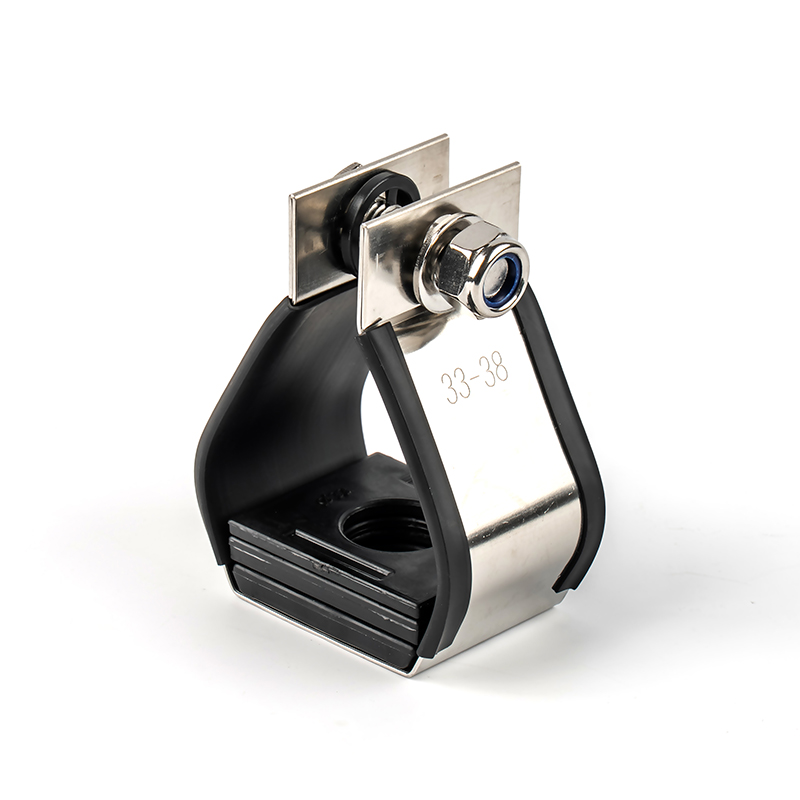
The single cable Cleats made of 316 stainless stee...
View more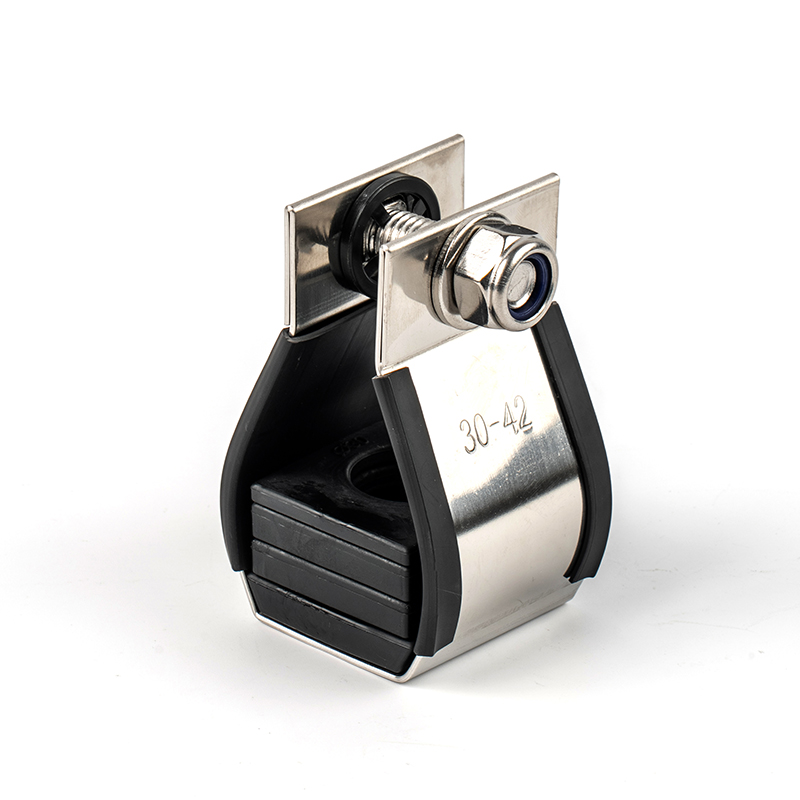
Manufactured from high-grade 316 stainless steel, ...
View more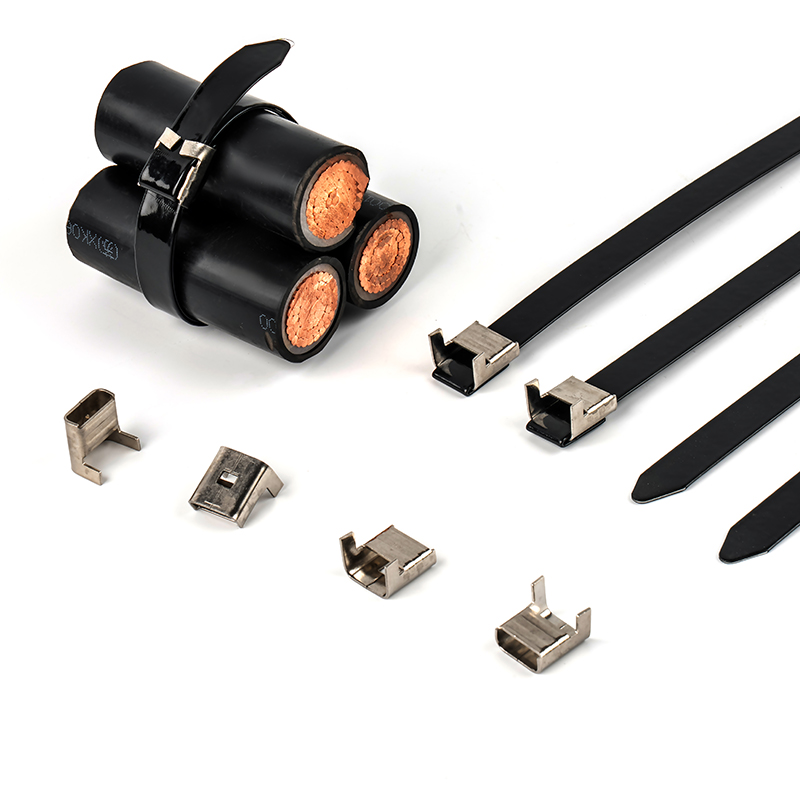
Brand Name: FengfanApproved Certificate: DNV &...
View moreContent
Nylon cable ties become brittle and prone to breaking when temperatures drop below 5°C (41°F) because the polyamide material undergoes glass transition, losing its flexibility and impact resistance.
Nylon 6/6, the standard material for cable ties, has a glass transition temperature (Tg) of approximately 50-60°C (122-140°F). When ambient temperatures fall below 5°C, the polymer chains lose mobility, causing the material to transition from a rubbery state to a glassy, rigid state. This molecular change reduces elongation at break from the typical 30-50% to less than 10%, making the ties susceptible to snapping under stress or impact.
| Temperature Range | Behavior | Failure Risk |
|---|---|---|
| Above 10°C (50°F) | Normal flexibility | Low |
| 5°C to -10°C (41°F to 14°F) | Reduced flexibility, increased stiffness | Moderate |
| Below -10°C (14°F) | Glass-like brittleness | High - prone to shattering |
Nylon cable ties exhibit reduced tensile strength in summer because elevated temperatures (above 30°C/86°F) cause moisture loss and thermal softening, potentially decreasing load capacity by 15-30%.
Nylon is hygroscopic, meaning it absorbs moisture from the environment to maintain optimal mechanical properties. In hot, dry summer conditions, ties lose this moisture content, leading to embrittlement. Simultaneously, temperatures approaching the heat deflection temperature (HDT) of 65-80°C (149-176°F) cause the polymer to soften, reducing the effective tensile strength from the rated 18-55 kg (40-120 lbs) to significantly lower values.
Properly conditioned nylon contains 2.5-3.5% moisture by weight. When this drops below 1.5% due to hot, arid conditions:
UV exposure compounds summer degradation. Standard nylon ties exposed to direct sunlight lose 10-15% of their strength per year, with accelerated failure in tropical climates.
Store nylon cable ties at 15-25°C (59-77°F) with 45-65% relative humidity, sealed in original packaging away from direct UV light and heat sources.
Proper storage maintains the equilibrium moisture content (EMC) necessary for nylon's mechanical integrity. Sealed polyethylene bags with desiccants prevent both excessive drying and moisture absorption that could lead to hydrolysis during long-term storage.
| Parameter | Optimal Range | Maximum Limits |
|---|---|---|
| Temperature | 15-25°C (59-77°F) | -20°C to 40°C (-4°F to 104°F) |
| Relative Humidity | 45-65% | 30-75% |
| Light Exposure | None (opaque packaging) | Indirect only |
| Shelf Life | 2-3 years unopened | 1 year if opened |
Avoid storing near radiators, HVAC vents, or windows. Temperature cycling between hot days and cool nights creates internal stress through repeated expansion and contraction, potentially initiating microcracks in the locking mechanism.
Locking mechanism failure typically results from improper insertion angle, debris contamination, material creep under sustained load, or manufacturing defects in the pawl tooth geometry.
The self-locking mechanism relies on a stainless steel or nylon pawl engaging with serrations on the tie strap. When this engagement is compromised, the tie slips or releases completely.
Ensure the tail is cut flush after application—protruding ends can catch and lever the pawl open. For critical applications, select ties with metal locking pawls (stainless steel 304 or 316) which maintain engagement integrity under vibration and thermal cycling.
Select ties with a minimum loop diameter 20% larger than your bundle, ensuring the length accommodates the circumference plus 50-75mm (2-3 inches) for the locking head and tail.
The bundling diameter determines both tie length and width requirements. Undersized ties create excessive tension concentration, while oversized ties waste material and may not tension properly due to excessive tail length.
Minimum Tie Length = (Bundle Diameter × π) + 50mm (2") for head clearance
For example, a 50mm (2") diameter bundle requires: (50 × 3.14) + 50 = 207mm minimum length. Select the next standard size: 200mm or 250mm (8" or 10").
| Bundle Diameter | Minimum Tie Length | Recommended Standard Length |
|---|---|---|
| 10-20mm (0.4-0.8") | 80-115mm | 100mm (4") |
| 20-40mm (0.8-1.6") | 115-180mm | 150mm (6") |
| 40-70mm (1.6-2.8") | 180-270mm | 200-250mm (8-10") |
| 70-120mm (2.8-4.7") | 270-430mm | 300-370mm (12-15") |
| 120-200mm (4.7-7.9") | 430-680mm | 450-550mm (18-22") |
For diameters exceeding 100mm (4"), use minimum 4.8mm (3/16") width to prevent the tie from cutting into soft cable insulation under tension. Heavy-duty bundles (150mm+/6"+) require 7.6mm (5/16") or 9.0mm (3/8") widths to distribute load properly.
Standard nylon cable ties range from 8kg (18lbs) for miniature 2.5mm ties to 114kg (250lbs) for heavy-duty 12.7mm ties, with intermediate ratings at 18kg (40lbs), 22kg (50lbs), 55kg (120lbs), and 80kg (175lbs).
Tensile strength ratings represent the minimum loop tensile strength (LTS) tested according to UL 62275 or MIL-S-23190E standards. These values indicate the static load at which the tie fails, not the recommended working load.
| Width (mm/inch) | Classification | Min. Tensile Strength | Typical Applications |
|---|---|---|---|
| 2.5mm (0.10") | Miniature | 8kg (18lbs) | PC wire, small sensors |
| 3.6mm (0.14") | Intermediate | 18kg (40lbs) | Residential wiring, light commercial |
| 4.8mm (0.19") | Standard | 22kg (50lbs) | General industrial, automotive |
| 7.6mm (0.30") | Heavy Duty | 55kg (120lbs) | Heavy machinery, marine |
| 9.0mm (0.35") | Extra Heavy Duty | 80kg (175lbs) | Construction, heavy equipment |
| 12.7mm (0.50") | Super Heavy Duty | 114kg (250lbs) | Mining, oil rigging, infrastructure |
Apply a 3:1 safety factor for static loads and 5:1 for dynamic or vibrating applications. A bundle weighing 10kg requires a tie rated for minimum 30kg (static) or 50kg (dynamic)—select the 55kg (120lbs) heavy-duty 7.6mm specification.
Nylon cable ties are manufactured in standard lengths from 80mm (3.1") to 1530mm (60"), with widths standardized at 2.5mm, 3.6mm, 4.8mm, 7.6mm, 9.0mm, and 12.7mm.
Length increments follow the metric system primarily, though imperial equivalents are common in North American markets. Not all widths are available in all lengths—miniature widths typically max out at 300mm, while super heavy-duty widths start at 200mm minimum.
| Width | 80-150mm | 200-370mm | 450-750mm | 900mm+ |
|---|---|---|---|---|
| 2.5mm | ● | ● | ○ | - |
| 3.6mm | ● | ● | ● | ○ |
| 4.8mm | ● | ● | ● | ● |
| 7.6mm | ○ | ● | ● | ● |
| 9.0mm+ | - | ○ | ● | ● |
Industrial-grade ties feature UV stabilization, wider operating temperature ranges (-40°C to 85°C), higher purity nylon 6/6 resin, and metal locking pawls, while household ties use standard nylon with plastic pawls and limited UV resistance (typically -10°C to 60°C).
The distinction extends beyond marketing terminology to measurable performance differences in material composition, manufacturing tolerances, and certification standards.
| Specification | Industrial-Grade | Household-Use |
|---|---|---|
| Material Grade | PA66 with UV inhibitors | Standard PA66 or PA6 |
| Temperature Range | -40°C to +85°C (-40°F to 185°F) | -10°C to +60°C (14°F to 140°F) |
| Locking Mechanism | Stainless steel pawl (304/316) | Nylon pawl |
| UV Resistance | 7-10 years outdoor exposure | 1-2 years (black only) |
| Certifications | UL Listed, MIL-SPEC, RoHS, REACH | None or basic CE |
| Color Options | Natural, UV black, colored (UV stable) | Natural, black (limited UV) |
| Dimensional Tolerance | ±0.1mm (precision molded) | ±0.3mm |
| Cost Ratio | 3x-5x base price | Base reference |
Choose industrial-grade for: outdoor installations, critical infrastructure, temperature extremes, chemical exposure, or vibration environments. Select household-grade for: indoor cable management, temporary bundling, light-duty organization, or cost-sensitive projects with replacement access.
This "bloom" is excess lubricant or antioxidant migrating to the surface, common in stored nylon. It does not affect mechanical performance and can be wiped off. Persistent whitening throughout the material indicates hydrolysis degradation—replace the ties.
Standard cable ties are single-use. The locking pawl permanently deforms during tensioning. Releasable (reusable) variants feature a release tab but sacrifice 30-40% of tensile strength and are not suitable for critical applications.
Creep is time-dependent plastic deformation under sustained stress. At 20°C and 50% rated load, nylon 6/6 exhibits 2-3% strain increase per year. Mitigate by using ties rated for 2x the actual load or selecting heat-stabilized formulations for high-temperature environments.
Standard colors (red, blue, yellow, green) use the same base resin with organic dyes and maintain equivalent mechanical properties. However, only carbon-black loaded ties provide meaningful UV resistance—colored ties without UV stabilizers degrade at the same rate as natural (white) ties in sunlight.
The single cable Cleats made of 316 stainless steel is used for cable management. It is corrosion-resistant, high-temperature resistant and meets international standards. It is suitable for various ha...
See Detail
Manufactured from high-grade 316 stainless steel, this cable management system is specifically designed for secure cable retention in power generation, petrochemical, marine, offshore platforms, and c...
See Detail
Brand Name: FengfanApproved Certificate: DNV & ABS.Product Description: Cable Fixing Band and ClipsThe Lower Cost Alternative to Cable Cleats Product Benefits- Low profile finish- 316 grade stain...
See DetailMobile: +86-136 7685 3958
Email: lihai.fan@zjffdl.com
Mobile: +86-188 57530390
Email: alan.huang@zjffdl.com
No. 1116 Yasha Ave, Cao’e Street, Shangyu District, Shaoxing City, Zhejiang, China, 312300


+86-0575-8215 2808
/8200 8688/8239 2526

+86-0575-8215 2066
Copyright ©Zhejiang Fengfan Cable Fittings Co.,Ltd.
