


 English
 中文简体
中文简体
+86-0575-8215 2808
/8200 8688/8239 2526
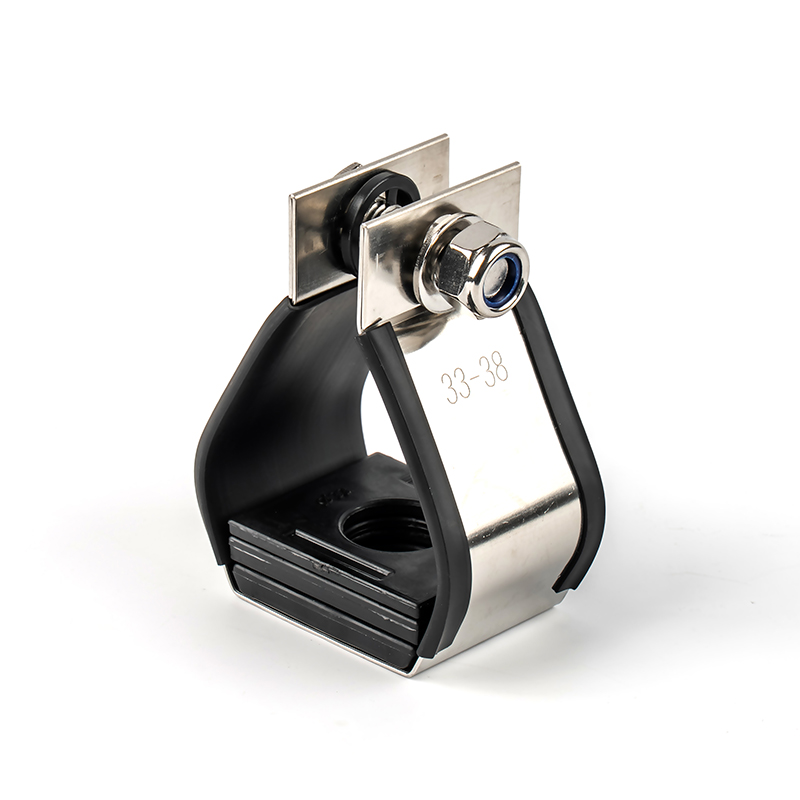
The single cable Cleats made of 316 stainless stee...
View more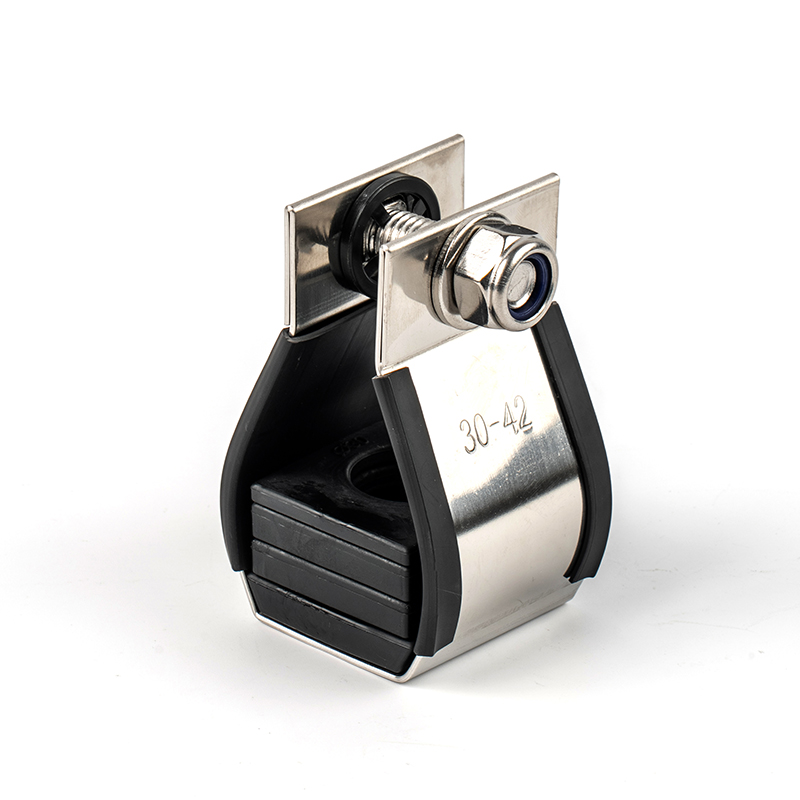
Manufactured from high-grade 316 stainless steel, ...
View more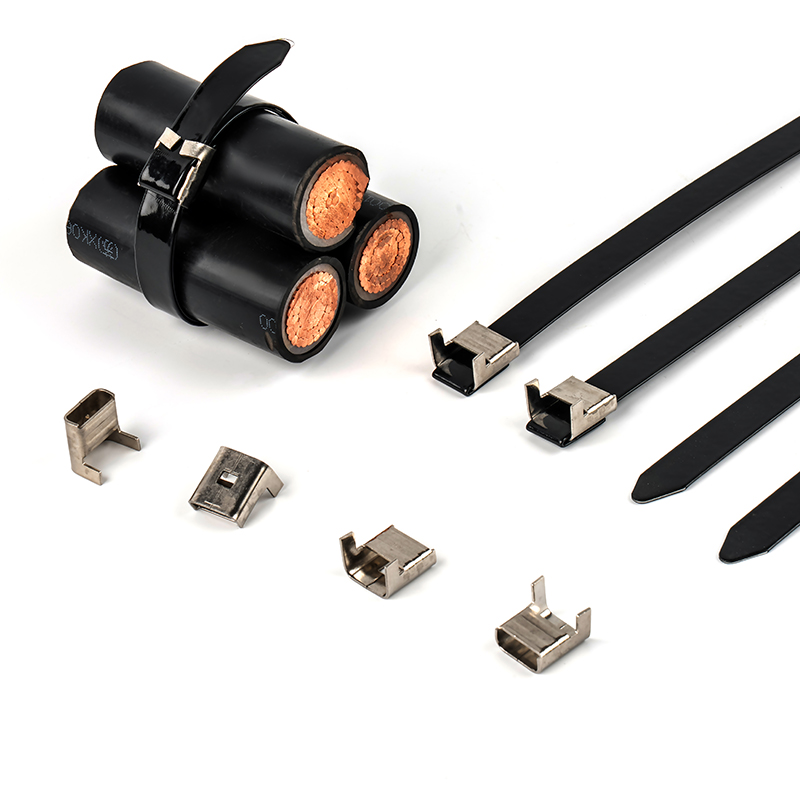
Brand Name: FengfanApproved Certificate: DNV &...
View moreContent
A cable marker is a permanent or semi-permanent identification device used to label electrical wires, cables, and harnesses for traceability, safety, and maintenance. The three primary types are heat-shrink sleeves (pre-termination only), self-laminating wrap-around labels (post-termination), and tie-on tags (for bundles and large cables). Leading brands include Brady, HellermannTyton, Panduit, 3M, and Silver Fox, with specifications typically covering temperature ranges from -40°C to 125°C, flame retardancy per UL 224, and shrink ratios of 2:1 or 3:1.
A cable marker is an identification tag, sleeve, or label applied to electrical conductors, cable bundles, or harnesses to convey critical information such as circuit numbers, voltage ratings, destination codes, or safety warnings. Unlike general adhesive labels, cable markers are engineered to withstand vibration, abrasion, chemical exposure, and temperature extremes common in industrial, marine, rail, and data-center environments.
Cable markers serve as the foundation of cable management systems. In complex installations—such as control panels, switchgear, aircraft wiring, or offshore platforms—proper marking reduces troubleshooting time by up to 50% and prevents hazardous misconnections during maintenance or retrofit work.
The material selection for a cable marker directly determines its durability, chemical resistance, and compliance with fire-safety standards. The four dominant material categories are cross-linked polyolefin, PVC, polyester/vinyl laminates, and halogen-free (LSZH) compounds.
Heat-shrink cable markers are manufactured from irradiated, cross-linked polyolefin. This material provides excellent electrical insulation, flame retardancy, and resistance to common fluids and lubricants. According to CYG specifications, polyolefin markers achieve a tensile strength of ≥10.3 MPa and maintain flexibility at -55°C without cracking. They conform to standards such as SAE AMS-DTL-23053/5 and UL 224 for flame resistance.
PVC-based non-shrink markers and standard tie-on tags offer a cost-effective solution for general industrial and commercial environments. Silver Fox Legend™ Non-Shrink markers, for example, are tested for 4,000 hours of UV weathering (white variants) and operate from -40°C to 85°C. PVC is suitable where halogen-free requirements do not apply.
Self-laminating wire labels consist of a white printable polyester or vinyl area combined with a transparent over-laminate that wraps around the cable to protect the printed legend. These materials resist fading, abrasion, and moisture, making them ideal for indoor structured cabling and fiber-optic installations.
In rail, metro, public buildings, and marine vessels, LSZH materials are mandatory. HellermannTyton TLFX heat-shrink labels are halogen-free and certified to EN 45545-2, the European railway fire safety standard, ensuring low smoke propagation, density, and toxicity during combustion. Silver Fox Fox-Flo® tie-on labels are similarly tested to London Underground standard LUL1-085.
| Material | Temp Range | Key Standard | Best Application |
|---|---|---|---|
| Cross-linked Polyolefin | -55°C to 135°C | UL 224, AMS-DTL-23053/5 | Industrial, aerospace, marine |
| PVC | -40°C to 85°C | General industrial | Commercial, panel building |
| Polyester/Vinyl | -20°C to 80°C | Indoor data cabling | Structured cabling, fiber optics |
| LSZH (Halogen-free) | -40°C to 105°C | EN 45545-2, LUL1-085 | Rail, metro, public buildings |
Cable marker specifications define dimensional compatibility, environmental resilience, print permanence, and regulatory compliance. Engineers and procurement teams should verify the following parameters before specification.
Heat-shrink markers are sized by supplied outer diameter and recovered outer diameter, with the shrink ratio indicating the coverage range. HellermannTyton ShrinkTrak ladder-style markers, for example, offer a 3:1 shrink ratio with standard widths of 50 mm, 25 mm, and 16 mm, covering cable diameters from 1.2 mm to 38.1 mm. A general rule is that sleeve height should be at least twice the cable diameter, while self-laminating wraps should be approximately 6.5 times the cable diameter in length.
Standard color coding follows industry conventions: white background with black lettering for general identification, yellow for caution or specific voltage classes, and green for grounding conductors. Municipal specifications often mandate that all 120/208V power cables require a tag, and control conductors must have wire numbers at both ends.
The cable marker market is dominated by specialized identification manufacturers and broad-line electrical component suppliers. The following brands represent the most frequently specified and stocked options across industrial, commercial, and infrastructure projects.
Brady offers the PermaSleeve® heat-shrink line and Wraptor® self-laminating labels. Their B-341 series is a white irradiated polyolefin shrink-on sleeve specified in municipal contracts, while the TLS2200 and BMP61 printers are common field and desktop solutions. Brady markers are widely used in electrical contracting, data centers, and utility applications.
HellermannTyton produces the ShrinkTrak (3:1, UL-certified), TLFX (rail-approved, halogen-free), and TLFD (diesel-resistant) heat-shrink ranges, plus Tiptag tie-on labels. Their ladder-style formats with side slits enable faster application and reduced printer jamming.
Panduit supplies military-grade heat-shrink labels and clip-on wire markers (Type SM equivalents). Their products are frequently listed as approved equals in government and utility specifications alongside Brady.
Silver Fox specializes in the Fox-in-a-Box® thermal transfer printing ecosystem, producing Legend™ Premium Heatshrink (3:1, UV/salt-spray tested), Legend™ LSZH Heatshrink (2:1, LUL1-085), Non-Shrink figure-of-eight markers, and Fox-Flo® tie-on labels. Their cross-ferruling function reduces print time by roughly 50% compared to single-end printing.
3M provides SCS-HB heat-bond markers with acrylic pressure-sensitive adhesive and self-laminating shields [^1^]. Raychem (now TE Connectivity) offers the D-SCE and ZH-SCE heat-shrink sleeve series and CM-SCE tie-on tags, which are explicitly named in municipal engineering standards.
| Brand | Flagship Product | Key Certification | Primary Market |
|---|---|---|---|
| Brady | PermaSleeve B-341 | UL 224 | Electrical contracting, utilities |
| HellermannTyton | ShrinkTrak / TLFX | EN 45545-2, UL | Rail, industrial, defense |
| Panduit | Military-grade heat-shrink | MIL-Spec | Defense, infrastructure |
| Silver Fox | Legend™ / Fox-Flo® | LUL1-085, Lloyds Register | Marine, rail, oil & gas |
| Raychem (TE) | D-SCE / CM-SCE | Municipal spec compliant | Municipal, industrial |
Installation method is determined by the marker type and the stage of cable assembly. The three primary methods are heat-shrinking, self-adhesive wrapping, and mechanical tie-on attachment. Each has distinct tooling requirements, time demands, and constraints regarding terminated versus unterminated cables.
Heat-shrink sleeves are slid over the end of an unterminated cable, positioned at the desired location, and shrunk using a heat gun to conform tightly to the conductor. This method provides the most permanent, low-profile identification but cannot be applied after connectors are fitted. A 3:1 shrink ratio sleeve reduces inventory by covering a wider diameter range per SKU. Installation time per marker is approximately 5–10 seconds after positioning.
Self-laminating labels feature a printable zone and a transparent tail that wraps around the cable to seal and protect the print. They can be applied to terminated cables at any stage, making them ideal for retrofit and maintenance. The label length should allow at least 2.5 wraps around the cable to ensure adhesion and protection [^4^]. These labels are common in data centers and structured cabling where heat guns are impractical.
Tie-on tags are attached with nylon or stainless-steel cable ties and hang from the cable or bundle. They are the only practical solution for large-diameter cables (1 inch and larger), cable bundles, hoses, and conduit. Standard tag sizes range from 13 mm × 51 mm to larger formats, with materials including tear-resistant polyethylene and halogen-free compounds.
A newer alternative, non-shrink markers use a figure-of-eight grip design that locks onto the cable without heat or adhesive. Silver Fox reports that applying non-shrink markers to 50 wires takes a fraction of the ~2 hours required for traditional ferrule marking, with no heat gun step. These are particularly valuable in oil and gas environments where heat sources near cables are prohibited.
| Method | Terminated Cables? | Tooling Required | Best Use Case |
|---|---|---|---|
| Heat-shrink | No | Heat gun | Harness building, permanent ID |
| Self-laminating wrap | Yes | None | Data centers, retrofit |
| Tie-on tags | Yes | Cable ties | Large cables, bundles, outdoor |
| Non-shrink grip | Yes | None | High-volume panel building |
Cable marking is not merely a best practice—it is a regulatory and safety requirement in many jurisdictions and industries. The necessity arises in five distinct scenarios.
Municipal and national electrical codes mandate identification for all power, control, signal, communication, and lighting wiring. For example, Winnipeg’s engineering standards require that all 120/208V power cables carry a tag, and all multi-conductor cables must be identified at every termination point with machine-printed markers. Handwritten tags on adhesive tape are explicitly prohibited.
In rail, metro, nuclear, and petrochemical facilities, incorrect cable tracing can lead to catastrophic failure. LSZH-marked cables are mandatory in enclosed public areas and transit systems to reduce toxic smoke during fire events. Offshore and marine projects require UV-stable and salt-spray-resistant markers certified by Lloyds Register.
Data centers, switchgear rooms, and control panels containing hundreds of conductors rely on consistent marking schemes to enable rapid fault isolation. Without markers, technicians may spend hours tracing cables, increasing downtime and exposure to live circuits.
When adding circuits to existing infrastructure, tie-on tags and non-shrink markers allow identification of already-terminated cables without disassembly. This is critical in live electrical environments where de-energization is costly or impossible.
Large infrastructure projects and OEMs use cable markers with barcodes or QR codes to track cable batches, installation dates, and warranty status. This digital traceability is increasingly required in smart building and Industry 4.0 deployments.
Yes. Self-laminating wrap-around labels, tie-on tags, and non-shrink figure-of-eight markers are all designed for post-termination application. Heat-shrink sleeves, however, must be slid over the cable end before connectors are fitted.
Heat-shrink markers are tubular sleeves that conform tightly to the cable when heat is applied, providing a permanent, low-profile fit. Non-shrink markers use a physical grip mechanism that locks onto the cable without heat, making them faster to install and usable on terminated cables.
No. LSZH (Low Smoke Zero Halogen) markers are required only in enclosed public areas, rail/metro systems, marine vessels, and commercial buildings where fire safety regulations mandate reduced smoke and toxic gas emissions. General industrial panel building may use standard PVC or polyolefin markers.
Thermal transfer printers are the industry standard for permanent, smear-resistant print. Portable options include the Brady TLS2200 and Brady BMP61; desktop systems include the Brady 200M and Silver Fox Fox-in-a-Box®. For office environments, laser-printable tie-on sheets (e.g., Silver Fox Legend™ Laser) run through standard A4 printers.
For heat-shrink sleeves, select a supplied diameter that is larger than the cable and a recovered diameter that is smaller, using the shrink ratio to determine coverage. For self-laminating wraps, the label length should be roughly 6.5 times the cable diameter. For tie-on tags, ensure the tag width fits the cable tie slots and the text is legible from the expected viewing distance.
Yes, but material selection matters. Cross-linked polyolefin markers resist common fluids and lubricants per ASTM D2671. Diesel-resistant grades (e.g., HellermannTyton TLFD) are specifically formulated for fuel and solvent exposure. PVC markers may degrade in strong hydrocarbon environments.
Yes. Integrated systems such as the Silver Fox Fox-in-a-Box® print heat-shrink, non-shrink, wrap-around, and tie-on labels using the same thermal transfer printer and software, with different guidance systems (LGS3, LGS4) for each format.
The single cable Cleats made of 316 stainless steel is used for cable management. It is corrosion-resistant, high-temperature resistant and meets international standards. It is suitable for various ha...
See Detail
Manufactured from high-grade 316 stainless steel, this cable management system is specifically designed for secure cable retention in power generation, petrochemical, marine, offshore platforms, and c...
See Detail
Brand Name: FengfanApproved Certificate: DNV & ABS.Product Description: Cable Fixing Band and ClipsThe Lower Cost Alternative to Cable Cleats Product Benefits- Low profile finish- 316 grade stain...
See DetailMobile: +86-136 7685 3958
Email: lihai.fan@zjffdl.com
Mobile: +86-188 57530390
Email: alan.huang@zjffdl.com
No. 1116 Yasha Ave, Cao’e Street, Shangyu District, Shaoxing City, Zhejiang, China, 312300


+86-0575-8215 2808
/8200 8688/8239 2526

+86-0575-8215 2066
Copyright ©Zhejiang Fengfan Cable Fittings Co.,Ltd.
