


 English
 中文简体

+86-0575-8215 2808
/8200 8688/8239 2526
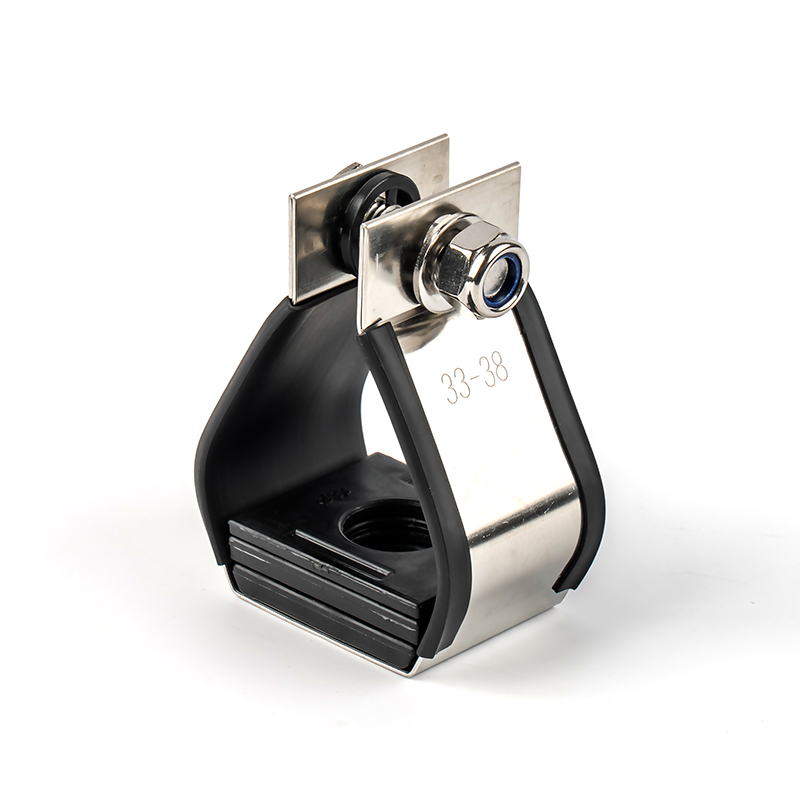
The single cable Cleats made of 316 stainless stee...
View more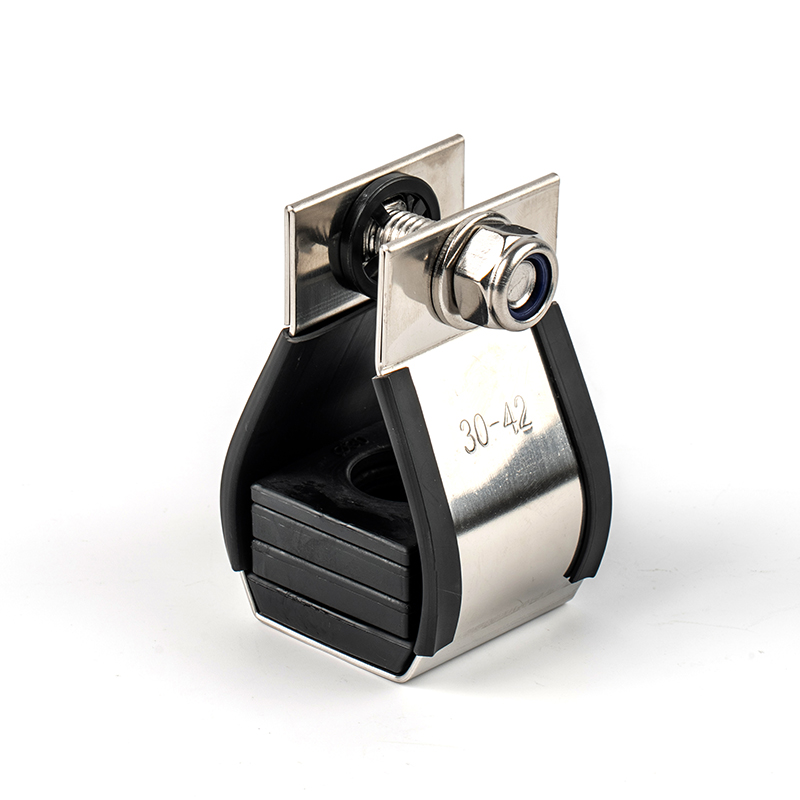
Manufactured from high-grade 316 stainless steel, ...
View more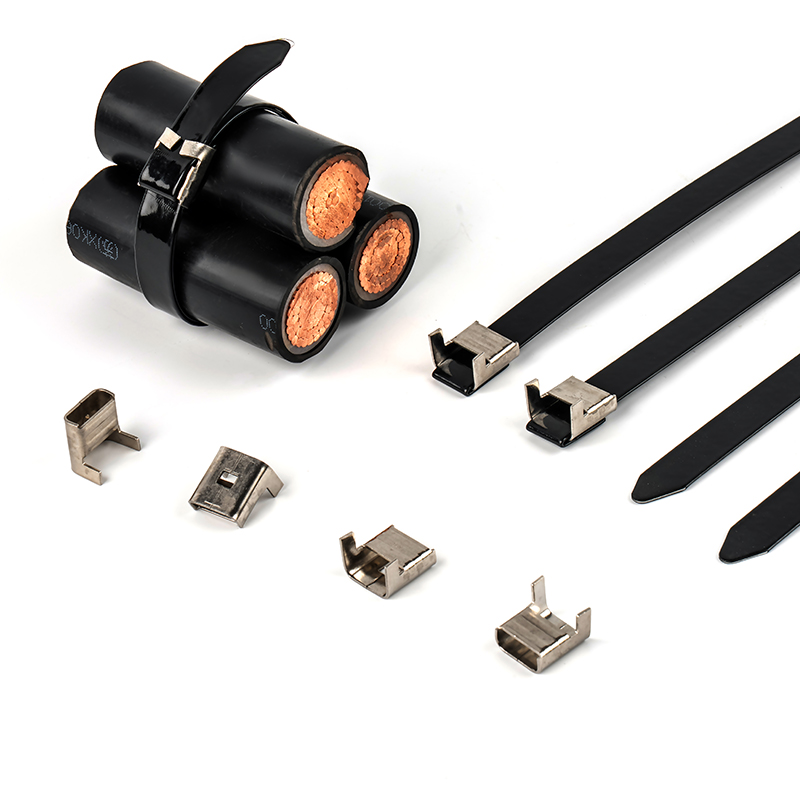
Brand Name: FengfanApproved Certificate: DNV &...
View moreContent
A dock lighting upgrade on a coastal site tends to fail in the same place. The contractor bundles 12 mm cables with standard black nylon ties, the installation passes inspection, and roughly fourteen months later the ties are chalky, brittle and snapping in the wind. Swapping them for thicker nylon ties from a hardware store only delays the same failure, because the weak point was never the width of the tie. It was the material, the locking mechanism and the way the tie was tensioned.
If you are shopping for a heavy duty zip tie, here is the short answer. Above roughly 60 °C, in salt air, in chemical plants, or anywhere vibration is continuous, a stainless steel cable tie with a ball-lock or ladder-lock head will outperform any plastic tie, including UV-stabilised nylon. If the job is a dry indoor control cabinet at normal room temperature, a good nylon tie is cheaper, faster to install, and a 316 stainless tie is simply wasted money.
The rest of this article covers the specifications that actually decide the outcome, the coating and lock choices that stop a stainless tie from damaging the cable it holds, and the tensioning habits that separate a ten-year installation from a two-year one.
The words heavy duty are not regulated in the fastener trade. A supplier can print them on a bag of 4.8 mm nylon ties and on a coil of 12 mm stainless band, and both labels are technically legal. What changes behaviour in the field is four measurable properties, and all four should appear on a proper datasheet.
Tensile strength is the load the head holds before it slips or the band fractures. Service temperature matters because nylon softens long before it melts. Ultraviolet and weather exposure is a material question, not a thickness question. And the base grade matters: 304 and 316 stainless behave differently in chloride, just as carbon-black nylon behaves differently from natural nylon.
| Option | Tensile strength | Service temperature | Weather and chemical resistance | Where it fits |
|---|---|---|---|---|
| Standard nylon 6/6 | Roughly 18–120 lb, with wide extra-heavy versions reaching about 250 lb | About −40 °C to +85 °C | Poor long-term UV unless carbon-black stabilised; absorbs moisture | Indoor panels, cabinets, dry cable bundles |
| UV-stabilised nylon | Similar to standard nylon | About −40 °C to +85 °C | Better UV resistance; still degrades faster in sustained heat | Outdoor trays, telecom cabinets, light industrial |
| Weather-resistant acetal | Moderate, comparable to mid-range nylon | About −40 °C to +90 °C | Good UV and moisture resistance, holds shape when wet | Marine topsides, agriculture, signage, exposed fittings |
| Stainless steel 304 ball-lock | Typically 200–350 lb for a 4.6 mm band, higher for wider bands | About −80 °C to +500 °C | Excellent UV and heat resistance; limited resistance to chlorides | Rail, OEM machinery, high-temperature enclosures |
| Stainless steel 316, coated | Typically 200–350 lb, scaling with band width | About −80 °C to +500 °C | Excellent, including chlorides; coating separates dissimilar metals | Offshore, shipyards, chemical, nuclear, tunnels |
Read the table as a filter. If the worst-case condition on your site is a dry indoor cabinet at 40 °C, nylon is the correct engineering choice. If any single column fails — heat, continuous UV, salt spray or sustained vibration — the plastic options drop out and the discussion moves to stainless steel.
Three service conditions push a project to stainless, and they usually arrive together. The first is heat: nylon loses a large share of its holding strength as it approaches 85 °C, which is why engine bays, oven surrounds, foundry areas and solar racking on hot roofs belong to stainless steel. The second is ultraviolet exposure combined with mechanical load. A black UV-stabilised nylon tie that survives five summers in a mild climate can chalk and crack in two on a coastal rooftop, because UV and heat accelerate each other.
The third is vibration. A stainless tie with a ball-lock head bites into the band itself rather than relying on a moulded pawl, so it does not creep loose the way a nylon ratchet can on a vibrating machine frame or a road-side gantry. If you want a fuller explanation of how these ties are constructed and where they are specified, the site's overview of stainless steel cable ties covers the fundamentals.
Stainless steel is not automatically safe against every surface it touches. When a 304 tie is clamped directly onto aluminium tray, aluminium ladder or galvanised steel, moisture turns the joint into a small battery and the aluminium becomes the sacrificial part. Two fixes exist: specify 316 stainless for chloride-rich or mixed-metal environments, or use a coated tie so the plastic jacket acts as a barrier between the two metals. On offshore and shipyard work, both are usually applied at once.
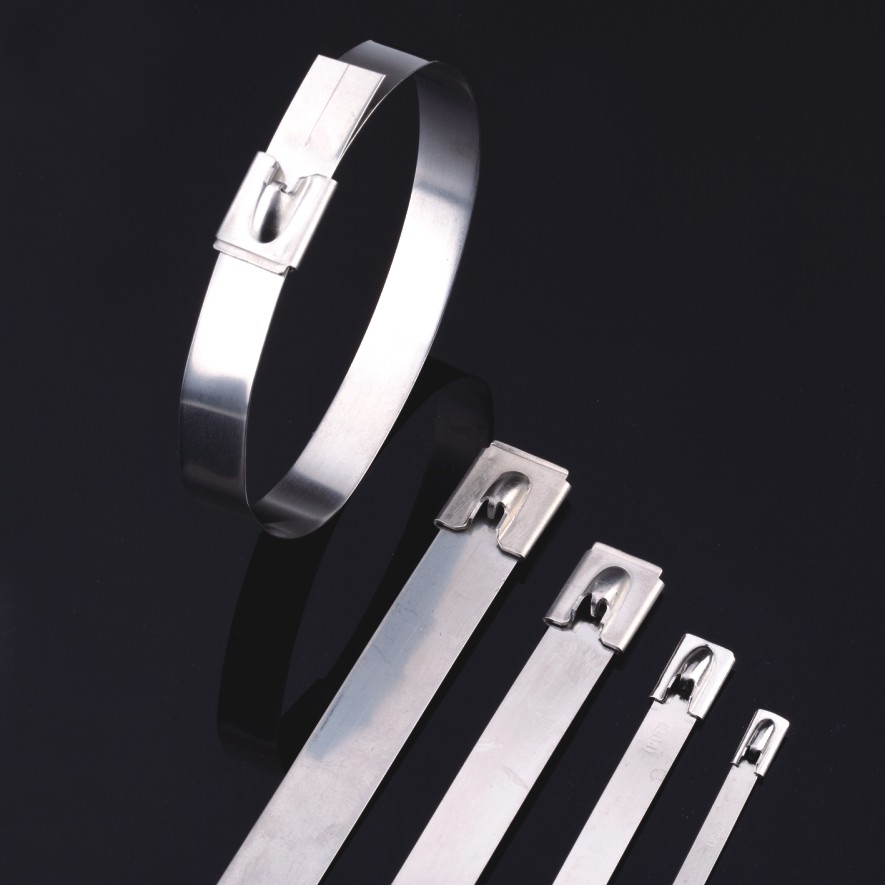 Ball-Lock Uncoated Stainless Steel Cable TiesEntirely metallic 304/316 stainless ball-lock ties offer fireproof, UV-resistant performance and high-temperature use; review for all-metal fastening.View Product →
The coating is not decoration. An uncoated stainless band has a sheared edge that will cut into soft insulation under vibration, and bare metal in contact with a dissimilar metal invites corrosion. The coating choices follow a simple logic.
One practical warning: coatings are damaged by over-tensioning far more often than by the environment. If the jacket is scuffed white at the head after installation, the tie has been pulled too hard and the corrosion barrier is already gone.
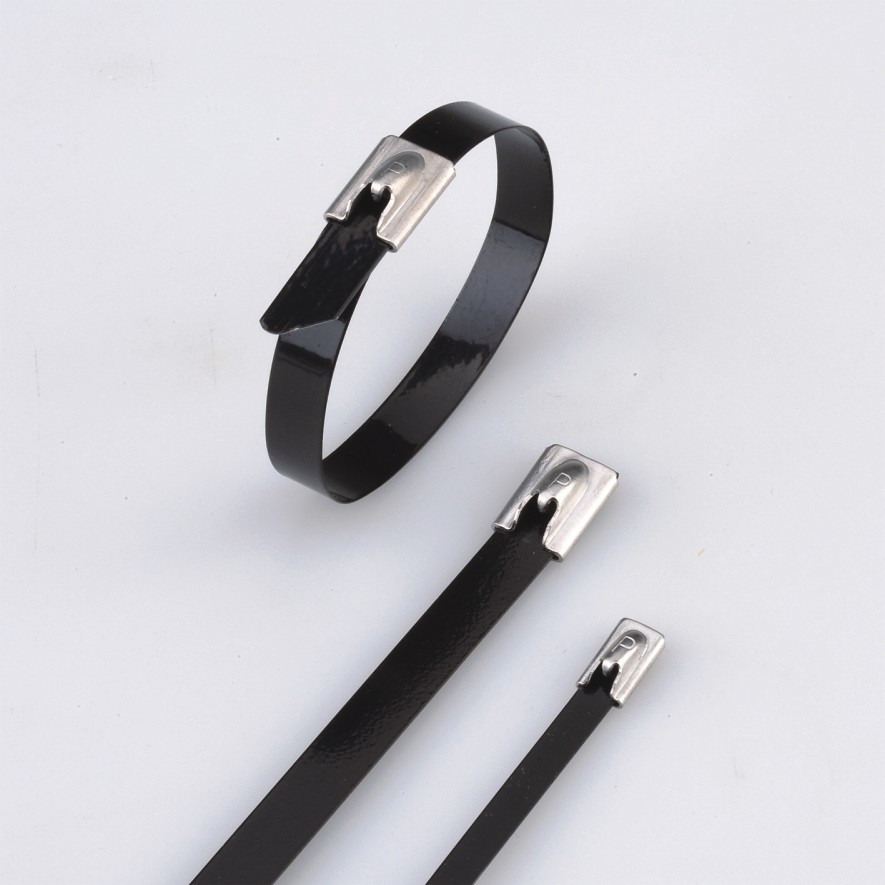 Polyester-Coated Ball-Lock Stainless Steel Cable TiesBlack 304/316 stainless ties with polyester or nylon coating, metallic buckle, UV-resistant and halogen-free; coating aids edge protection and dissimilar-metal corrosion barrier.View Product →
Stainless ties are installed with tools, not by hand, and the tool choice is usually made on volume rather than on the tie. For low-volume work a manual tensioner sets and cuts the band in one motion. For heavier band widths and buckled strapping, a crimping tool closes the buckle and a separate tensioner pulls the band tight. For repeat production on cable trays and harnesses, an automatic gun does both jobs at a consistent tension, which is the only reliable way to hit the same setting on every tie.
The reason this matters is fatigue. A tie that is under-tensioned lets the bundle move, and the band wears through its own coating at the head. A tie that is over-tensioned crushes the cable jacket on soft insulation and work-hardens the stainless band, which then cracks at the lock. Both failures look like "cheap ties" to the person replacing them.
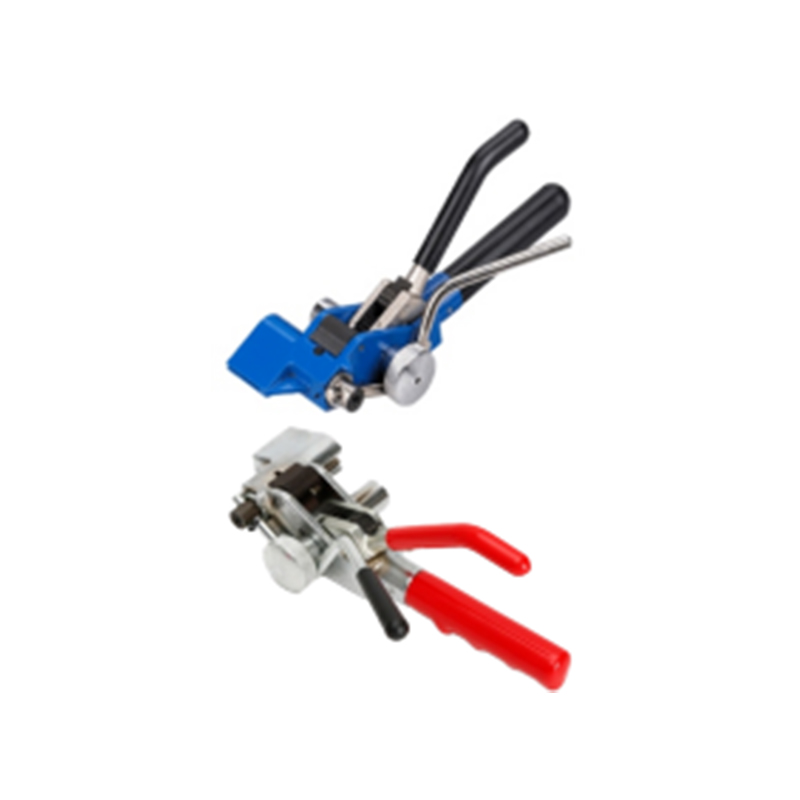 LQA Stainless Steel Cable Tie Strapping ToolHand tool for tensioning and cutting 8–16 mm stainless steel cable ties, with adjustable tension control and excess strap removal.View Product →
Only in tension, and only at room temperature. Width raises tensile strength, but it does nothing for UV resistance, heat resistance or vibration creep. In an outdoor or hot environment, a wide nylon tie still fails on the same schedule as a narrow one.
Yes, but not bare 304 in a wet or salty location. Use 316 stainless, or a coated tie, or both. In dry indoor conditions the galvanic risk is low and a plain 304 tie is usually acceptable.
Match width to bundle diameter and load, not to habit. Oversized band on a small bundle is hard to tension neatly and wastes the locking slot; undersized band on a heavy bundle is the most common cause of premature failure.
For stainless, yes. Hand tensioning gives inconsistent results and frequently damages the coating. For nylon, a tensioning gun is optional on small jobs, but on any production run it is the difference between a neat harness and a row of uneven, partly cut tails.
Choose the tie from the environment backwards: first the material, then the lock type, then the coating, then the tool. A heavy duty zip tie is not a thicker version of a cheap one, it is a different product built for a different set of conditions. Get those four decisions in the right order and the bundle stays put for the life of the installation.
The single cable Cleats made of 316 stainless steel is used for cable management. It is corrosion-resistant, high-temperature resistant and meets international standards. It is suitable for various ha...
See Detail
Manufactured from high-grade 316 stainless steel, this cable management system is specifically designed for secure cable retention in power generation, petrochemical, marine, offshore platforms, and c...
See Detail
Brand Name: FengfanApproved Certificate: DNV & ABS.Product Description: Cable Fixing Band and ClipsThe Lower Cost Alternative to Cable Cleats Product Benefits- Low profile finish- 316 grade stain...
See DetailMobile: +86-136 7685 3958
Email: lihai.fan@zjffdl.com
Mobile: +86-188 57530390
Email: alan.huang@zjffdl.com
No. 1116 Yasha Ave, Cao’e Street, Shangyu District, Shaoxing City, Zhejiang, China, 312300


+86-0575-8215 2808
/8200 8688/8239 2526

+86-0575-8215 2066
Copyright ©Zhejiang Fengfan Cable Fittings Co.,Ltd.
