


 English
 中文简体

+86-0575-8215 2808
/8200 8688/8239 2526
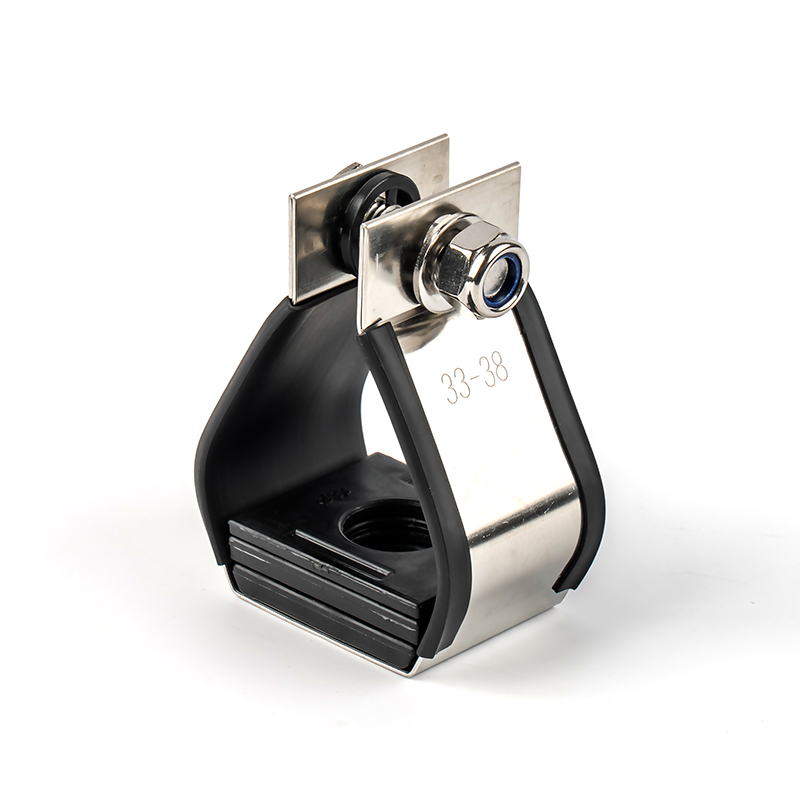
The single cable Cleats made of 316 stainless stee...
View more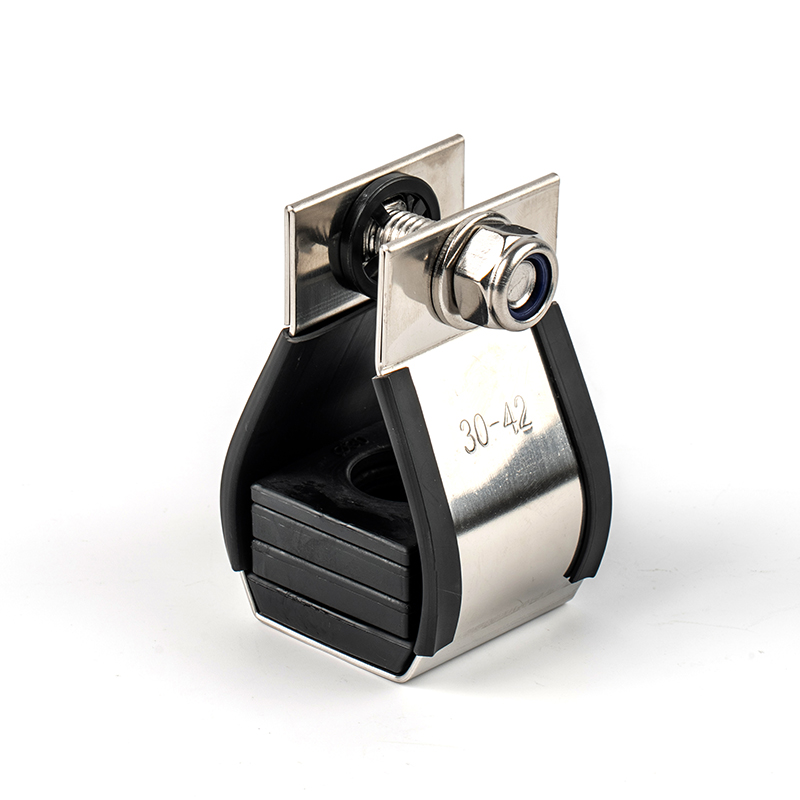
Manufactured from high-grade 316 stainless steel, ...
View more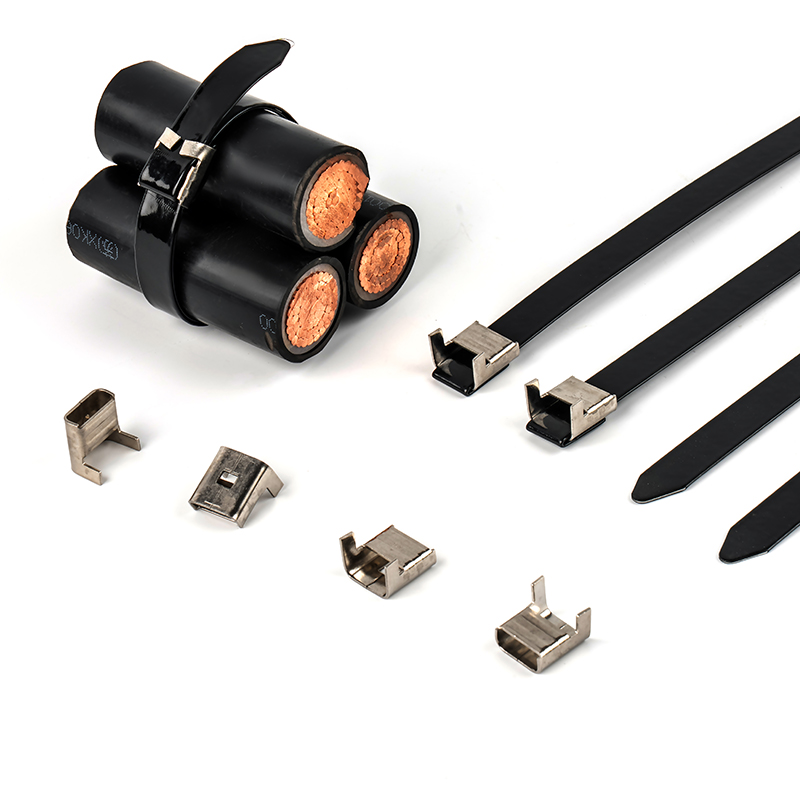
Brand Name: FengfanApproved Certificate: DNV &...
View moreContent
Stand beside a foundry ladle, a glass furnace or the exhaust manifold of a diesel generator and you will find cable bundles routed within a metre of surfaces holding 150 °C or more. An ordinary nylon 6/6 tie that lasts decades on an office ceiling loses about half its tensile strength in weeks at that temperature, creeps under load, and finally lets the bundle drop onto the tray below.
The practical answer comes first: choose the tie by the continuous service temperature of the location, not by the peak. Uncoated stainless steel ties are the only common option that stays dependable above roughly 150 °C. Heat-stabilised nylon 6/6 and PPA-coated stainless steel cover the 105-150 °C band, and ordinary nylon is fine below 105 °C. The rest of this page explains where those limits come from, which data sheet figures tend to be optimistic, and what to confirm before a part number reaches a drawing.
The table below lists constructions produced in volume, with typical continuous service temperatures. Treat the figures as starting points for a specification; grade, load level and cable jacket will shift them.
| Material or finish | Continuous service temperature | Short-term peak | Typical application |
|---|---|---|---|
| Nylon 6/6, unstabilised | 85 °C | 150 °C for minutes | Indoor panels, cabinets, general bundling |
| Heat-stabilised nylon 6/6 | 105-150 °C | 180 °C | Machine tools, light engine bays, ovens |
| Weather-resistant acetal | 80-100 °C | 120 °C | Outdoor routes with UV and moisture |
| PVC-coated stainless steel | 105 °C | Not published | Cable protection where heat is moderate |
| Polyester-coated stainless steel | 150 °C | Not published | Marine, rail and industrial trays |
| PPA-coated stainless steel | 200 °C | Not published | Foundries, kilns, engine rooms |
| Uncoated stainless steel 304/316 | 500 °C and above | Melts near 1400 °C | Furnaces, exhausts, high radiant heat |
| PEEK ties | 250 °C | 300 °C | Small instrument bundles, aerospace |
Two trade-offs drive most decisions. Uncoated stainless steel is the most heat-tolerant option, but a rough cut end can chafe a soft jacket, so flush cutting matters. Coated ties protect the jacket and allow colour coding, yet the coating sets a ceiling well below the steel's own limit. PEEK sits in the middle: excellent for small sensitive bundles, expensive, and rarely made in the long lengths tray work needs.
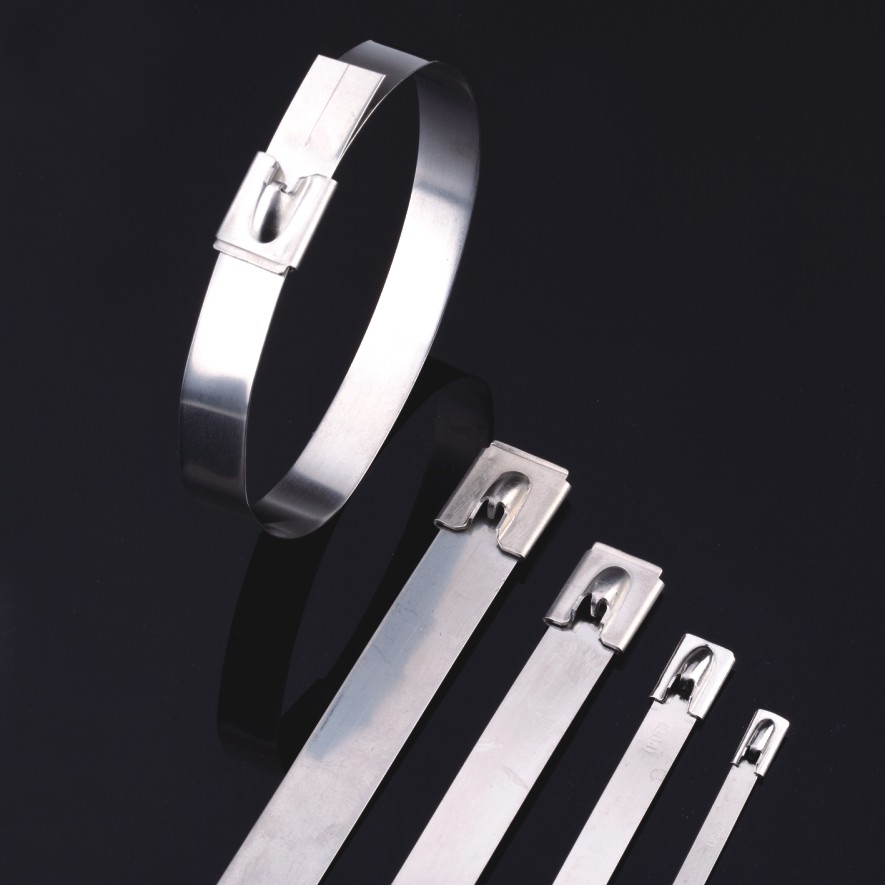 JZGS Ball-Lock Uncoated Stainless Steel Cable TiesFor high-temperature runs, these 304/316 stainless steel Ball-Lock ties span standard to super-heavy sections; fireproof and UV-resistant.View Product →
A coated tie is a composite, and a composite fails at the temperature of its weakest layer. PVC, the familiar soft black or blue finish, softens near 105 °C and releases plasticiser above it; polyester holds to roughly 150 °C; PPA, a high-temperature polyamide, tolerates about 200 °C. Past those points the coating cracks, chalks or peels, leaving a sharp stainless edge pressed against the cable jacket.
Where an installation needs steel strength and abrasion protection at around 180 °C, a PPA-coated tie is one of the few practical answers. Hotter than that, uncoated steel with a clean cut end, or a cleat that clamps the cable without wrapping it, is the more honest solution.
 FZLSPAP L Type PPA Coated Stainless Steel Cable TiesFor steel-strength installations needing abrasion protection, these PPA-coated 304/316 ties shield cable jackets and resist UV; FZLSPAP widths reach 19.05 mm.View Product →
There is a quieter failure to plan for as well. Stainless steel in contact with aluminium or galvanised steel in a warm, damp environment forms a galvanic couple. The tie usually survives; the tray or bracket underneath corrodes, and the pale deposit that follows is often mistaken for a coating problem.
Send these questions to the supplier and ask for documents rather than reassurances. Anyone who cannot answer them for a specific part number is guessing.
Two identical ties installed to different tensions will age differently. Under-tensioned ties allow movement and fretting; over-tensioned ties load the head and the jacket, and the damage appears at the hottest point of the run. Stainless steel ties need a proper tensioning and crimping tool rather than hand effort, not only for consistent tension but because a loose tail is a cut hazard.
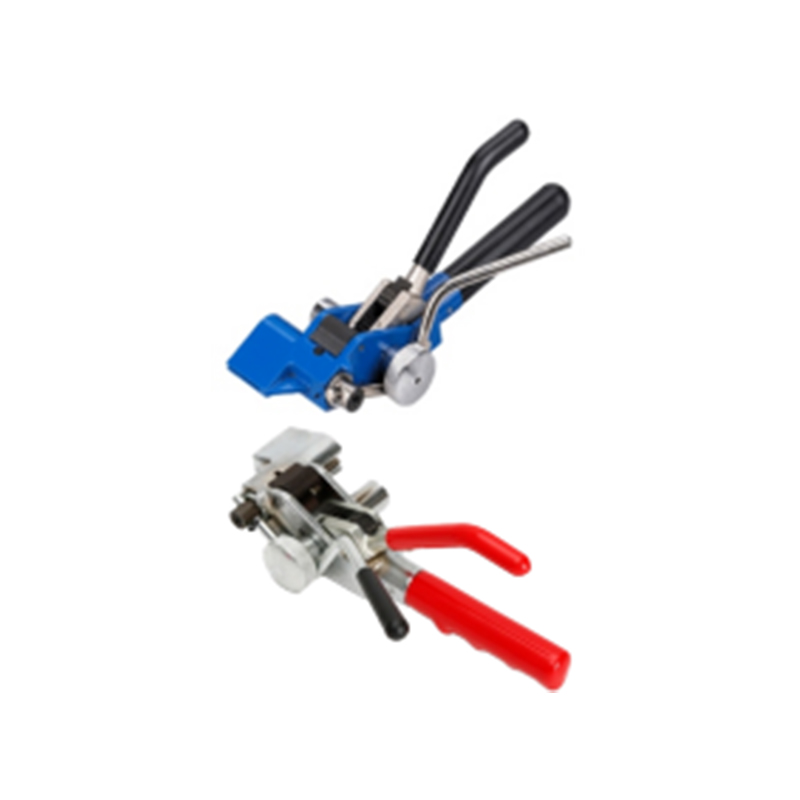 LQA Stainless Steel Cable Tie Strapping ToolFor consistent tension and safe tail removal, this LQA hand tool tensions and cuts stainless steel ties from 8 mm to 16 mm wide.View Product →
Flush cut-off, deburred edges and consistent spacing matter more at high temperature, because the jacket is softer and the tie is closer to its mechanical limit. Where vibration accompanies heat, shorten the spacing and keep the buckle off a bend.
Not for a permanent installation. Ordinary nylon 6/6 is rated around 85 °C continuous. A heat-stabilised grade may reach 150 °C under light load, but its holding force there is a fraction of the room-temperature figure, and relaxation begins within weeks.
For the hottest runs, yes. Below about 150 °C they are often overkill: they cost more, need a tool, and an uncoated tie can chafe a soft jacket. A PPA-coated steel tie or a heat-stabilised nylon tie is usually better value in that band.
Ask for the ageing standard and the load behind the figure, then run a simple oven test on a sample batch at site temperature with a representative load for a few hundred hours. A tie that has darkened, lost tension or snapped at the head has told you what you needed to know.
Heat resistance is a system property, not a single number printed on a bag. State the continuous temperature, check the coating and the load at that temperature, and choose tooling that gives repeatable tension; the bundle will still be tight when the next maintenance window arrives.
As a manufacturer of stainless steel ties, nylon ties, cleats and installation tools, we see these specifications from the production side every week. The parts that last are almost always the ones where temperature, load and coating were written down before the order was placed.
The single cable Cleats made of 316 stainless steel is used for cable management. It is corrosion-resistant, high-temperature resistant and meets international standards. It is suitable for various ha...
See Detail
Manufactured from high-grade 316 stainless steel, this cable management system is specifically designed for secure cable retention in power generation, petrochemical, marine, offshore platforms, and c...
See Detail
Brand Name: FengfanApproved Certificate: DNV & ABS.Product Description: Cable Fixing Band and ClipsThe Lower Cost Alternative to Cable Cleats Product Benefits- Low profile finish- 316 grade stain...
See DetailMobile: +86-136 7685 3958
Email: lihai.fan@zjffdl.com
Mobile: +86-188 57530390
Email: alan.huang@zjffdl.com
No. 1116 Yasha Ave, Cao’e Street, Shangyu District, Shaoxing City, Zhejiang, China, 312300


+86-0575-8215 2808
/8200 8688/8239 2526

+86-0575-8215 2066
Copyright ©Zhejiang Fengfan Cable Fittings Co.,Ltd.
